An English Girl’s Introduction to Skyscrapers, Snowballs and Sauerkraut
Valerie Byron
© Copyright 2026 by Valerie Byron

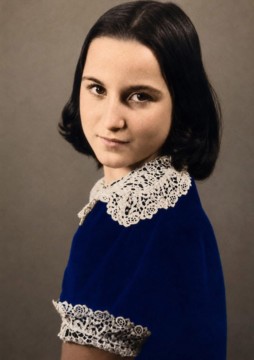
Photo courtesy of the author.
|
America, Here
I Come! An English Girl’s Introduction to Skyscrapers, Snowballs and Sauerkraut Valerie Byron © Copyright 2026 by Valerie Byron
|
Photo courtesy of the author. |
LEAVING ENGLAND
After my first year at grammar school, Mum sat me down and announced that we were going to America.
Her family had been urging her to emigrate, convinced she would have better opportunities there. All she had to do was sell everything she owned, leave the man she loved and start again in a country several thousand miles away.
Naturally, I thought it was a marvellous idea.
For Mum, it was rather more complicated. Alan Aitchison’s family disapproved of “the Jewess”, as they referred to her, and Alan showed no inclination to marry her or become a father to me. His father controlled the family business and, I suspect, the family purse strings. Alan loved my mother, but apparently not quite enough to risk either.
My uncle Morry lived in New York and my aunt Betty in California. Between them, they agreed to sponsor us. Mum now had secretarial skills and a reasonable prospect of earning a living. America offered a future, even if it meant leaving her heart behind.
I, meanwhile, was beside myself with excitement. We were going to the magical country I had seen at the pictures. Better still, I would have to leave school to get there.
The next few months passed in a glorious whirl of preparations. I was even allowed a going-away party with friends from grammar school. Our house, bought twelve years earlier for nine hundred pounds, sold for the astonishing sum of three thousand. To me, this suggested we were practically millionaires.
At eleven, I still regarded other people as supporting characters in the fascinating story of my life. It never occurred to me that Mum might be heartbroken. While I was imagining America, she was dismantling everything familiar.
She told me she had found a good home for our young cat, and I believed her. Later, I wondered whether that had been another of the comforting things grown-ups told children. I never asked, and I still prefer to hope she was telling the truth.
While the final arrangements were made, I was sent to stay with Mum’s friends, Marian and Leslie Bradley, in Rhyl, North Wales. I never knew where Mum went after leaving me there, although I imagine she spent as much time as she could with Alan.
The Bradleys’ house stood directly across the road from the Irish Sea, which looked inviting from a distance and decidedly less so at close quarters. Each morning, I raced across to the beach with their two dogs, Sugar and Crybaby. We scrambled over damp dunes and charged along the sand, the dogs plunging into the surf while I sensibly confined myself to breathing the salty air and planning my American future.
All that sea air sharpened an appetite that had never needed much encouragement. I remember meals of sharp Cheddar, firm, tasty tomatoes and crusty French bread, eaten with enormous enthusiasm. It remains one of my favourite combinations. Some childhood pleasures withstand a lifetime of competition.
Marian and Leslie also took me shopping for the voyage. My new outfit consisted of a yellow woollen polo-neck jumper and green tartan trousers—my very first trousers.
I thought I looked wonderful.
Looking back, I suspect I resembled a small travelling rug.
Money was scarce, and new clothes were an occasion, not an expectation. I certainly had nothing approaching the wardrobes I later provided for my own children. Those green trousers were a considerable event.
Rationing finally ended on my birthday that year, which seemed an excellent present from the British government. But I already had my sights on greater things. In America, I would at last be able to acquire the elusive garment I had coveted for years.
Jeans.
Eventually, Mum and Alan arrived to collect me, and we travelled by train to Southampton. There, the magnificent Queen Elizabeth waited to carry us to New York.
From high above the dock, we waved goodbye to Alan. Streamers fluttered between ship and shore, people shouted their farewells, and the air hummed with excitement. To me, it was the beginning of a splendid adventure.
To Mum, it was goodbye to the man she loved.
She hid her distress so well that I scarcely noticed it. I leaned over the railing and waved with all the enthusiasm of a child who had no idea what leaving might cost.
It would be five years before we saw Alan again.
NEW YORK
I began my glamorous Atlantic crossing by being sick.
Fortunately, this indignity was confined to the first night. After that, I took to shipboard life with remarkable ease.
We travelled second class, which seemed quite grand enough to me. Meals appeared in a proper dining room, served by handsome men in uniform. Having rarely been taken to a restaurant, I considered this arrangement exceptionally civilised and saw no reason why it should not continue indefinitely.
Our Cockney waiter, Pip, received the full benefit of my eleven-year-old flirtation. Whether he recognised it as such, I cannot say.
A German couple taught me to ask, “What is your name?” and “How old are you?” in German. I still remember both phrases and produce them whenever I feel the need to imply a command of the language. Any reply, of course, brings the conversation to an abrupt halt.
I roamed the ship, watched films, ate whenever the opportunity presented itself and enjoyed the evening entertainment. Outside, the water in the swimming pool heaved from end to end as the ship rolled. Nobody seemed tempted to get in. Watching it was quite enough exercise.
After five glorious days, we stood at the bow, waiting for our first glimpse of the Statue of Liberty. The ship’s horn boomed across the harbour.
America, which until then had existed mainly on cinema screens, was suddenly real.
Uncle Morry and his second wife, Gertrude, met us on arrival. My mother’s brother was a short man with a sharp tongue and an authority that more than compensated for his height. Most of the family approached him cautiously. Napoleon might have understood him.
He adored Mum, however, and always made sure she was provided for.
My own affection was tempered by a healthy respect for his temper. On visits to England, he had brought me Chiclets chewing gum and lollipops, which I distributed among the neighbourhood children in exchange for their company. I had discovered the benefits of foreign aid at an early age.
Morry and Gertrude lived in an apartment on East 24th Street in Manhattan. As we drove there, I swivelled from window to window, trying to take everything in. Bill Haley and the Comets were playing “Rock Around the Clock” on the car radio, providing a suitably American soundtrack.
The city was overwhelming. Buildings soared above us. Taxis honked, traffic surged, shop windows glittered, and everywhere people spoke in those wonderful accents I knew from the films.
Even the advertisements were exciting. High above the street, enormous billboards urged us to drink something called 7-Up. I had never heard of it, but was already favourably disposed towards it.
For the first few weeks, Uncle Morry took us out to dinner every night. We usually went to a small French restaurant, where I alternated happily between minute steak and spring chicken. Having arrived in a country devoted to choice, I saw no need to complicate matters.
Eventually, my uncle decided we should try somewhere different and took us to a Chinese restaurant.
I inspected the menu in the window.
Bird’s nest soup.
I stopped dead.
I had crossed the Atlantic with an open mind, but there were limits.
I refused to go inside. Uncle Morry stamped his feet and expressed himself with considerable feeling. I remained unmoved.
Back we went to the French restaurant.
My spring chicken was excellent. The atmosphere at the table was less so.
We stayed in New York for three months, through cold weather and snow. Mum tried to enrol me at Hunter College, but was told I was too young emotionally, although academically ahead of my age.
I was therefore sent to a local public school, where my education in American life began rather more abruptly than I would have wished.
On my first morning, nobody accompanied me. At eleven, I was expected to negotiate an unfamiliar city and find my own way to school.
I waited for the bus, trying to look as though I knew what I was doing.
When it arrived, boys threw snowballs containing stones from the windows. People pushed and shoved to get aboard. I had come from England, where even considerable national distress could usually be organised into a queue.
This was alarming.
School offered little reassurance. I sat at the back of the classroom, struggling to follow lessons about the Algonquin and Iroquois, subjects entirely absent from my English education. Even the children’s names—José, Javier—were unfamiliar to me. It was a disconcerting discovery that so much of the world had been carrying on without my knowledge.
I had never spoken to a Black person before. When a tall girl approached and asked where I came from, I told her England.
“Wow,” she said. “You speak English so well.”
“What do you think we speak in England?” I asked.
“Uh… French?”
It appeared we both had things to learn.
The classroom itself baffled me. Children answered teachers back and apparently lived to tell the tale. Missing homework or failing a test could result in a second chance, or something called a “make-up” test. To a child fresh from an English grammar school, this seemed an astonishingly generous system.
There were frequent interruptions, and from my place at the back I often struggled to hear what was being taught.
Then, during my very first week, someone nominated me for class president.
As far as I could tell, my only qualification was an English accent.
I had never heard of a student council and had only the vaguest notion of what a class president did. Faced with unexpected political office in a country whose buses I had barely mastered, I panicked and declined the honour.
The cafeteria presented further difficulties.
One day, I was served hot sauerkraut. Until then, I had managed eleven perfectly satisfactory years without knowing it existed. The smell persuaded me that this had been the correct arrangement.
I refused to eat it.
A member of staff informed me that I could not leave the table until I had finished.
I do not remember how long we remained at this impasse. I do know that I never ate the sauerkraut, so presumably someone eventually recognised that the school would need the table again.
For all my early excitement, New York became a lonely place. I made no friends. After school, I wandered the streets before catching the bus home, looking into shop windows and browsing in drugstores. I longed to order an ice-cream soda, but lacked both the money and the courage.
America had looked much easier to join from a cinema seat in England.
By the time I returned to the apartment, everyone was usually still at work. I did my homework, watched the Pinky Lee Show on television and wrestled with my P.E. uniform.
The gym teacher admired children who arrived with their uniforms starched and neatly pressed. I wanted very much to be one of them.
Unfortunately, Uncle Morry’s apartment contained neither starch nor a steam iron. I laboured over those stubborn wrinkles with the equipment available, then carried my efforts to school in the hope of receiving a word of praise.
None came.
I could not win approval for my gym clothes, but I hoped I might do better with a birthday present for Uncle Morry.
With very little money and no idea what he might like, I searched shop after shop. Eventually, I chose an oilcloth for his kitchen table. It seemed practical, affordable and therefore suitable for a grown-up.
When I unfolded it, it released a smell that could have cleared the apartment.
I had wanted to make a good impression. Unfortunately, I had made a lasting one.
I never felt entirely at ease with Mum’s family. I suspected that, in looking at me, they saw my father, whom they despised for the way he had treated us. Whether this was fair to them or simply how it felt to a lonely child, I cannot say.
They loved my mother and would have done anything for her. I came as part of the arrangement.
There were happier moments. Uncle Morry’s young son, Michael, came to stay at weekends, and we played together. He was a sweet child, and having a young relative to myself was a novelty I enjoyed enormously.
Morry had been through a bitter divorce and was caught up in a difficult custody battle, so those visits were precious to him. They also allowed me to see a gentler side of my formidable uncle.
He had an older daughter, Wendy, about my brother’s age, but I did not see her. She belonged to that distant category of people who were practically grown up.
Just when I thought I could bear no more of school, loneliness or unsuccessful ironing, Mum announced that we were moving to California.
Once again, emigration had come to the rescue of my education.
I was ready. New York had given me skyscrapers, snowballs, my first taste of American school life and a firm position on sauerkraut. Now I wanted sunshine and a home where I could stop feeling like a guest under inspection.
Most of all, I wanted Mum to myself again.
We had crossed an ocean together. Surely the journey across America would be the easy part.(An excerpt from Valerie's memoir "No Ordinary Woman")
*****