Bill Gagliardi Exemplified the Greatest Generation, and He Made It Better
Peter Gagliardi
© Copyright 2026 by Peter Gagliardi

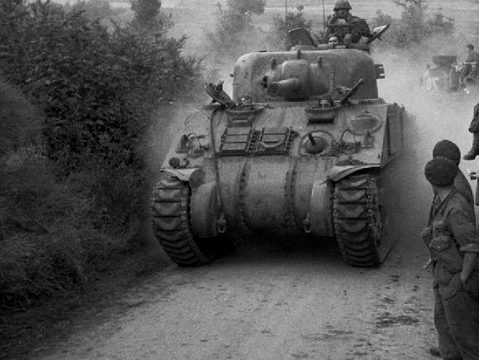
Photo by U. S. Army Photographer at Wikimedia Commons.
Bill Gagliardi Exemplified the Greatest Generation, and He Made It BetterPeter Gagliardi © Copyright 2026 by Peter Gagliardi |
Photo by U. S. Army Photographer at Wikimedia Commons. |
The experiences of the Greatest Generation shaped their worldview, their values and attitudes. Growing up during the Great Depression of the 1930s, the vast majority faced economic hardships and scarcity. When the United States was attacked by Japan at Pearl Harbor, millions joined the military effort. These experiences taught them frugality, delayed gratification, sacrifice, community values, and national unity. The events of the 1930s and 40s shaped this generation and provided lessons that carried them through life. The Greatest Generation has three main attributes, rugged individualism, love of freedom and country, and military experience. Bill Gagliardi lived by these virtues and displayed them throughout his life. This is how the Greatest Generation survived the Depression, won World War II and gave us the democracy and freedom that we enjoy today.
Rugged Individualism
The
Greatest Generation developed a unique form of rugged individualism
that was rooted in survival, grit, and physical endurance.
They
learned to build, repair, and maintain everything they owned by
hand. They were resourceful and they learned to
solve
problems independently without relying on outside assistance such as
from the government. They had economic self-reliance and
relied
on their own stamina to find work and survive. They
had pride in their work and they favored hard work over
government relief viewing personal labor as the ultimate
resource.
They developed a culture of quiet endurance and suppressed their fear
and trauma to accomplish their goals. They
survived
in life- threatening environments such as the jungles of the
Pacific.
Bill
Gagliardi was a rugged individualist. William "Bill"
Gagliardi was a productive member of the Greatest Generation and he
made it better. He was born in Wilkes-Barre Pennsylvania in
1914 and he had a tough life just like the rest of the
generation. His natural parents died during one of the plagues of the
nineteen twenties when he was very young. It was a time of
great family values and he and his two brothers were adopted and
raised by their aunt and uncle. As a youngster, he woke up
early
every morning to deliver The Wilkes-Barre Record. He quit
school early to support his family and he never graduated from G.A.R.
Memorial High School. He got a job in a butcher's meat store
and learned his trade as a butcher. This was before the
supermarket age and there were many specialty shops like this one
specializing in meat. He worked his way up and eventually
opened his very own meat store. He was doing well when
disaster
struck and the Depression hit the country. The whole country
began to suffer as there were few jobs and little money.
Suddenly, Bill's customers could not afford to pay for their meat and
feed their families. Bill had a big heart, and he
sympathized with his customers and he sold them meat
on
credit. Unfortunately, his customers never paid him and he
went
out of business.
Love of Freedom and Democracy
The Greatest Generation demonstrated their love of freedom and democracy by fighting in World War II. They enlisted and joined the military, worked in factories to build the weapons of war, rationed food and gas at home, and risked life and limb to stop tyranny and preserve freedom and democracy across the globe. Over 16 million Americans served in the armed forces during World War II. They fought globally across North Africa, Europe, and across the Pacific in harsh life-threatening conditions. They overcame tyranny and their campaigns defeated fascist regimes in Germany, Japan, and Italy. They accepted great sacrifices and millions gave their lives or suffered severe injuries for liberty. Workers in factories manufactured thousands of tanks, ships and planes. Families accepted rationing and limited their consumption of meat, sugar, gas and rubber to supply the troops. Citizens bought war bonds with their own savings to finance the military effort. They maintained national unity as communities put aside differences to support the war effort.
World
War II
Then
came World War II and Bill did his patriotic duty and
enlisted in
the United States Army. He got through basic
training and
wound up in armor on a tank crew.
Surviving Combat
He fought the Japanese in the Pacific and was almost killed. His tank was hit by anti-tank ordinance and the whole crew died except for Bill who was seriously wounded. This is how Bill survived in combat. Bill was the communications officer on the tank, and he was stationed on the top of the tank hull and not inside the tank. American tanks did not have a separate dedicated communications officer in the lower front hull. Bill had his hatch open and was standing and then sitting with his upper body protruding above the tank hull when the tank was hit, so he threw himself clear to the ground and survived even as the tank was destroyed. Radio communications officers frequently kept their hatches open and went on top of the tank while traveling and when not under direct fire. This allowed them to maintain critical visibility, so they could clearly see their environment and detect every threat while there was still time. During the battle Bill was in, an anti-tank round struck the tank and destroyed the hull of the tank. Bill was on top of the tank, he survived the explosion, and he had an immediate escape route by throwing himself to the ground before internal fires and ammunition explosions engulfed his compartment. This is an explanation of the tactical environment during Bill’s battle. An American Sherman tank crawls through dense muddy jungle terrain on Okinawa. Vegetation blocks all visibility and the tank commander could not see through his narrow periscope and the internal intercom system is blocked with heavy static. To coordinate with the accompanying Marine infantry rifle squad Bill unleashes his forward hull hatch, pushes it open and sits high up on the edge of the opening with his head and torso fully exposed and he is there to spot hidden obstacles and threats. A hidden Japanese 47 mm anti-tank gun, concealed in a bunker covered in palms, fires an armor piercing round from point blank range. The shell penetrated the low central front hull of the tank, instantly killing the tank crew. Bill is on top of the hull of the tank survives the hit and jumps to the ground before the tank explodes Seeing his buddies killed in combat was devastating to Bill. He spent several months in an Army Hospital recovering from his injuries. After recovering from his injuries, he was honorably discharged from the Army,
Building the New America
He returned to Wilkes-Barre and resumed his career as a butcher, working for various stores and winding up at The Great Atlantic and Pacific Company, the A & P. Then he met the love of his life, Emma Marie Galli from Pittston Pennsylvania. . They dated and eventually married. They had two sons William Junior, and Peter. Bill was a great husband and father and he had to work two jobs for many years to support his family. He was a staff aide at the Veterans Hospital in Plains Township Pennsylvania, and worked as a butcher for the A & P at night. He was lucky if he got two days off a week. He attended William Junior's Wedding and got to know his two grandsons. He excelled in his role as a grandfather. He continued to work his way up and he became a Federal Meat Inspector for the Department of Agriculture where he retired. He died in 1987, and he is survived by sons William and Peter, William’s family and many relatives. His memory lives on in our hearts and minds and is an inspiration to us all. His love of life, rugged individualism, sacrifice, and love of freedom and democracy will live forever.