In
the early 1970s, the National Park Service contracted the Museum of
Northern Arizona, H.S. Colton Research Center to complete an
ecological survey of the Grand Canyon, Lee’s Ferry to Lake Mead,
river level to 500’ up: almost 300 miles of desert riparian
habitat. I was blessed to be the Research Center’s field botanist.
Don
was my assistant during much of the Grand Canyon field botany
contract work for the Park Service. Short and stocky, he had to take
three steps to my two on those long pulls across the Esplanade
between side canyons. We’d been collecting the stepped ledges above
base camp, and had found a nice sheltering alcove deep enough that
our entire crew of 14 could have set up camp inside, 100 vertical
foot off the river bank.
But
we weren’t the first to find this spot: jammed against the back
wall, stuck in a crevasse was a hand-hewn wooden skiff, maybe ten
foot long if it had been whole. One of the wooden paddles had
survived the crushing flood that stashed this man-made flotsam here;
we took it back to main camp and recorded the historical site’s
location, surely dating back to the wild days before Hoover Dam had
tamed the mighty river’s flood stages.
At
dusk, a summer storm was sweeping from the North and bringing in
rain. We’d been out all day and hadn’t set a tent; Don suggested
we bivouac in the alcove. We grabbed our ground cloths, summer-weight
down bags and the last half of a bottle of “River Red”. We
climbed back to the shelter, to watch the evening fall and finish our
day’s field notes by the short-lived light of a small fire of
hastily gathered twigs.
The
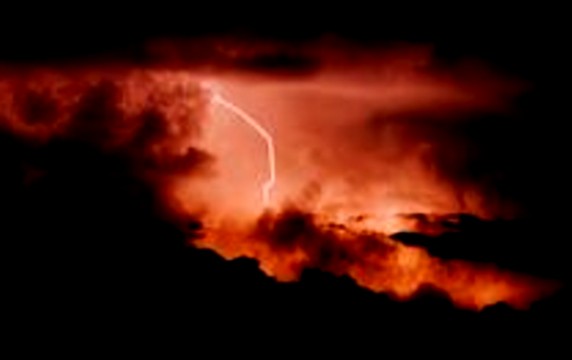
storm dropped into the Canyon from behind us, not drops but sheets of
water, curtains of wild howling rain and lowering bowls of deep
purple clouds that spit electricity in splintering bursts. We let the
embers die out, spread our plastic-sheet rectangles and thin foam
pads below waiting sleeping bags on the sandy floor.
Looking
out from our perch and at our level perhaps a quarter mile distant,
we could see a prow-shaped promontory presenting its massive edifice
to the down-canyon reach; this edge of stone attracted lightening,
bolt after shattering bolt. With each successively larger blast the
Canyon was illumined with a clean purple-white light, palpable,
filling the intervening void. At the peak of the storm, a series of
three massive strikes tore into this rock face, sending house-sized
blocks skyward, to plummet into darkness. The echoes, and the storm,
faded to black.
In
the morning as we gathered up our gear and shook out our
drop-clothes, we found that a whole colony of salt scorpions had
congregated in the moist warmth below our plastic sheets. They, and
we, scurried off in opposite directions; no harm, no foul.