Bheka Pierce
© Copyright 2025 by Bheka Pierce

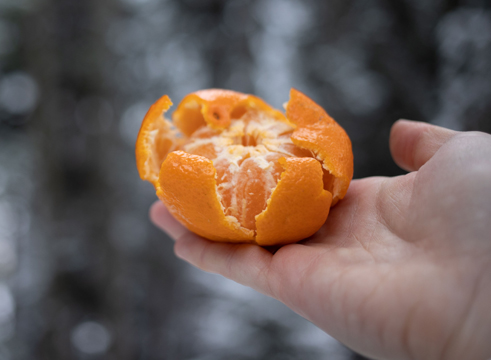
Photo by KATRIN BOLOVTSOVA at Pexels
| Scooter
Boy Bheka Pierce © Copyright 2025 by Bheka Pierce |
Photo by KATRIN BOLOVTSOVA at Pexels |
After joining the Peace Corps in 1969, I was sent to teach English at a small school in a remote valley of southern Swaziland (now called Eswatini.) The people there were so warm and welcoming I felt a curious sense of somehow having come home. My students were great, both eager to learn and more than clever enough to patiently teach me how to teach them. After the first three months, I’d gotten the hang of it, more or less, and the week just gone by—which included my sitting on the front table with a broomstick and my pointer to show my land-locked kids how Hemingway’s old Santiago rowed out from the harbor to get to where the fish were--had been especially pleasing.
Now, Saturday morning, while having two hard-boiled eggs and a chunk of cheddar for breakfast, I gave thought to how to spend the day. A long walk up into the hills behind my house might be good. I’d not yet walked that way much. With any luck, I’d catch sight of the crimson-plumed Igwalagwala bird, from which the royal family plucked feathers to wear in their hair.
Because every season in Swaziland was snake season I put on my L. L. Bean hiking boots and pulled the legs of my jeans down over the high leather ankles. Into my small backpack, I put another hard-boiled egg, a stick of biltong, a slice of fruitcake, a bottle of rain water, and two tangerines, plus—in case I did manage to get snake-bit—my Boy Scout knife. I knew you were supposed to cut a slit vertically between the two puncture marks and suck out the venom. I hoped--if I did get bit—it would not be on my butt or the back of a knee.
I chose the path off to the left up along a ridge that gradually took me to the next higher ridge. All around me were bushes and bush-wood trees, most not much taller than I, with the occasional acacia and mimosa. It must have been a well-used path, the red soil packed hard and smooth. I kept my eyes on the path directly in front of me, watchful for serpents or the odd scorpion.
After an hour, I’d not met a single person, but as I was heading up a steep incline there appeared around a bend a boy of eight or nine coming down on a scooter made entirely of wood, including the wheels, only excepting two ten-penny nails used for the axles and bicycle inner-tube rubber fitted over the wheels. The boy was barefoot, wearing only a leather loincloth and a Chicago Cubs t-shirt, which had likely come from a mission parcel.
The moment he saw me, he hopped off the scooter, drew it to him, as if to protect it, and stared at me wide-eyed and open-mouthed. Maybe because he was wearing the Cubs t-shirt, it did not at first occur to me he might be looking at his first white-skinned person.
“Sayubona, unfana wami,” I said in my best siSwati. Hello, boy of mine. I thought that would reassure him, but it seemed to have the opposite effect. Confusion and fear apparent in his young face. He said nothing.
“Unjani?” I asked. How are you? Still nothing. It seemed he was only a moment from turning and bolting back up the hill.
I found enough siSwati to tell him I was only a simple tichela from the Ntshanini school. I was searching for the Igwalagala bird. Had he seen one on this day?
He stood there, probably not grasping my fractured siSwati. Then the first of several tears washed down his cheeks, and he said softly, “Necesi, ubaba wami.” I am sorry, my father.
Sorry? Sorry about what? Sorry meaning: “Excuse me for making a mistake?” Or sorry meaning: “I am feeling sorrow for you?”
He seemed no longer fearful. His expression shifted into one that looked like nothing less than commiseration. I realized he was feeling sorrow for me, for my deformity, for my white skin.
The hugeness of that—the import of that look--took my breath away. I’d often remarked to myself how generous-hearted Swazis were, but this was in a league by itself. I felt, once and for all, liberated from my white skin. Liberated from the entire nonsense of skin color.
The two of us alone together on the planet, I could think of nothing to say. I offered him a tangerine, which he took in the traditional way, placing the fingertips of his left hand on the inside of his right wrist to show respect for an elder. We peeled and ate together, tossing the skins well off the path.
When
done, he said, “Niyabonga,
ubaba
wami.” Thank you, my father. Then
he stepped onto his scooter and set off coasting down the hill, me
calling after him, “Hamba
kahle,
unfana wami.” Go
well, boy of mine.
Go well and when you
get home you will have a story to tell at the cooking fire.