A Journey Through Martha Maria’s Kitchen
Alexander da Silva Lima
© Copyright 2026 Alexander da Silva Lima
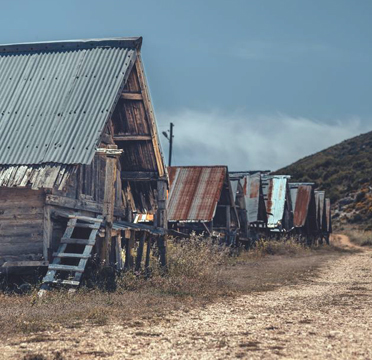
Photo by Robert Taylor at Wikimedia Commons.
| The
Map That Held The World A Journey Through Martha Maria’s Kitchen Alexander da Silva Lima © Copyright 2026 Alexander da Silva Lima |
Photo by Robert Taylor at Wikimedia Commons. |
This is a true biographical nonfiction story about my maternal grandmother, Martha Maria, a woman from Acopiara, Ceará, who migrated to the Pontal do Paranapanema, in São Paulo state, and whose kitchen became my first understanding of geography, memory, migration, food, and survival.
This story is not about me.
I am only the curious eyes of a child who once lived in that house, and the heart of a geography teacher who, many years later, understood that an entire world had been hidden in his grandmother’s kitchen.
The journey belongs to Martha Maria.
She was born in Acopiara, in the state of Ceará, in northeastern Brazil, and came to the Pontal do Paranapanema, in western São Paulo state, in a pau de arara, one of those precarious trucks that carried poor migrants across Brazil with very little in their hands and a whole world inside their chests.
To me, she was Grandma Martha.
I do not know everything she saw on that crossing. In poor families, many stories are not kept in documents, photographs, or carefully written notebooks. They survive in other ways. They remain in gestures, in silences, in the way someone folds a dish towel, saves a handful of flour, stretches the leftover beans, refuses to throw food away.
My grandmother left no travel diary. She did not write about the landscapes she crossed, the fear on the road, the dust on her face, the tiredness in her body, the uncertain stops, what she had left behind, or what she hoped to find. But she left something perhaps more fragile and more lasting: a way of feeding people when there was almost nothing.
She brought little from Ceará. Perhaps almost nothing that could fit inside a suitcase. But she brought memory. She brought faith. She brought hunger. She brought the way of preparing food. She brought the strength of women who learn too early that cooking is not only making a meal. It is keeping a house alive.
I am Alexander, the son of one of the Marias.
My mother’s name is Maria de Jesus. My grandmother, who already carried Maria in her own name, gave all her daughters that same sacred name: Maria de Lourdes, Maria de Fátima, Maria Tereza, and Maria de Jesus.
I never knew for certain whether she did it out of faith, protection, resistance, superstition, or tradition. Perhaps it was all of those things at once. In a hard world, repeating the name Maria may have been her way of placing each daughter under a kind of mantle, as if a name could protect what poverty, distance, and life itself could not guarantee.
Because my parents lived and worked on farms, I spent part of my childhood with Dona Martha. At the time, I did not know I was living inside a story. Children almost never do. I only knew the small geography of that house: where the water was kept, the corner where food was prepared, the smell that arrived before lunch, the sound of a cloth being wrung, the patience of hands that wasted nothing.
My first map was not drawn on paper.
It had no borders, capitals, rivers, mountains, or names of countries written in tiny letters. It was not hanging on a classroom wall, nor was it pointed at by a teacher with a ruler.
My first map smelled of corn, beans, coffee, smoke, country chicken broth, and melted queijo coalho, the firm white cheese of northeastern Brazil.
My first map was my grandmother’s kitchen.
There was a dragon in that kitchen.
That was how, in my childhood, I understood the wood-burning stove. A red dragon, set in the middle of a simple wooden house, as if it guarded the family’s heart. The polished red floor, the old vermelhão, climbed up the stove and traced around it the same living, warm, almost sacred outline. Everything seemed to be made of the same color: the floor, the stove, the embers, the memory.
When Dona Martha stirred the pots, flames appeared through the three openings in the iron stovetop. The fire breathed, crackled, grew, and then hid itself again, as if that old creature obeyed only her hands. The kitchen filled with smoke. Smoke entered the walls, the clothes, the hair, time itself.
Hanging from a broom handle were pork casings and sausages, slowly taking in the smoke from the firewood. Today I think of it as preservation, an old knowledge born from people who needed to use everything, save everything, turn everything into food. Back then, I only saw the dragon releasing smoke while my grandmother fed the fire as if she were feeding a creature of the house.
That stove was not only a place for cooking.
It was the private sun of Dona Martha’s house.
It was there that beans softened, broth thickened, corn couscous took in steam, country chicken released its fat, and baião de dois slowly came together, as if every food first had to pass through fire before becoming memory.
At Christmas, everyone came.
The house was small, simple, made of wood, but on that day it grew. It grew with footsteps arriving, with conversations crossing the doorway, with plates being placed on the table, with laughter, calls, embraces, children running, and adults speaking loudly all at once.
That small house became the size of a castle.
It was the happiest day of the year.
The mixture of voices filled everything. The red dragon worked harder than ever, the smell of food moved through every room, and Dona Martha moved through the kitchen like someone ruling a kingdom without ever needing to raise her voice.
Everyone came waiting for that food. Everyone praised it. Everyone repeated that no one cooked like she did.
I heard those words and felt special.
More than special: important.
Because, in some way, the praise given to my grandmother’s food also touched me. I was the boy who lived there. The boy who saw that food being born before the others did. The boy who knew the sound of the pots, the smell of seasoning, the fire of the stove, the steam of the couscous, the chicken broth, the baião de dois before the feast.
On that day, the recipes of everyday life gathered into a single banquet. What for others was Christmas was also, for me, the repetition of ordinary days. Perhaps that is why I felt like the king of that castle.
Not because I had a crown.
Not because the house was large.
Not because there was wealth.
But because I had a secret privilege: every day, I ate the food they could taste only at Christmas.
It was there that I learned good food is not always expensive food. It is not always sophisticated. It does not always appear in a beautiful photograph.
Good food, before anything else, must carry a human truth.
Dona Martha could take almost nothing and make her magic. With very little, very little indeed, she prepared something that stayed in memory longer than any banquet. She knew how to stretch what there was without letting it become only misery. Her food did not hide poverty, but it did not surrender to it either.
There was baião de dois, rice and beans cooked together, with queijo coalho melting between them like a small miracle. There was corn couscous wrapped in a dish towel, known by many as cuscuz de pano or cuscuz de prato, simple, warm, humble, served without ceremony, but never without meaning.
That couscous was not only food.
It was a way of saying: we are still here.
The baião de dois was not only rice, beans, and cheese.
It was Ceará surviving in São Paulo. It was the Northeast arriving in the Pontal do Paranapanema. It was a woman crossing Brazil and refusing to let distance erase everything she was.
There was also that old pasta, sold in a paper bag, thick, with a hole through the middle. I did not know its proper name. To me, it was simply my grandmother’s pasta. A rustic hollow pasta, long and thick, the kind that seemed made to cross time.
Dona Martha cooked it with broth and pieces of country chicken. The broth entered through the hollow center, carrying with it bits of meat, good fat, salt, the smell of the pot, the slow taste of things raised in the yard.
When we ate it, the flavor seemed to come from inside the pasta, as if the pasta kept a secret in its own body.
At the time, I did not know that Italian pastas existed that were valued precisely for that same shape, that inner channel able to hold sauce, broth, and memory. Later, I discovered names such as bucatini, perciatelli, ziti. Beautiful names, foreign names, names from fine markets and elegant restaurants.
But my grandmother knew the principle before I knew the name.
She may never have heard the word bucatini. She may never have seen an imported package or an Italian recipe in a beautiful book. Even so, she knew that hollow pasta tasted better when it received the broth of a well-cooked country chicken. She knew food needed to enter from the inside, not merely cover the surface.
Today I think there was sophistication hidden inside that simplicity.
Sometimes haute cuisine only gives an expensive name to what poor grandmothers already knew how to do with a pot, fire, patience, and necessity. Dona Martha did not call it technique. She called it food. She did not speak of texture, absorption, or depth of flavor. She simply served the dish and waited for us to eat while it was still hot.
Many years later, when the house was no longer the same and my grandmother’s absence occupied more space than the furniture, I found a piece of butcher paper at the bottom of a drawer. It was worn, folded, stained by time, almost hidden among small hand-rolled straw cigarette butts.
Perhaps that was Dona Martha’s only sin.
She smoked, but never in front of her grandchildren. I do not know whether out of shame, care, or respect. Perhaps she wanted us to keep only the smell of her food, not the smell of her smoke. Perhaps that straw cigarette was the brief interval of a woman who spent her life serving, cooking, caring, swallowing fatigue without announcing her own pain.
That paper returned another place to me.
Seu Onofre’s butcher shop.
When my grandmother asked for meat, I went to buy it. I still remember the counter, the strong smell of fresh meat, the piece first wrapped in plastic and then in that rough pink paper, which seemed made to hold not only food but messages from the world.
What enchanted me most was the cut of the knife. Seu Onofre pulled the paper from the hanging roll, measured it with his eyes, and cut it all at once, dry and precise, as if ending a small ceremony.
I liked that sound.
Perhaps because childhood finds beauty where adults see only haste. Perhaps because that cut of the knife meant something would return home with me, cross the street, enter Dona Martha’s kitchen, and become food.
Among those forgotten cigarette butts was the pink paper from Seu Onofre’s butcher shop. And on it, as if she had left a clue for after her departure, was my grandmother’s recipe for baião de dois:
green cowpeas
rice
queijo coalho
carne de sol, Brazilian sun-dried beef
pork fat
manteiga da terra, the clarified butter of the Northeast
finely chopped onion
crushed garlic
cilantro
parsley and scallions
aromatic sweet pepper
salt
bean broth
There were no exact measurements. My grandmother did not cook by obeying numbers. She cooked by eye, by smell, by habit, by memory. She knew when to add the rice, the point of the beans, the moment when the queijo coalho should enter and melt without disappearing. She knew when the pork fat had given what it had to give, when the onion was at the edge between sweet and burnt, when the sweet pepper perfumed without hurting.
That recipe, almost hidden among traces of smoke and old paper, was more than a list of ingredients. It was a silent confession. A small map, folded and nearly forgotten, where Acopiara, the Pontal do Paranapanema, poverty, invention, hunger, faith, fatigue, and the tenderness of a woman who turned little into permanence could all fit.
I kept that paper in my mind as one keeps a photograph.
Because some families do not leave inheritances in safes. They leave recipes. They leave smells. They leave repeated names. They leave a stained piece of paper saying, in silence, how to survive.
Many years later, when I became a geography teacher, I understood that my grandmother had taught me geography before school did.
She taught me that places do not exist only on maps. They exist in recipes, in accents, in the names given to children, in prayers repeated silently, in the food people carry when they migrate, in the dishes they recreate far from the land where they were born.
Ceará did not disappear when Dona Martha left Acopiara. It traveled with her. It crossed the road in her hands. It entered the kitchen in the interior of São Paulo. It rose in the steam of couscous. It melted in queijo coalho. It entered the hollow center of pasta filled with country chicken broth. It remained in the names of her daughters. It stayed in the way she fed us.
Later, in school, I learned to read political, physical, climatic, economic, and population maps. I learned to speak of continents, countries, rivers, mountains, borders, inequalities, cultures, and territories. Then, as a teacher, I began teaching all of that to my students.
But before any school map, I had already learned a deeper lesson: every migration is also a movement of memory.
People do not travel alone.
They carry language.
They carry faith.
They carry wounds.
They carry hunger.
They carry recipes.
They carry ways of surviving.
A poor migrant may arrive with little in her hands, but sometimes the hands themselves are the greatest luggage. My grandmother’s hands carried Ceará. They carried drought, scarcity, courage, necessity, and the dignity of women who were never given the luxury of giving up.
When I was a boy, I did not think of her as someone historical. She was simply my grandmother. The woman who cooked, cared, corrected, protected, and did what had to be done. Like many children, I saw the miracle without knowing it was a miracle.
I did not know that one day I would miss that smell more than I would miss many places I never had the chance to visit.
I did not know that the simple, poor house hidden in my memory would one day become a kind of country inside me.
I did not know that one day I would write because she had cooked.
My dear grandmother has gone to cook in heaven.
I like to imagine her that way: not in absolute rest, but preparing something. Moving with that old patience. Knowing where everything is. Taking a little corn, a little flour, a little bean, a piece of cheese, and turning it all into food for the tired souls arriving from some long journey.
I remained here with the hunger she left in me.
Not only hunger for food. Hunger for places. Hunger for cultures. Hunger for stories. Hunger for people. Hunger to understand the world beyond what my eyes could reach.
I became a geography teacher. For more than twenty years, I have taught students to look at the world. I speak of countries I have not visited, of rivers I have known through books, of deserts I have seen in documentaries, of mountains I have crossed only in imagination, of cities I have walked through in pages, on television, on the internet, and on maps.
There is a quiet contradiction in being a geography teacher without having the means to know the world as I always dreamed.
I spent my life teaching distances while carrying my own.
I wanted to know the world. I wanted to walk through distant places, hear other languages, sit at unknown tables, speak with people from different cultures, enter small villages, visit markets, taste simple food, discover stories that do not appear in tourist routes.
But I could not.
So I traveled in the ways that were possible.
I traveled through books.
I traveled through television.
I traveled through maps.
I traveled through the internet.
I traveled through other people’s stories.
And finally, I traveled through writing.
Some people begin a journey with money, a passport, an airport, and a hotel reservation. I began with memory. I began with a grandmother born in Acopiara. I began with a plate of baião de dois, couscous wrapped in a dish towel, hollow pasta filled with country chicken broth, and a piece of pink paper found at the bottom of a drawer.
I began with the smell of food made by a woman who crossed Brazil without ever being celebrated as a traveler.
The world often admires those who travel for pleasure. It says little about those who traveled because staying meant hunger.
My grandmother was not called an explorer. No one interviewed her about her crossing. No magazine published photographs of her arrival. No prize described her courage. To many, she was only one more poor woman leaving a difficult place in order to survive in another.
But to me, she was my first great traveler.
Before I dreamed of Europe, Africa, Asia, Latin America, or any other destination, she had already shown me that a journey is not measured only in kilometers. It is measured by what a person carries, loses, protects, transforms, and gives to those who come after.
When I think of travel, I do not first think of famous monuments. I think of small, remote, hidden places. I think of family kitchens, markets at dawn, old recipes, people telling stories while food cools on the table, dishes that have not yet been changed to please visitors.
I have always loved places that have not been polished for tourism.
I love places where food still comes with a good story.
In those places, a dish is almost never only a dish. It is climate, soil, migration, religion, poverty, celebration, colonization, resistance, and affection. A plate can explain a territory better than a monument. A family recipe can reveal an exile.
Perhaps that is why gastronomy became, for me, another form of geography.
Food is geography you can eat.
Every ingredient comes from somewhere. Every flavor has traveled a path. Every traditional dish is a map folded inside a pot.
My grandmother never explained it that way. She did not need to. She taught with her hands.
Years later, when I began writing stories about food, travel, and memory, I realized I was not inventing a theme. I was returning to the first lesson.
My project, The Flavors That Took Me Around the World, was born from that wound and that inheritance. It was born from the impossibility of traveling as much as I wished, but also from the certainty that imagination, research, memory, and writing can open doors that money keeps closed.
I began writing about food not because I wanted only to describe beautiful or exotic dishes. I write about food because it allows us to enter the intimate life of a place. Tourism often looks at the surface. Food enters the house. It sits at the table. It listens to the grandmother. It asks why that family cooks that way, why that village preserves that recipe, why that ingredient survived.
That desire did not begin in airports.
It began with Martha Maria.
It began when I saw a poor woman turn almost nothing into abundance.
It began when I learned that a dish can contain a migration.
It began when I understood, late and still in time, that my grandmother had placed the world before me on a humble plate.
Sometimes I imagine what she would think if she saw me writing about distant places. Perhaps she would smile and say I am giving too much importance to simple food. Perhaps she would tell me to eat before it got cold. Perhaps she would not understand why anyone would write about couscous, beans, cheese, carne de sol, pasta, hunger, or old kitchens.
But I believe she would understand the essential thing: I am still trying to feed someone.
She fed bodies.
I try to feed memories.
She cooked with what she had.
I write with what I carry.
And what I carry is her.
I carry Acopiara, although I was not born there. I carry the Pontal do Paranapanema. I carry the dirt roads of childhood. I carry my mother, Maria de Jesus, one of the Marias. I also carry the other Marias, all named by a woman who perhaps believed that a sacred name could protect a daughter from the brutality of the world.
I carry the smell of melted queijo coalho.
I carry the steam of couscous wrapped in cloth.
I carry broth entering the hollow center of old pasta.
I carry the cut of the knife through the pink butcher paper.
I carry a recipe almost hidden among straw cigarette butts.
I carry the certainty that poverty can take many things, but it does not always take beauty.
It does not always take flavor.
It does not always take the ability to tell a story.
My first journey did not begin when I opened a book, entered a classroom, or imagined the world beyond Brazil.
It began in my grandmother’s kitchen.
And I am still following that road.