Alexander da Silva Lima
© Copyright 2026 Alexander da Silva Lima
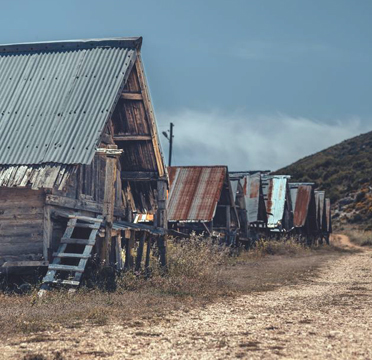
Photo by UMUT 🆁🅰🆆 at Pexels
| The
Colony Of Ten Houses Alexander da Silva Lima © Copyright 2026 Alexander da Silva Lima |
Photo by UMUT 🆁🅰🆆 at Pexels |
For me, there was only the colony.
Ten farmhouses lined up beside a dirt road, at the far end of the Pontal do Paranapanema, in the interior of the state of Sao Paulo, Brazil. From the outside, they looked almost the same, like sisters, but each one kept its own world behind the door. Ten houses. Ten families. Ten ways of crossing a day when the day came larger than the body.
From a distance, perhaps a person would have seen very little. Wood, dust, fence, yard.
Those of us who lived there knew better. Each house had its own way of staying upright.
Ours stood in the middle. Not by choice. It simply stood there.
At the back of the yard, the clay oven was where morning began before morning. The firewood cracked while the sun was still unsure of itself. The fire breathed low. My mother, Maria de Jesus, was already on her feet, facing the day before it had announced itself.
I do not remember her complaining.
I remember her silence.
It was the silence of someone who did what had to be done because there was no room not to do it. It was not submission. It was urgency. The world could wait for many things, but it could not wait for bread, clothes, fire, water, care. My mother seemed to know this with her whole body.
Now I know there was exhaustion there.
Back then, I saw only strength.
She worked the dough with a care that did not come from delicacy. It came from need. The bread came out hot, alive, sending its smell across the yard, telling us that we could still go on. I took it anyway, burning my fingers, broke it open, and spread it with Dona Nega's butter, thick and yellow, made at home, tasting of something true.
The butter melted fast. It sank into the soft middle. Sometimes it ran down my hand.
For a moment, everything seemed enough.
It was not.
But it seemed so.
And for a child, a few moments can hold up an entire morning.
Now I understand that it was not only hunger. There was also the rush to enjoy something before it disappeared. Many things disappeared quickly in the colony. Bread. Sugar. Afternoon. Money. The patience of adults. The childhood of some children.
The ten houses had nearly the same shape, but none of them sounded the same.
Music almost always came from Dona Marlene's house. Old country songs, long ones, the kind that seemed to tell the lives of people who also lived pressed by hardship but did not give in. The sound escaped through the window, crossed the yard, passed the clotheslines, the fences, the wind, and mixed with everything else: pans striking, children calling, chickens scratching, adults speaking in low voices.
There were houses of loud laughter.
Houses with doors half closed.
Houses where we knew, without anyone explaining it, that it was not a day to play out front.
Houses where lack arrived earlier.
Even so, no house was completely alone. If something was missing in one, someone found a way. If a little was left in another, it ended up being shared. A cup of sugar. A piece of burning wood. A little flour. A bit of news. Advice. A remedy made of plants and faith.
No one called that solidarity.
It was simply the way we kept going.
I did not feel poor.
I felt that I belonged.
The hard-packed dirt yard was my world. There I built castles, opened paths, raised crooked walls, traced roads that led nowhere and, for that very reason, led everywhere. My castles fell easily. I built them again. There was no grand thought behind it. No drama. There was play. There was life happening before it became an explanation.
The toys came from what was left over.
A twig became an ox, a bridge, a fence, a sword without war. A bottle cap became a wheel. An old oil can became a truck. A chayote became cattle on a farm. The long ones were skinny oxen. The small ones, calves. The crooked ones were the best because they looked wild.
I gave them names.
The bravest one, of course, was called Valente.
My grandmother laughed when she saw me defending a chayote from the pot. She said it was food. I answered that it was still grazing. She tried to keep a serious face, but the laughter escaped before the scolding. Valente won a few more minutes of life.
In those days, everything could become something else.
Maybe because almost nothing came ready-made.
A poor child learns early to invent a world from the leftovers of the world.
But there were days when the colony changed its tone.
I remember a long rain, the kind that begins early and seems to have no intention of leaving. The sky lowered. The yard turned to mud. The sand disappeared. What had been mine, suddenly, could no longer be touched. I could not run, build, invent oxen, roads, kingdoms, anything.
Childhood, which always found a way out, had no place that day.
I stood at the door and watched the rain strike the ground, undoing everything little by little.
My mother kept going.
Oven lit. Body bent. Hands working.
The house seemed smaller that day, but also fuller. The smell of bread grew stronger because of the cold. Rain on the roof spoke with the crackle of firewood. I held the hot bread in my hand and looked outside without knowing exactly what I felt.
I only knew that something was being taught, though no one was giving a lesson.
Maybe it was on a day like that that I learned, without noticing, that life does not always let us go outside. Sometimes it closes the door, cuts off the yard, dissolves the ground. What remains is what we manage to keep inside.
When the rain passed, the yard was no longer the same.
Neither was I.
Even so, there was beauty.
I never forgot the silk floss tree.
When it began to release its white fibers, the sky changed. Those white tufts came down slowly, turning in the air, and to me that was snow. Real snow. I ran through the yard with my hands open, believing with my whole body.
It was not cotton.
It was not fiber.
It was not seed.
It was snow.
And that was enough.
Now I know the correct name. I know the tree, the fiber, the thorns on the trunk, the difficult bark. But the correct name arrived too late to defeat the boy who saw snow fall in the Pontal do Paranapanema.
The tree enchanted, but it also wounded. It was tall, beautiful, impossible to embrace without care. Maybe that is why it still teaches me. Life there carried the same mixture: thorn and wonder in the same body, hardness and surprise sharing the same shade.
Not all beauty arrives clean.
Some of it comes scratching.
My father's name was Joao Lima Filho, but almost no one called him that. In the colony, he was Picote.
Even he did not know exactly why.
He used to say the nickname came from fourth grade, from a teacher who began calling him that. Perhaps because he turned in his assignments with the perforated edges still attached to the paper, those little white teeth clinging to the margin, showing hurry, carelessness, or the poverty of school supplies.
No one knew for certain.
He did not seem eager to explain it either.
In the Pontal, a nickname could be born from almost nothing and stay forever.
Picote.
A short name, easy in the mouth, used more than the name he received at baptism. Joao Lima Filho was the name for documents, church, registry offices. Picote was the man of real life. The one who arrived with mud on his boots, silence in his mouth, and a tiredness that seemed to come from long before that day.
I do not know when a nickname stops being a joke and becomes a destiny.
Maybe it happens when the person answers to it without surprise.
My father was hard to summarize.
He worked a lot, spoke little, drank more than he should, and carried a sadness inside him that I understood only much later. As a child, we see the gesture before we understand its source. I saw the hardness. I saw the silence. I saw the way he came home tired, with weight on his shoulders, as if something had become trapped in him between the fields, the road, and the house.
Today, when I return to him through memory, I try not to make an easy judgment.
My father was a marked man. Marked by work, by poverty, by alcohol, by a life that did not always offer him the chance to handle gently what he felt. But he was also resistant. Stubborn. He took the blows of the world and remained standing, even if bent.
Sometimes he sat without saying anything. He ate slowly. Breathed deep. I stayed nearby, waiting for some word that perhaps would never come.
Now and then, he placed his hand on my head.
It was little.
It was a lot.
There were men who loved like that, with a heavy hand and a closed mouth. Men who did not know how to apologize, did not know how to explain fear, did not know how to call tenderness by its name. Still, they left something behind. A confused mark. A mixture of pain, respect, and belonging.
My mother was the other side of the house.
Maria de Jesus did not need to take up space to hold everything together. She did it in silence. The day began in her. In the fire she lit, the dough she worked, the clothes she washed, the plate she divided. She was one of those women who seem smaller than they are because they never announce their own strength.
Only later did I understand her size.
My mother came from a line of women torn from one place and forced to grow roots in another. Marias on pau de arara trucks, the hard wooden benches that carried poor migrants across Brazil. Marias with little bundles. Marias with children on their laps, faith in their chests, and a courage no one called courage because, for the poor, courage is often mistaken for obligation.
I come from those Marias.
I also come from Dona Martha.
My maternal grandmother had hands that never left me. Hands of cotton, crochet, spinning wheel, pots, mending. Hands worn down, but not defeated. When I was a boy, I liked to watch her work as if I were witnessing something sacred without knowing it. She took the rough thing and made shelter. She took scraps and made use. She took thread and made time.
Dona Martha had almost no schooling. She knew how to write her own name, and that was already a great deal within the life she had been given. But her hands knew what no notebook could teach. There was in them an old intelligence, a science without a diploma, the kind that does not enter books but keeps entire families standing.
Sr. Oliveira, my maternal grandfather, appears in my memory like a deeper root. The kind we do not always see, but know is holding something up. Not every memory comes as a complete scene. Some arrive as fragments. A name. A presence. A silence. A way of being at the origin.
We do not begin with ourselves.
It took me time to understand that.
Before I was Alexander, teacher, writer, grown man trying to organize his own story, there were Joao Lima Filho, Maria de Jesus, Sr. Oliveira, Dona Martha. And before them, other names the land swallowed without asking permission.
There was drought.
Road.
Migration.
Farm.
Cotton.
There were people working too much so that one day someone might be able to write.
At school, I did not know any of that yet.
The school was made of wood. Simple, almost like the houses, but inside it the world tried to grow. The floor creaked. The blackboard carried old marks. The chalk left white dust on the fingers of Professor Luiz Antonio.
He taught as if he were planting.
Perhaps he did not know what he was doing for us. Or perhaps he knew, and that was why he insisted so much. He spoke of letters, numbers, places, maps. I listened and sometimes got lost. The world of school was hard. It demanded an attention the tired body did not always have.
But something there called me.
A map, to me, was never just a drawing.
It was a promise.
It showed that there were places beyond the dirt road, beyond the farm, beyond the ten houses. Later, when I became a Geography teacher, I realized that perhaps I had spent my life trying to put on the map what never appeared there: the colony, the women at the oven, the men with mud on their boots, the children in oversized clothes, the old people with nicknames, the workers with no portrait.
But before that, there was work.
Early.
Too early.
I began working when I was ten.
Ten.
There are numbers that do not count age. They count theft.
Part of my childhood was stolen on the farms. Those farms that swallow a boy and return a tired man before his time. Places where the child of the poor learns early that the body is useful, that wanting gets in the way, that play is a luxury for those born protected.
I went.
I went because, in certain places, life does not wait for a child to finish being a child. It calls. Or pushes. Almost always, it pushes.
The body learns first. It learns weight, sun, dust, obedience, the fatigue that arrives before night. Only later does the mind understand that this was not normal, only treated as if it were. Many unjust things survive like that.
Disguised as custom.
I studied at night because the day was not mine.
The day belonged to work, to the boss, to tiredness, to need. Night was what remained for me. So I went with it. Sleepy, afraid, in simple clothes, with burning eyes. I went with my soul dirty with humiliation and a stubbornness that may have come from my father.
I do not tell this to ask for pity.
Pity makes things smaller.
I tell it because there are stories that, when they are not spoken, keep working inside us. I tell it because I know that many children also had their childhoods made smaller by work, hunger, shame, and adult necessity. Some of those children grow up without ever managing to explain what was taken from them.
I grew up trying to explain.
Then came college.
Me, of all people.
The boy who seemed destined for nothing, sitting in a place where the world, without needing to say it, had already warned him he did not belong.
And I was frightened.
Not by the world. By myself.
It is frightening to discover that a chain can break. Frightening to realize that destiny also lies.
For a long time, I wrote hidden even from myself. I wrote, but I did not call myself a writer. I thought a writer was someone else. Someone from another house, another childhood, another social place.
I was a teacher.
A worker.
The son of Maria de Jesus and Picote.
The grandson of Dona Martha and Sr. Oliveira.
The boy from the colony of ten houses.
But the word remained.
It remained like the smell of bread on clothes. Like dried mud on a shoe. Like white fiber caught in the air before falling.
I began to show my writing when I was fifty.
Before that, I wrote hidden even from myself.
It was not shame of the word. It was shame of believing the word could be mine.
My writing was born there, even if I noticed it late. It was not born clean. It was not born tame. It was not born to please a salon. It was born from what stayed trapped in my throat.
I write because there is an old cry looking for a way out. Because some of the dead still speak inside me. Because the excluded also have a right to beauty. Because misery cannot be the only biography of the poor.
Writing is my denial of what they said I was.
And it does not belong only to me. It belongs to those who came on the hard benches of migrant trucks. To those born in wooden houses, on beaten ground, with walls without luxury. To those who worked too early. To those who studied too late. To those who were beaten by life and, even so, did not learn to hate.
I write for God.
But not with clean hands.
I write with hands of earth, chalk, callus, fever. With the hand of the boy who could not play. With the hand of the man still trying to forgive. With the hand of the teacher who learned late that his voice could also be a form of resurrection.
Today, when I write, I do not want to turn pain into decoration. I also do not want to erase beauty in order to prove suffering. One thing does not cancel the other. In my childhood there was lack, yes. There was shame. There was early work. There was fear.
But there was also hot bread.
Music crossing the yard.
A neighbor sharing what little there was.
June bonfires.
A teacher planting letters.
A silk floss tree making it snow where it never snowed.
Maybe overcoming is this.
Not forgetting.
Not denying.
Not allowing the story to be told only by the part that wounded.
The colony of ten houses stayed in the past. It stayed in that poor past of beaten ground, simple clothes, and divided bread. But it did not remain as pure sadness. For the child I was, there were more happy days than sad ones. There was laughter, invention, belonging. There was that possible happiness childhood makes even when life is narrow.
Because a child, before learning to measure the world with someone else's ruler, finds wholeness where an adult sees only lack.
In my dreams, the colony of ten houses is present.
It wakes before the sun with my mother at the oven. It breathes wood smoke. It listens to the music coming from Dona Marlene's house. It keeps my father arriving with mud on his boots. It lets Dona Martha pull the thread slowly. It opens the dirt road for boys to run. It lights the June bonfires. It releases the white fiber of the silk floss tree over my head.
There, I am still a boy.
With dirt on my feet, my hand lifted to the sky, and the old certainty that it was snow.
Today I know it was not.
But I also know it was.
Because there are truths childhood invents, and adult life does not have the right to correct them completely.
Perhaps the houses have changed, fallen, been rebuilt, been forgotten. Perhaps the road is different, perhaps the brush has retreated, perhaps no one knows exactly where childhood began and necessity ended.
But in me, it still stands.
Each house with its smell.
Each door with its voice.
Each family with its way of resisting.
And I still come from there.
I am Alexander, Alex, Lequito.
Son of Maria de Jesus.
Son of Joao Lima Filho, Picote.
Grandson of Sr. Oliveira and Dona Martha.
Geography teacher.
A late writer, perhaps.
But late only to those who believe the word has a proper age to be born.
I was born in that colony.
The writing came later.
Or perhaps it had been there from the beginning, in the hot bread, in the mud, in the creak of wood, in the distant music, in my mother's hand, in the impossible snow of the silk floss tree.
Maybe
it only took me fifty years to hear it.