From My
Village To The Great Wall Of China: A Journey That Changed My Worldview
A
True Story of Discovery, Friendship, Innovation, and the Beginning of
an Entrepreneurial Journey
Umedjon Amoni
©
Copyright 2026 by Umedjon Amoni
 |
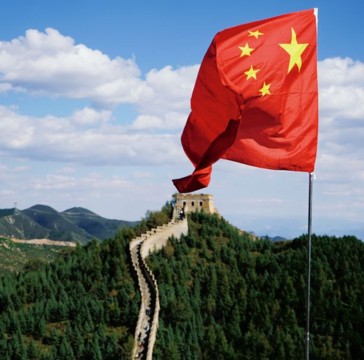
Photo by Xiaodong Zhang at Pexels. |
Tajikistan
— 2026
Some
journeys end when an airplane lands, yet continue to unfold
throughout a person’s life. They remain in the memory, take root in
our thoughts, and gradually become decisions that shape our future.
For me, such a journey was my first trip to the People’s Republic
of China. It was more than an opportunity to visit another country.
It was the moment when the world stepped beyond the boundaries of my
imagination and became a living reality.
It
all began with an achievement. I had become a winner of an
international science olympiad for young people in Tajikistan.
Following this accomplishment, an opportunity arose for me, as a
young journalist, to travel to China as part of an international
programme. My journey lasted from September 20 to October 15, 2023.
For someone who had grown up in a remote village in Tajikistan, this
opportunity meant a great deal. Until then, I had mostly encountered
foreign countries through books, films, and photographs. Now, I had
the chance to compare what I had imagined with what I could see and
experience for myself.
On
September 20, seventeen of my friends came to Dushanbe Airport to see
me off. Their faces were filled with smiles, and their words carried
the warmth of genuine friendship. As I said goodbye and took my first
steps towards the aircraft, I felt an unusual mixture of excitement
and happiness. I was excited because I was embarking on a distant and
unfamiliar journey, and happy because my dream of discovering the
wider world was finally coming within reach. When we leave familiar
surroundings, we do more than cross geographical distances; we also
step beyond the boundaries of our habits and assumptions.
My
first evening in Hangzhou left a lasting impression on me. China is a
country where an ancient historical heritage exists alongside rapid
technological development. Tall buildings, digital lighting systems,
advanced transport infrastructure, and the fast pace of urban life
gave me the feeling that the future had already arrived. In such an
environment, it is difficult to remain a mere observer. You begin to
compare, ask questions, and search for the reasons behind what you
see. As a young journalist, I paid close attention to how urban life
was organised, how technology was used in everyday activities, and
how people approached their work. Every observation led me to another
question: What could I learn from this experience, and how might
those lessons be adapted to the realities of Tajikistan?
One
of the most memorable and meaningful moments of my trip was seeing
the President of China in person at an international event. Being
present in such an international setting helped me understand that
participating in global affairs is not simply a matter of pride. It
is also an opportunity to learn, broaden one’s perspective, and
develop a stronger sense of responsibility. The experience reminded
me of the importance of looking beyond assumptions, observing reality
directly, comparing information, and drawing conclusions from what
one actually sees.
Yet
the most breathtaking part of my journey was visiting the Great Wall
of China. Until that moment, I had known this extraordinary landmark
only through the pages of books and the images I had seen. Standing
before its immense stone structures and looking along the seemingly
endless path winding across the mountains, I found myself overwhelmed
by the scale of what lay before me. I began to think about the
millions of people who had worked to build and maintain this
remarkable structure throughout history. How much knowledge, labour,
organisation, and determination had been required to create a
monument that would continue to capture the world’s imagination
centuries later?
For
a young person who had travelled from a remote village, seeing the
Great Wall carried a special meaning. My initial amazement soon gave
way to deeper reflection. I did not want to take a few photographs
and leave with nothing more than a pleasant memory. I wanted to find
a lesson in the experience that I could apply to my own life. The
Great Wall became a symbol of perseverance. It reminded me that great
achievements do not happen overnight. They begin with a single step,
with the laying of the first stone, and they require patience,
determination, and continuous effort.
Another
important part of the journey was meeting people from different
countries and forming new friendships. I became acquainted with young
people from the Netherlands, Munich in Germany, Indonesia, and Saudi
Arabia. Our group leader was Jeremy Walker from the Philippines,
whose organisational skills and warm manner made a positive
impression on us. Travelling alongside Parviz, whom I knew as the
head of sports television in Tajikistan, was also a memorable
experience. We shared time on the airplane and at the hotel. Our
conversations during periods of waiting and our everyday interactions
in an unfamiliar environment reminded me of the profound truth behind
a Tajik proverb: “You truly know a friend when you travel
together.”
These
encounters allowed me to discover the world through people. I came to
understand that cultural and linguistic differences do not have to be
insurmountable barriers. Mutual respect, sincerity, and a genuine
willingness to understand one another can bring people from different
continents closer together. Each person had a different background
and a different perspective, yet we could still learn from one
another. Our conversations showed me that the world becomes more
understandable when we approach it with curiosity rather than
prejudice.
Even
discovering Chinese cuisine became a way of learning about the
country’s culture. Tasting different kinds of noodles, Chinese
dumplings, and steamed dishes was more than a culinary experience. It
helped me recognise that culture is not confined to historical
monuments, museums, or architecture. It is also present at the dinner
table, in daily habits, in traditional food, and in the ordinary
routines through which people express their identity. Sometimes,
understanding a country begins with something as simple as sharing a
meal.
As
a young journalist, I was particularly interested in opportunities
for youth development and the media. My exposure to digital platforms
and media workspaces in China encouraged me to think about the
opportunities available to young people in the regions of Tajikistan.
I began to consider how young people living far from major cities
could gain access to practical knowledge, modern technologies, and
professional guidance.
These
reflections inspired an idea that I called the “Mobile Youth
Laboratory: Tajikistan to the World.” The concept was to create
opportunities for young people in rural communities to learn digital
journalism, information literacy, artificial intelligence, and online
entrepreneurship. The aim would be to help them turn their ideas into
practical projects, regardless of where they lived or what resources
were available to them.
I
believe that talent is not limited by geography. A young person in a
remote village may have an excellent idea, a strong work ethic, and
the determination to succeed, yet lack access to the tools and
knowledge needed to put those qualities into practice. Bringing
training and digital opportunities closer to such communities could
help bridge that gap. My experience in China encouraged me to think
not only about what I could learn for myself, but also about how
knowledge gained abroad might benefit others at home.
Of
all the encounters during my journey, however, one conversation had a
particularly strong influence on my professional and entrepreneurial
ambitions. I met a young Chinese man named Moniko. His innovative
thinking, independent approach, and way of conducting business
impressed me deeply. We talked and exchanged experiences, and I paid
close attention to how he worked and used digital opportunities. What
struck me was not simply what he had achieved, but the way he
approached possibilities and turned ideas into action.
As
I listened to him, a simple but powerful question arose in my mind:
“If he can do it, why can’t I?”
That
question stayed with me. It challenged the limits I had placed,
perhaps unconsciously, on what I believed was possible for someone
from my background. I realised that success did not begin with having
every resource or knowing every answer. It began with being willing
to learn, experiment, and take the first step. Inspiration would mean
little, I understood, unless I turned it into action.
After
returning to Tajikistan, I decided to put what I had learned into
practice. I began a small trading business, selling goods and
gradually connecting this activity with online sales and digital
technologies. Step by step, I explored ways to use digital tools to
reach customers and develop my work. Today, this business generates
approximately $600 in monthly income.
I
do not consider that figure the final measure of success, nor do I
claim that my journey to China alone created the business. Building
something of one’s own requires effort, learning, patience, and the
ability to adapt. Nevertheless, the trip gave me an important source
of motivation and helped me see entrepreneurship from a new
perspective. What had once seemed distant or difficult to imagine
became something I could begin pursuing myself. The business
represents an important first step towards greater professional
independence and financial self-reliance.
My
experience in China taught me that innovation does not necessarily
begin with expensive equipment or substantial financial resources.
Often, it begins with a different way of thinking and the willingness
to try a new approach. Technology can create opportunities, but
people must recognise those opportunities and have the courage to use
them. This lesson has continued to guide me as I explore digital
tools, online commerce, and new ways of developing my professional
skills.
Since
that first journey, I have also travelled to Turkey, Uzbekistan,
Korea, Russia, Kyrgyzstan, Kazakhstan, Iran, and Belarus. Each
country has offered new experiences and lessons. Every journey has
added something to my understanding of the world and of the people
who inhabit it. Yet my first trip to China holds a special place in
my heart. It was the journey that first helped me move beyond the
limits of my previous assumptions and gave me greater confidence in
my professional ambitions and entrepreneurial potential.
Travel
has a long and respected place in Tajik literary tradition. The
Safarnama of Nasir Khusraw, the celebrated eleventh-century Persian
poet and traveller, demonstrates how personal observations made along
a journey can become a lasting source of knowledge for generations.
His work reminds us that travel writing is not merely a record of
places visited. At its best, it is an account of how encounters with
the world transform the traveller’s understanding of it.
My
own journey taught me a similar lesson. The greatest distance we
travel in life is not necessarily the geographical distance between
two countries. It may be the distance between the way we thought
yesterday and the way we understand the world today. A journey can
change the questions we ask, the possibilities we recognise, and the
choices we make when we return home.
When
I left Tajikistan in September 2023, I was a young journalist from a
remote village, eager to see a world I had previously known mainly
through books and images. When I returned in October, I brought back
much more than photographs and memories. I returned with new
friendships, a broader perspective, ideas for youth development, and
the determination to explore entrepreneurship for myself. The Great
Wall had shown me the power of perseverance, my international friends
had expanded my understanding of other cultures, and my conversation
with Moniko had encouraged me to turn inspiration into action.
I
have come to believe that we do not need to change the whole world to
begin changing our lives. We need to be willing to see the world more
closely, learn from the experiences of others, and take a meaningful
step in our own communities. Sometimes, a journey that begins with an
opportunity to visit another country becomes the starting point of a
much larger journey within ourselves.
For
me, that journey began in China, beneath the vast horizon of the
Great Wall, and continued when I returned to my own country. Its most
important destination was not a city or a landmark. It was a new
understanding of what I might be capable of achieving—and of what I
might one day help others achieve, too.
*****
Umedjon
Amoni is a young journalist and entrepreneur from Tajikistan, based
in Dushanbe. His interests include digital technologies, the use of
artificial intelligence in media, online entrepreneurship, and
initiatives that expand opportunities for young people.
(Unless
you
type
the
author's name
in
the subject
line
of the message
we
won't know where to send it.)
*****
If the
link to the letter doesn't work you can copy
and paste in this address: preserve@storyhouse.org
Book
Case
Home
Page
The
Preservation Foundation, Inc., A Nonprofit Book Publisher