Tamila Bahshieva
© Copyright 2026 Tamila Bahshieva

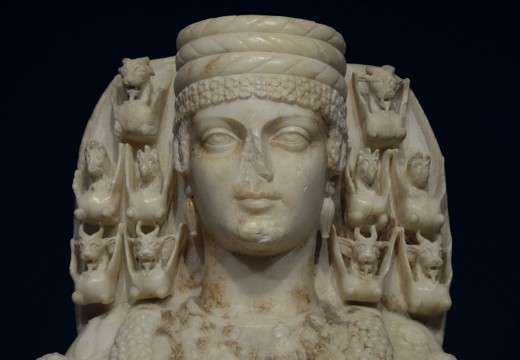
Photo by Carole Raddato at Wikimedia Commons. Artemis of Ephesus, Ephesos Museum
| Ephesus:
The Whisper Of The Goddess Tamila Bahshieva © Copyright 2026 Tamila Bahshieva |
Photo by Carole Raddato at Wikimedia Commons. Artemis of Ephesus, Ephesos Museum |
I walked upon ancient ground, and the past slowly came alive within me.
Somewhere nearby, tourists chattered and guides called out, but I felt myself drawn ever onward, toward the place where ancient Ephesus still held the breath of its goddess.
At the entrance, people stocked up on water and sheltered their faces beneath broad-brimmed hats.
I entered Ephesus as though crossing the threshold of time.
Long ago, when building the temple, the architect Chersiphron had laid charcoal and sheep’s wool beneath its foundations, an ancient way of protecting the magnificent structure against earthquakes.
Herostratus’s fire, the raids of the Goths, and the passage of time slowly brought down one of the Seven Wonders of the World.
The ruins were silent.
Yet their silence was full of life.
I laid my palm against a cool stone slab, and it seemed that beneath my fingers I could still feel the distant pulse of the past.
Ancient Ephesus slowly rose before my eyes.
The marketplace hummed.
Craftsmen argued among themselves.
Poets recited their verses.
In the Great Theatre, where blood had mingled with sand, the crowd roared.
In the baths, people spoke of power and art.
1The hot air carried the sharp scent of sun-warmed laurel, while girls in pale peploses bore baskets of fruit to the goddess’s festival.
“Would you mind taking our picture?”
A stranger’s voice brushed the air around me, and the vision trembled.
But my thoughts were already returning to Her, the one whose name still sounded here almost like an incantation.
Artemis.
The Olympian Maiden.
Daughter of Zeus and Leto, born as her mother fled Hera’s wrath.
She was the first to see the light, and later helped her mother endure the final trials of her journey so that her brother, Apollo, could be born.
She was more than the goddess of the hunt.
She watched over all living things: women, birth, the moon, the earth.
And the very mystery of life.
According to ancient legend, one hundred and twenty-seven columns rose in her honor, each a gift from a king.
Sacrifices were offered to her, and hymns sung throughout the Hellenic world.
It seemed her name still lived in the hot air of Ephesus.
The museum greeted me with coolness.
In the half-light, the ghost of the city slowly stirred.
The screen went dark, and out of the darkness, in a cloud of smoke, She emerged.
The Ephesian idol.
Motionless as the pillar of creation.
Her chest was adorned with clusters of amber and symbols of sacrificial bulls.
A crown of stars rested upon her head.
A face that held neither tenderness nor cruelty, only infinite calm.
Time vanished.
My heart stood still.
And suddenly, in the goddess’s face, I saw my own reflection.
“You are Artemis.”
The whisper burned against my shoulder.
I turned sharply. Only the hem of a dark chiton flickered among the people before dissolving into the crowd.
By evening, Izmir had grown quiet, almost transparent.
Light slowly slipped from the houses, and somewhere far away a flute was playing.
Artemis had never disappeared.
She still speaks, through strength, through fear, through love, through memory.
And her voice echoes softly within me:
“I am in every woman,
in her light and in her darkness.
In every breath of living things.
I am the moon reflected in water.
I am the memory that cannot be erased.
I am the stars hidden deep within human hearts.”