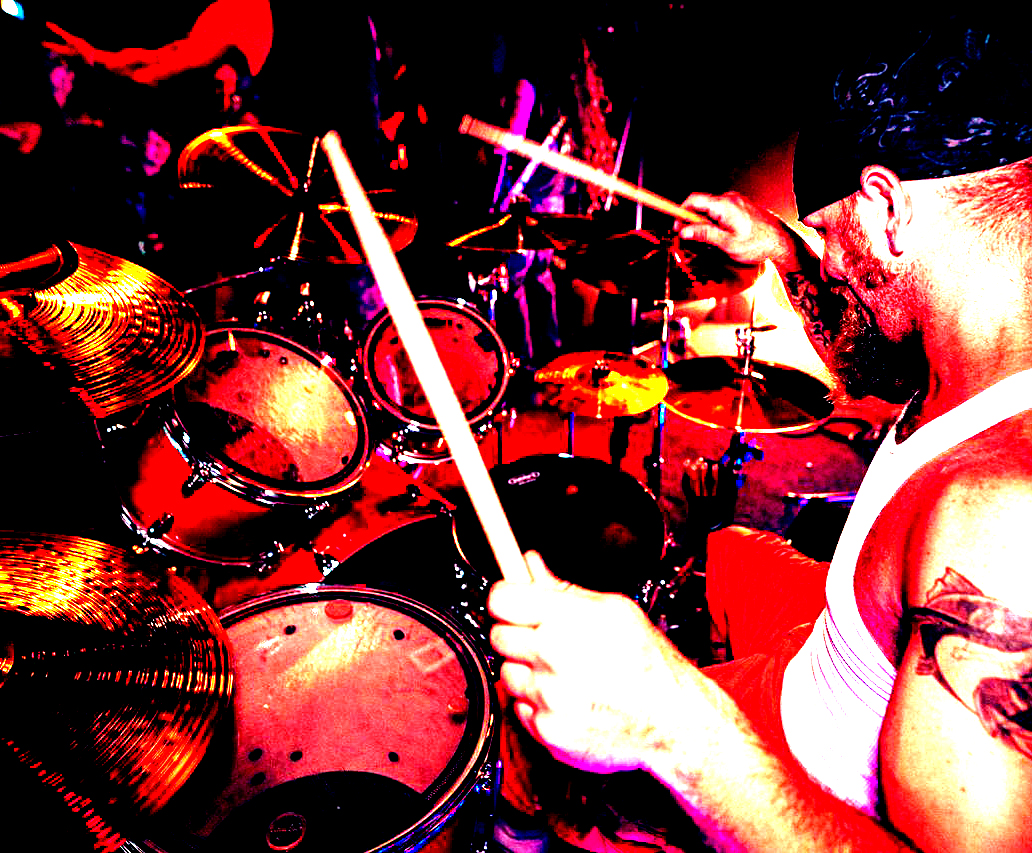
Bam Bam
Sylvia Adanna Eze

©
Copyright 2026 Sylvia Adanna Eze
|
Bam Bam
|
Bam. Bam.
The drums begin.
My fingers tap against the table. Then my foot joins in. My head starts moving almost without permission. Before I know it, my shoulders are swaying, my body is following the rhythm, and I'm standing there dancing.
I never made a conscious decision to dance.
The music made it for me.
That moment made me wonder: why am I always drawn to this kind of music? The songs with infectious beats. The high-energy tracks that make it impossible to sit still. The kind of music that doesn't ask for permission before taking over your body.
For the longest time, I assumed everyone experienced music the same way I did. Then I started paying attention to my friends and the music they loved. Some couldn't get enough of the trap. Others lived on R&B. Some loved pop, some orchestra, while others preferred gospel, Afrobeats, or other alternative music.
It reminded me of just how vast music really is. There isn't one type of music, there are countless genres, each connecting with different people in different ways. Music is universal. It crosses cultures, languages, and borders. It brings people together in ways that few things can.
I wrote in one of my previous articles; Does Every System Create People Underneath? On how I've always found it fascinating how entertainment often attracts more attention than science, even though I'm an engineer. The truth is that entertainment has incredible staying power. As long as humans exist, there will always be music, dancing, storytelling and problems to solve. Careers built around them are unlikely to disappear.
That got me thinking.
I'm not saying this theory is completely right, but it's something I've noticed.
I think our taste in music begins with our environment.
The place you're born in, the culture around you, your family, and the people you spend time with all shape the kind of music you naturally enjoy.
I was born in Nigeria, West Africa, so I grew up listening to P-Square and Afrobeats. Those songs were part of everyday life and parties. Then I got into high school, and my playlist slowly changed. I started listening to Western artists like Iggy Azalea, Ariana Grande, Beyoncé, Rihanna, and more. My environment had changed and so had my musical taste.
But it wasn't just school.
My family shaped my playlist too.
My mum loved Celine Dion and Michael Jackson, so naturally I grew up listening to them. My siblings introduced me to completely different genres. At one point, my siblings were obsessed with K-pop, Latin, Caribbean, and Brazilian music. They loved the energy, the rhythm, and the infectious beats that reminded them of African music. Before I knew it, I found myself listening to K-pop too, and gradually those other genres found their way into my playlist as well. They even got me into some rock music, something I never imagined I would enjoy.
It made me realize that when you love people, you often become curious about the things they love. You give their favorite songs a chance simply because they matter to you. Slowly, without even noticing, your musical taste expands.
Then there are life experiences.
Experience changes what we enjoy.
When people begin a new spiritual journey, many start listening to Christian music. When they're heartbroken or going through a difficult season, sad songs or love songs suddenly make more sense. The lyrics feel personal. The artist seems to understand exactly what they're feeling.
Likewise, when we're chasing a goal, we often fill our playlists with motivational songs. We want music that reminds us to keep going.
But I've noticed something interesting.
When something becomes excessive—or starts feeling impossible—and we no longer enjoy it, we naturally begin pushing away the music associated with it. We start looking for something different. Of course, if someone genuinely enjoys it or finds meaning in it, they're more likely to continue with it.
Think about motivational music. Listen to nothing but motivational songs when you are extremely disappointed for some time, and eventually they may start sounding repetitive or even frustrating. The same messages that once inspired you can begin to feel disconnected from your reality.
Perhaps that's because people don't just want encouragement—they also want to feel understood.
Take Nigeria, for example.
Many Nigerians live with daily stress, economic hardship, and uncertainty. Most people don't enjoy suffering. I remember one of my teachers saying that we shouldn't turn suffering into a competition or wear it as a badge of honor. Life isn't only about enduring hardship. It's also about finding time to rest, have fun, and enjoy the journey.
Long periods of hardship can change your mentality, your attitude, and even the things you enjoy activities that once brought you happiness may no longer have the same appeal. Of course, some people might embrace difficult challenges because they find purpose or fulfillment in them, but that is different, when the suffering that is forced upon you.
Perhaps that's why, after a long day or a difficult season, a lot of Nigerians don't want music that reminds them of their struggles. They want an escape. They want to dance. They want songs with infectious rhythms, even though their lyrics are not deep, but it allows them, even for a few minutes, to forget reality.
Maybe that's one of the reasons Afrobeats has become so powerful for so many people.
The beat itself becomes therapy, which is why knowing your audience or market in life is always important.
Now imagine a society where life is relatively comfortable. People there might not connect as strongly with purely upbeat songs. Instead, music that explores emotional struggles, relationships, identity, or personal conflict may resonate more because those are the challenges occupying their minds.
In other words, people often gravitate toward music that either reflects their experiences or offers them an escape from those experiences.
There's another side to this that I find fascinating.
Love doesn't only influence what we listen to.
Hatred does too.
I've experienced times when I disliked someone so much that everything about them irritated me—their voice, their opinions, even the music they recommended. I remember someone I strongly disliked suggested a song that everyone else insisted was amazing. I refused to listen to it simply because it came from them.
Eventually, after five different people recommended the exact same song, I finally listened to it.
It turned out to be a great song.
The problem was never the music.
It was my feelings toward the person.
That made me realize something important: we don't always judge music objectively. Sometimes we judge the people attached to it.
This reminds me of one of the principles discussed in Influence + Persuasion, Emotional intelligence series by Harvard Business Review Press. (All thanks to my mom, Mrs. Nkiruka Loretta Eze who bought this book as she believed it held powerful information). People are naturally persuaded by those that they perceive as being like themselves and in genuine praise. Similarity creates trust and openness.
When dislike or hatred enters the picture, we become resistant—not just to the person but sometimes to everything associated with them. Their recommendations lose credibility before we've even considered them.
It shows how powerful love and hate really are. They don't just shape our relationships; they quietly shape our preferences as well.
There's another interesting thing I've noticed.
Occasionally, I find myself wondering why orchestral music isn't as popular today as it was during the time of the great classical composers. Was it simply something about human nature that constantly pushes us toward discovering something new?
Then it dawned on me that we value things based on how common or rare they are. Sometimes, when something is everywhere, we stop appreciating it. On the other hand, when something feels rare, unfamiliar, or difficult to access, our curiosity grows. We want to experience it for ourselves.
I also think our beliefs play a role. When we believe in a cause, a movement, or a way of life, we naturally gravitate toward music that reflects those beliefs. Music isn't just something we hear—it often becomes part of our identity.
The same idea might explain why songs sometimes become successful far beyond the countries where they were created. Part of that success comes from similarity. People recognize emotions, rhythms, or experiences they relate to, even if they don't speak the language. But once a song becomes popular in a new culture, people often remix it, sample it, translate it, or even create AI versions of it. It's almost as if they want to make the music feel a little more like their own.
I don't know if these observations are completely right, and I'd be interested in hearing arguments against them. But I find it fascinating how our environment, our experiences, our relationships, and even our psychology quietly shape the music we choose to love.
Looking back, I realize my playlist gives a glimpse of my life and the person that I am.
It reflects where I was born, the people who raised me, my friends, my siblings, the goals I chased, the difficult seasons I survived, and even the people I loved—or didn't.
These days, I try to keep my musical taste balanced. I'll happily listen to pop, R&B, gospel, K-pop, or even rock from time to time.
But if you ask me where my heart is, I'll always come back to African music—especially the songs with irresistible rhythms that make you dance before you've even thought about it. Songs like Jason Derulo's and DJ Goya "Mi Chico”, Yemi Alade’s Johnny, Tems songs, even the African version of pop western pop songs, which are impossible for me to sit through without moving.
Maybe our taste in music isn't as random as we think.
Maybe every playlist is a biography.
A collection of our environment, our relationships, our experiences, our emotions, and the person we're slowly becoming.
Contact
Sylvia
(Unless
you
type
the
author's name
in
the subject
line
of the message
we
won't know where to send it.)
The Preservation Foundation, Inc., A Nonprofit Book Publisher