
Traveling Through USSR During The Cold War 1979


Scot Walker


© Copyright 2026 by Scot Walker
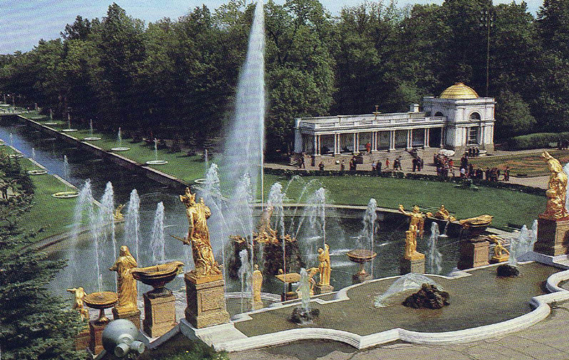
Photo courtesy of the author.
July 7 Leningrad, summer palace of the tsars. Photo courtesy of the author.
I have traveled to over 100 countries—and some were more spectacular than others. This trip to Communist U.S.S.R was marvelous as much for the sites we saw as for the Russians we met and even more for the thirty men and women in my group—with whom I became life-long friends. One of them worked on the Manhattan Project but had to keep silent and the truth was only admitted to me by his widow after he died. Another was a pilot who once had his plane hijacked, another was a Campell Soup Company retiree, yet another owned the Acme Stove Company where I live here in Washington, DC. Well the list went on and on and to my knowledge I am the sole survivor. The entries below are from my diary and are thoughts as I journeyed through that part of the world 47 years ago.

July 2 Monday. I left DC for NYC and started my flight to USSR. I met the other 29 members of my group along with Nick, our contact, who would get us through our pre-approved entry into that dark unknown world. He gave several warnings one of which was not to drink the water in Leningrad—another was that we would be shepherd and watched 24/7 everywhere we went and that we were to stay in our group and let him know immediately if we felt uncomfortable or threatened, etc. Nick’s speech was more threatened and unsettling than helpful but we all bucked up and settled down for our flight across the Atlantic.

July 3 Tuesday. Moscow. We landed at Sheremetyevo Airport had a chance to meet each other—and as one of the few single tourists I set out to learn everyone’s name and something about them. Happily, they all soon became my fast friends. I learned everyone’s names and I’m sure no one else did.

[Editor’s note, June 3, 2000—I still write to Doris, Morris, Jan, Peter, Clark, Eva and Jim. We discussed a 20th reunion in 1999. Editor’s note August 6, 2010. To my knowledge all are dead now. Toward the end of his life, I discovered that Jim had worked on the Manhattan Project.]


Shortly after landing, we went on the city tour and I met our guide, Tanya. We stopped several times and looked at the Kremlin from the Moscow River. We also saw the Presidium on the Square of Ivan the Terrible. Then we drove by the Bolshoi Theatre and Congress. We stayed in the Peking Hotel after Tanya first took us to the wrong hotel. She told us that the tour agency made a last-minute change in our schedule. This was to be a recurrent problem during our 3-week stay, but with a decade and a half teaching experience in three different schools with seven different grades for me to teach and more subjects than I have time to delineate, last minute changes never bothered me—I guess I’m getting flexible in my old age! The Peking Hotel was a tall ugly building, but it seemed that all the buildings in Moscow were tall and ugly so it really didn’t matter. I slept well.


July 4 Wednesday. Moscow. We entered the Kremlin through the Borovitsky Tower. The Kremlin walls and their 20 towers served as a strong defense line against invaders. The walls are 15 to 42 feet high and 10 to 20 feet thick. St. Basil’s is inside the Kremlin. We stood outside the Supreme Soviet and noticed that although it has 3 rows of windows, it is really just a two-story building. It was built that way to fool the eye of the casual visitor. It was formerly called the Grand Kremlin Palace. The reception to mark the victory over Nazi Germany was held here in 1945. Yuri Gagarin received his Gold Star as Hero of the Soviet Union here in 1961. We saw Cathedral Square, which is the oldest square in Moscow; its foundations were laid out in the early 14th Century. Ceremonial processions were held here when the tsars were invested and crowned. Then we toured the Kremlin and Red Square which fronts the Kremlin. In 1156, Prince Yuri Dolgoruky started the Kremlin by ordering a wooden fortress to be built on Borovitsky Hill. The fortress was razed in 1238 during the Tartar invasion, and the Kremlin’s wooden walls offered no defense. Later, two cathedrals were built there: The Cathedral of Archangel and the Cathedral of the Assumption. The oak walls were replaced by white-stone walls with towers in 1367-8 and Moscow began to be called White-Stone. In 1485-95, during the reign of Ivan III, the wall of white stone was replaced by new brick walls and towers—and these are still standing. In 1713, the capital was moved from Moscow to St. Petersburg and the Kremlin became the temporary residence of the tsar’s court where Russian tsars were crowned. In 1812, Napoleon’s armies marched into Moscow and were quartered in the Kremlin for 34 days—and they left the city aflame—basically destroying everything I their wake. In March 1918, the Soviets moved the government back to Moscow from St.. Peter’s (then known by its Russian name of Petrograd.) We also saw the outside of the Cathedral of the Assumption—the main church of the Kremlin, which was built in 1475-79. It’s currently under renovation. We passed by the Tainitsky Tower and Kutafya Tower. Then we walked by the Palace of Congress and Troitsky (Trinity) Tower and Nicholas Tower before walking to the Cathedral of the Twelve Apostles, which was built from 1635-56. I saw the world’s largest cannon and the world’s largest bell and visited Lenin's Tomb luckily our guide knew a tour-guide’s trick and showed us that the line looked like it stretched a mile but it went around a corner for a forty or fifty feet before entering the tomb—so we joined the line there and entered within a few minutes—where a short man shushed us motioning for us to be respectful. We left the Kremlin through the Kutafya Tower. In the afternoon, we took the Moscow River cruise, sailing past the Kremlin. In the afternoon, we went to Novo Devichy, a castle and cathedral on the edge of the city of Moscow. I am so happy to have a guide who knows the system—I can’t imagine what it would be like to try to tour Moscow on our own-let alone take the adventure I’m about to enjoy!

DAY 3—July 5 Thursday. Moscow/Leningrad. I slept like a proverbial rock and was somewhat relaxed (but anticipatory) as we boarded our flight to Leningrad where we stayed in Hotel Leningrad. The room had the best view! I was on the side facing the River Neva and saw the ship, Aurora, which was where the sailors who led the Revolution were stationed. I could also see the entire Winter Palace, known as the Hermitage. I took several photos from my window.

DAY 4—July 6 Friday. Leningrad. We visited Smolny, the headquarters of the October Revolution, then went to the Admiralty and I took pictures of various street scenes. I walked along Heroes Avenue admiring the Heroes’ Monument (a structure like the Washington Monument but not as thick or tall) and later toured and photographed St. Isaac’s Cathedral. Then, I walked along the embankment and stood at the Neva River, overlooking the beautiful city.

Every Russian I met spoke some German, but they also hated the Germans because everyone had lost relatives during the war. Then I visited the Hermitage, where Morris Katz spent the afternoon because he kept lingering behind the group admiring of all things, the pictures of the cats—I told him about my cats Merryweather and Intrepid but it look me a double-take before I realized his interest in the cats was a lot more than in his love for animals—Morris’s last name is KATZ. We lolled and loitered as the rest of the group flew through the gallery. And later, we walked over to the Aurora, where the Russian Revolution began. I sat there underneath a cannon as Morris took my photograph with our hotel in the background. What a marvelous morning and afternoon! After lunch, we visited St. Basil’s Cathedral, the Peter and Paul Fortress—which was a jail but is currently used as mint. I also visited the officers’ quarters in the Fortress of Peter and Paul and saw the Tomb of Peter the Great. Vince, our American tourist with a Polaroid, met a small group of women who were breaking up some large rocks. He took their pictures and gave them to them. He had friends for life and the women ended up hugging him and hanging on to him as if he was the kindest man in the world. (This was just one of the examples of the many times I saw one or more of our group doing things for the Russian people. We gave them Kennedy coins, spoke to them as often as we could, and gave them other gifts. And we even learned how to say YELLOW BLUE BUS (which sounds like the Russian words for I LOVE YOU.) It seemed as if there was a great friendship bond between us and the Russians. I don’t know why.)

July 7 Saturday. Leningrad. In the morning we went to Lake Ladoga and saw the Broken Ring Monument—the Ice Road started here—the furthest penetration the Germans made into Russia. Ironically, the Russians had buried the Hermitage art treasures in the exact spot on which the Germans camped, but luckily, the Germans were clueless. In the afternoon, we took the hydrofoil to Petrovorets, the tsar’s summer palace. The weather was overcast and the clouds burst just as we started our tour. I, ever the intrepid traveled, changed shirts in the bus and was okay. After the short storm, the sun came out and the rest of the day was beautiful, and turned into one of the highlights of my trip (Editor’s note, August 6, 2010, and one of the most memorial days of any of my travels). We saw the great palace, the great cascade, sun fountain, Roman fountains, Sampson fountain, fountain of the trees, nymph fountain, pyramid fountain, Eve fountain, sheaf fountain, Neptune fountain and the chessboard cascade. We returned by bus to Leningrad. In the evening, we saw Medea, by Euripides at the Lenin Opera House. I sat in the orchestra.

July 8 Sunday. Leningrad. I had had enough of traveling with a group and decided to go out on my own to meet the people and to practice my limited Russian so I took Metro and met people while the rest of the group went to the exhibition area. Leningrad is a city of many bridges. I walked across several, including: Losonosova, Dvortsovy, Anichkov and Ushakovsky I took the metro to the next stop and went out among the people—I rode on both lines. I saw the Nara Arch which celebrates the victory over Napoleon. In the evening everyone in my group told me how much they missed me. They had gone to an exposition and said it was fantastic. I told them I had just relaxed—I was too exhilarated to tell them of my personal victories, of traveling alone, reading the Cyrillic alphabet, talking to the people, and even ordering lunch on my own. I slept well.

July 9 Monday. Leningrad/Tbilisi. We flew Aeroflot, “the official Olympic airlines,” on our entire journey—today’s flight, however, was not good. We had to wait on the plane almost the whole day. Jim, a US pilot, said it was because the Russians didn’t want us to fly over land in daylight—they were afraid we would take photos. How paranoid! I took my shoes off and relaxed and a stewardess told me to put my shoes back on—she was shocked that I had removed them. I made a motion to put them back on, but left them off.

[EDITOR’S NOTE: June 25, 2001. I NOW REALIZE THAT THE RUSSIANS SUFFERED BECAUSE THEIR FLIGHT WAS POSTPONED BECAUSE OF US.]


We reached Tbilisi, Georgia in the evening.


July 10 Tuesday. Tbilisi. I celebrated my birthday in Tbilisi Georgia. My local guide gave me a copper cup [EDITOR’S NOTE: I HAVE IT AS OF Ocrober 20, 2025]. In the morning, we visited Mtashminda Cathedral, which was built in the Eleventh Century. Later we stopped at the Metekhi church, which is located in the ancient capital, Mtsheta. Then we stopped briefly at Trakaisky Castle We also visited a small architectural village outside Tbilisi, with models of dozens of houses from various regions. We got to walk inside each one and see them as they were. I was somewhat disappointed because they weren’t furnished—but it was still very interesting and, I am told, it is the only example of regional buildings in that part of the world. In the late afternoon, we went on an optional cable car ride to the top of Mt. Mtatsminda. The view was fantastic—the city is quite narrow and hugs a river—but it spreads out over several miles. There was an amusement park at the top and I was amazed to discover that the Georgians didn’t crash their bumper cars into each other like we do. They rode them around in a big circle. I don’t know if they were less aggressive than we are, or if they just wanted to know what it was like to drive—either way, it was amazing! The Georgians were the only people, by the way, who still kept Stalin’s memory alive. They had statues in his honor since Stalin was a Georgian. I was very impressed with the kindness, generosity and love of the Georgian people. They also were quite cool in an unstable time. They kept their own religion (Orthodox) and their own language. They seemed to believe the adage that they would send their tax money to Moscow and do their own thing.

[EDITOR’S NOTE: June 25, 2001 I IMAGINE THEY HAD LITTLE PROBLEM SEPARATING FROM USSR WHEN COMMUNISM FELL!]


July 11 Wednesday. Tbilisi/Tashkent Our group had a good sense of “oneness” and I started the habit of hugging when we arrived at each airport. Soon we were all hugging each other—before breakfast and dinner, when we were boarding planes, etc. It felt good to treat people as if we were arriving and being greeted by the locals. At least I felt that way about it. I developed several really close friends and still write to them.

 [EDITOR’S NOTE: JUNE 25, 2001: THIS IS STILL TRUE, 22 YEARS AFTER OUR TRIP. I STILL WRITE TO JIM AND EVA AND TALK TO DORIS KATZ. INDIRECTLY I AM IN CONTACT WITH LOIS AND HER HUSBAND BECAUSE THEY CORRESPOND WITH JIM AND EVA. INDIRECTLY, I AM IN CONTACT WITH JOANIE BECAUSE SHE WRITES TO DORIS. JOANIE GOT DIVORCED ABOUT 10 YEARS AFTER OUR TRIP. EDITOR’S NOTE, August 6, 2010 UPDATE OCTOBER 20, 2O25—I BELIEVE THEY ARE ALL DEAD NOW. I WAS ONE OF THE YOUNGEST IN THE GROUP..]


We flew to Tashkent and went on our city tour. Tashkent is extremely hot—but it’s in the middle of the dessert so it’s not humid. We saw a wedding party at Lenin Square. There was a long fountain in the center of the square. Later, I rode the subway several times. The subway was about the coolest place in town! Because of the lack of hotel space, I had to share my room with Joe, a 70-year-old, who had retired after working 45 years at the Campbell Soup Company. He knew every recipe! Tanya, our tour guide, apologized but said that there wasn’t anything she could do about it—she promised a refund when I got home [like I really believed in the Easter Rabbit!] It was hotter than hell in our little room and there was no air conditioning, so I dragged my mattress out onto the balcony and slept there. Joe tried to talk me out of it, but I’m me and I did it anyway. Several of my fellow tour group members dropped by that evening and saw my mattress out on the balcony. They, too, told me to drag it back inside, but I didn’t. I slept well—even though it got very chilly by early morning.


July 12 Thursday. Tashkent. First thing in the morning, the maid entered the room. When she saw my mattress on the balcony, she made a hand movement to ask who did it. I didn’t speak enough Russian to tell her what I had done but by my actions I admitted that I had. She paused for a moment and then rushed toward me, hugging me like a big mother bear. At breakfast, I asked Tanya about it and she told me that all the natives dragged their mattresses outside in the evening—it was just too hot inside and as a matter of fact, it saved countless lives during an earthquake because everyone slept outside when the buildings collapsed. That night, of course, everyone in my group followed suit, dragged their mattresses out onto the balconies and slept outside. We had a big breakfast and then headed out on tour. I saw a canal and watched the children play in it. Later, we visited downtown civic area and saw the outside of the opera house. I went out on my own a little and spent some time in the cool subway.

July 13 Friday. Tashkent/Bukara/Samarkand. We left Tashkent early and landed in Bukara where we visited the Ismail Samanid Mausoleum, completed in the 9th Century in the reign of Ismail Samani, the most illustrious Samanid ruler. The figured brickwork, the only decoration, offers a constantly changing pattern. From afar, the textures of the brick walls look like woodcarvings. The keynote is natural harmony based on scientific calculations and a regular system of balancing proportions. Then we visited the Kalyan Minaret, which was built in 1127. It’s made of baked brick and is the symbol of Bukhara. It’s 50 meters high and is known as the “Tower of Death” because the Moslems used to cast infidels from the tower onto the rocks below. We also visited the Chor Minor. Then we drove to Samarkand, where I stayed in the Samarkand Hotel and took some fantastic photos from my hotel window—I could see at least a half dozen mosques.

After lunch, we went back on tour and saw the Madrasah of Shir Dar, Tillya Kari Madrasah; Madrasah of Ulgbek and the famous Mosque of Bibi Khanum. According to legend, Bibi-Khanum, Timur’s favorite wife, wanted to have this mosque ready for him by the time he returned from a military campaign, but the architect who was building it, fell in love with Bibi-Khanum and began a work slowdown until she would let him kiss her.

[EDITOR’S NOTE:IN 2008 I VISITED THE PART OF INDIA TIMUR CONQUERED AGRA.]


Bibi Khanum finally relented in order to finish the mosque before her husband returned, but the architect’s lips left a permanent imprint on her cheek. When Timur returned, he confronted his wife who told him the story, but as soon as Timur tried to kill the architect, he was swept away to heaven by the angels. Unfortunately, the Mosque of Bibi Khanum began to crumble and decay as soon as it was built and today is more of a relic than anything else. This was because of its size and because of the incessant earthquakes. It was once ranked as among the grandest mosques of the Islam world. A formal decision has been adopted to reconstruct this monument to its former status.


July 14 Saturday. Samarkand. First we visited the Registan—a lovely mosque surrounded by roses. The Registan is the central square and the heart of old Samarkand. The name itself has come to personify things of beauty but in bygone times it just meant “Sandy Place.” The Registan’s complex of monumental structures is a classical example of the town-building art of the past. It three madrasahs of Ulugbek, the Shir Dar and the Tillya Kari, were built in the 15th and 17th centuries and were the alma maters of many famous poets and scholars of the East. Then we visited the Statue of the Wise Poets near Registan. Then I went to the market and bought a pound of pistachios. Later, we visited the Shah-I-Zindeh, a lovely mosaic encrusted mosque. It had the typical three-onion shaped dome. We visited the Guemir Madrasah and the Shai-I-Zinden. The Shah-I-Zindeh is the site of the miracle of the resurrection of the body and the spirit of the nephew of Mohammed. It stands on the south-eastern side of Afrasiab mound, the town-site of early Samarkand. Its chain of small ornamental mausoleums—eleven in all—date from the 14th and 15th centuries. Not one of Samarkand’s monuments can rival the mausoleums of Shan-I-Zindeh in subtlety, refinement and variety of form. I saw natives and took several pictures. I also saw an Islamic teacher teaching the children about religion, but when I mentioned it to my day guide, he acted as if he was going to turn the man in so I accidentally (on purpose) forgot where I saw the teacher. I visited the Tomb of Timur (Tamerlaine). It’s made of black marble and Timur’s tomb is at the foot of his teacher, who is buried under a slab of white marble. I also saw the mausoleum of Gur emir, which is the largest Islam theological school in the world. It was built in 1404 during the reign of Timur. Legend has it that Timur, dissatisfied with the height of the mausoleum, gave orders to destroy it and to raise another one within two weeks. The builders, under pain of death, worked day and night and managed to cope with this task. The Mausoleum ultimately became the tomb of Timur and his family. In the afternoon, we went to the countryside in Uzbek to Tadznik and saw the children riding their donkeys.

July 15 Sunday. Samarkand/Tashkent/Irkutsk. We wasted most of the day flying. The planes couldn’t hold our entire group when we left Sarmarkand, so we had to split in two. We were warned that we could drink the water or eat the fruit but we were not to do both within 2 hours of each other—otherwise we’d get sick. Everyone followed their advice. I stayed at the Intourist Hotel in Irkutsk—and had a lovely view of the river. The town was very typical of Siberia—with huge walls and shuttered windows to protect the houses from the winter.

July 16 Monday. Irkutsk. We saw typical Siberian houses and saw the oldest church in Siberia, the war memorial and the opera house. Later we saw tomb of Yurmak, who discovered both Siberia and Alaska. In the same cemetery, we saw a fantastic tombstone. It was of a tree with all the branches cut off; it seemed that the man had no heirs so he wanted the world to know that his family tree ended with him. We also visited a functioning church although most of my group wondered if it was “for show” or for real.

July 17 Tuesday. Irkutsk/Lake Baikal. We took a boat cruise of Lake Baikal, the oldest and deepest lake in the world. We also saw several beautiful villages along the shore. In the evening, we went to a performance of Gayna by Khachaturian at the Opera House. I sat in a box seat. It was the worst ballet I had ever seen and I joked to my friends that that was what happened when you were a bad artist: you were sent to Siberia. No one thought it was funny, but the performance was awful. I don’t think most of the group had ever gone to the theatre or they would probably have walked out—it was that bad. We were charged transportation to the theatre but after we found that it was only 3 blocks for the hotel, we all complained. We thought that the Russian tour agency was trying to rip us off. Tanya said that there were a lot of elderly people in our group and she didn’t want us to walk the dark streets at night. We all agreed however, that we had walked miles and went out most evenings so we never quite figured out the logic of having to take a bus for 3 blocks. In retrospect, I’m sure that Tanya was looking out for us—she assumed that we had deadlines to get to the show on time and she was also concerned that we might get lost getting back to the hotel. I’m sure she also didn’t want us to travel through the city unescorted, but that’s another story.

July 18 Wednesday. Irkutsk/Tashkent/Moscow. Today was another long nearly wasted day as we flew back to Moscow. On the way I met Angela Davis who had just received the Lenin Prize. She gave me her autograph. I didn’t recognize her, of course, but others in the group did. Angela was flying first class in our plane.

July 19 Thursday. Moscow Midway through our dinner, Tanya came running in to announce that she had tickets for us to see the Moscow Circus. At first I didn’t want to go—I was hungry and didn’t realize how hard it was to get the tickets. Tanya corralled us all, put us on the bus, and even though we got there late, I enjoyed it like I haven’t enjoyed many other performances in my life. It was certainly the most amazing circus I’ve ever seen. There was just one ring—but it seemed the action never stopped. There was a long sequence when a clown came out and spoke for what seemed like hours, but there were jugglers, bears, and other attractions—truly fantastic! I looked at my watch and realized I’d been there for over three hours and it seemed like mere minutes.

July 20 Friday. Moscow. In the morning, we rode the Metro and I took several pictures. Artists have decorated each of the stations with mosaics or paintings and the stations were lovely.
 
Then we went to the Armory where I saw a statue of the tsar’s cannon, a statue of Yermak who discovered Siberia, and fine statues of ballerinas, horsemen and horses. Later, several of us went shopping at the Friendship Store, but we didn’t see anything worth buying—the quality was bad and the prices were high. We also walked to the Rossaiya Hotel—to see what first class was all about. That night we enjoyed the Intourist banquet at the Kalinin Prospect.

July 21 Saturday. Moscow. In the evening, we saw a performance of the Beryozka Ballet. At one point, the women were dancing in long flowing gowns on the stage. All of a sudden, several dozen men sprang out from behind them, as if they had been hiding under their gowns. It was awesome! I don’t think I’ve ever seen anything quite like it. I had heard for years that the Russians were the greatest dancers in the world—now I was a believer!

July 22 Sunday. Moscow/NYC I flew home. We left Sheremetyevo Airport and flew on Aeroflot to New York.


Contact Scot
(Unless you type the author's name
in the subject line of the message
we won't know where to send it.)
Scot's story list and biography

Book Case

Home Page

The Preservation Foundation, Inc., A Nonprofit Book Publisher