The Visit That Never Ended
Raul Guzman
© Copyright 2026 by Raul Guzman
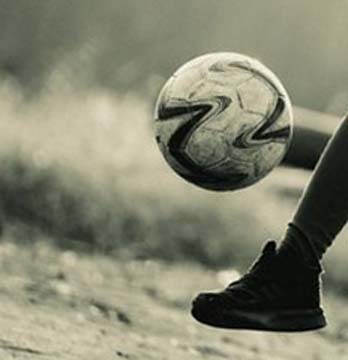
Photo by josh dago at Pexels.
The Visit That Never EndedRaul Guzman © Copyright 2026 by Raul Guzman
|
Photo by josh dago at Pexels. |
When I was 9 years old, my family and I left Mexico for what I thought was just a trip. I have since fallen in love with learning and exploring.
In 2019, I was nine years old, and my family was going on a trip. “Es solo un viaje,” my parents used to tell me. A few days before we left, my mother packed one suitcase for me and one for my sister, Rocio, who was eight years old at the time. Though I had no reason to, I counted my shirts the night before we left. Eight shirts. Eight shirts is not forever, I told myself. Eight shirts means we are coming back.
In my carry-on blue backpack, I carried 2 books, a bag of Picafresas, and my stuffed animal, “osito”. I’d told everyone I was too old for this, but for this trip I couldn’t bring myself to leave him behind. While parents carried the nerves and the documents, my sister and I carried the excitement because, to us, this was an adventure.
The flight from La Barca (a small rural area in Mexico) felt endless. On the way, my sister and I took turns at the window and made up stories about what we would find. From movies, we had built a picture of the United States in my head: enormous cars, skyscrapers, and everyone smiling; the American dream. When we landed at O'Hare Airport in Chicago, the first thing I noticed was how big the airport was. The airport was bigger than my whole neighborhood. Then I noticed how everyone walked fast and talked fast, and none of it sounded like the broken English I had practiced.
My dad taught me a little English. I could say, “My name is Raul. I’m 9 years old. I like soccer.” I was proud of those sentences, but by the time we finished the drive from the airport to the apartment, I could only remember how to say them, and instead my dad taught me on the first day how to say “ I don’t know English”. Little did I know, but these words would mark me for the next few years. The first instance of that showed as soon as we arrived at the apartment and my dad’s cousin asked me, “ What’s your name?” I panicked; it was the first time someone was asking me something in English, and for a second I couldn’t remember how to say “I don’t know English.” In the end, I remembered and said, “ I don now inglish”. The broken English that came out of my mouth was hardly English. As my face turned red hot, my dad answered for me about my name.
The next day, we drove around town in a car that smelled like pine trees and French fries. It was spring, and the air felt like nothing I had ever felt before. In Mexico, the air was so dusty you could see the dust floating around when the sun was up, and it smelled like a farm. Here, the air felt thin, and instead of dust, you could see smoke under the sun. That might be the explanation why it smelled like I had just been rolling coal. Little did I know the difference between the air was only one of many differences.
Back in Mexico, our street was never quiet. Someone was always calling from a window, a neighbor was always stopping by, and a radio was always playing somewhere. Here, the street was empty. The houses stood far apart, and nobody came outside. My sister and I pressed our foreheads against the window, and she whispered, “Where is everybody?” I didn’t have an answer.
The food surprised us, too. We got to eat pizza and burgers, as expected, but nobody had warned me about the cereal aisle, a hundred boxes with cartoon characters on them, or about the cups at restaurants being filled so much with ice that they seemed to hold more ice than drink. Peanut butter and jelly on the same sandwich seemed to me like a terrible mistake when I tried it. And I missed tacos from the street vendor so much that my stomach ached. Regardless of my personal likings, I realized that there were levels to something as simple as supermarkets.
A few weeks into our trip, my parents decided my sister and I shouldn’t sit around all day. “Just a little school,” my mom said. “Just while we’re here.” Just while we’re here. I hung on to those words like a rope. My first day at Grant Elementary, I thought I would feel butterflies in my stomach; instead, it felt like it was full of bees. My teacher, Ms. Sylvia, stood me in front of the class, and twenty-two faces turned to look at me. A little boy in the front row waved and asked me something. I caught only the last word, “You”. To this day, I don’t know if he asked “How are you?” “ Who are you?” or something completely different. I smiled and nodded. He looked confused.
Recess, my favorite part of the day back in Mexico, was the hardest part of the day. Kids ran in groups, laughing at jokes I couldn’t understand even if I tried my hardest. I stood near the fence, kicking at the wood chips and pretending to be busy. I told myself, “It doesn’t matter, we’d be home soon anyway.” Being unable to speak is a strange kind of loneliness. In Mexico, I was the funny kid; but here, I was the quiet kid, the kid people spoke to so slow and loud they made him felt like an outer space creature. At home, though, I wasn’t alone. Every afternoon, my sister and I sat on the couch and compared notes, a secret club of two. “I understood three words today,” she would whisper. “I understood five,” I’d answer, trying to one-up her, and we’d both laugh. She was my only friend for a while.
That changed thanks to soccer eventually. One afternoon, a few boys were kicking a ball around, and it rolled toward me. Without thinking twice, I stopped it with my foot, flicked it up, and passed it back. I realised I had passed it back to the boy who had waved on my first day, Sebastian, who raised his eyebrows. “Whoa,” he said. I understood that word. He pointed at me and then at the field, and I joined the game. I was overjoyed! For soccer, we didn’t need words. Instead of prepositions, there were tackles; instead of verb conjugations, there were passes; instead of sentences, there were goals. My team won the game, and for the first time since we landed, I feel like I had a small victory. That night, I told my parents, “I made a friend.” My dad hugged me so tightly I still remember 7 years later.
I can’t tell you the day our trip stopped being a trip. Nobody announced it. Nobody was talking about staying. It was quieter than that. First, the date we were supposed to fly home came and went incalculable times, and nobody mentioned it. When I asked why we hadn’t gone back, my mom said, “The tickets cost too much right now,” and I nodded because that made sense. Then the next fall, my sister and I went back to the same school, and a teacher slowly started saying our names a little more correctly. “Just for another year, “ my dad said, “the more you study here, the better.”
Other things changed, too, in ways I only noticed later. My dad started coming home and talking to my mom about what dream zone they would like to live in; it was always an American town. My mom began learning the bus routes, then the names of the neighbors, then which grocery store had the best onions. One day I opened my dresser and saw that my mom had finally unpacked my suitcase. I stared at the eight shirts, now sharing space with clothes I had never owned in Mexico. Most of them were too small anyway.
I stopped saying “when we are at home” and started saying “back in Mexico.” I didn’t decide to do it. One day, I just heard myself and felt a little dizzy, like I had stepped off a moving treadmill. Nobody ever told me our trip was over. Silently, I just realized it had been a long time since anyone had talked about going back.
Nobody tells you how a new place doesn’t become a home all at once. It slowly transforms. It came the day I understood a joke before anyone translated it, and laughed at the right moment. It came the day Ms. Sylvia returned my essay with a note that said, Wonderful work, Raul! It was the first day I dreamt in English. All of this slowly made me realize small things I liked. I liked the rumble of the school bus in the morning. I liked guzzling food down during Thanksgiving. Incredibly, I started to develop a liking for peanut butter and jelly sandwiches.
When Sebastian invited me to his birthday party, I realized I was standing in the living room of someone I considered a stranger a few months ago, holding a gift, and realized I wasn’t a stranger anymore.
In 2020, my little brother Daniel was born. I was ten, holding a tiny person who had never lived anywhere but here. I started to wonder how life would have been different for me if I had been born here. My sister and I looked at each other over his head, and neither of us said what we were both thinking: there is a person in our family who wasn’t from Mexico.
In 2023, my baby sister Mariana arrived, and in 2025, my youngest brother Isaias followed. Now our house is loud in a way that reminds me of the streets in Mexico I thought I would never hear again. Someone is always shouting, laughing, or talking. The house now resembles part of my life in Mexico as a little kid; the three youngest will never stare at a customs officer and understand nothing. They won’t count shirts or press their foreheads against a window, wondering where everybody went. They will grow up speaking English and Spanish without thinking about it.
I won’t lie and say it was easy. Even now, there are days I miss aspects of Mexico- the jolly sounds and the delicious food, for example- and I feel caught between two worlds. 7 years later, I still switch languages when I’m excited or angry. But I’ve learned that a place can become yours without erasing the place you came from. Home isn’t bound to only a place on a map. Sometimes home can be any place that shapes who you are. I carry my two homes, Mexico and the US.
The funny part is that I can’t point to the moment it happened. There was no landing, ceremony, or stamp in a passport that said you live here now. One day I was a boy on a trip, and some day after that, I was a boy coming home from school, and I didn’t notice the change in between.
I think about that nine-year-old at the airport, clutching his blue backpack, believing he’d be back in a few weeks. He wasn’t wrong, exactly; he still guarantees everyone that boy will go back and visit eventually. He just didn’t know that “un viaje” can turn into a lifetime so suddenly that you only notice when you look back.
I never did use all eight shirts; I believe that, abstractly, the way I slowly and unintentionally didn’t use the 8 shirts is projecting the way “un viaje” slowly and unintentionally became home. But I’m still here, and so is my whole family, and I think that’s what home turned out to be.
Raul
Guzman was born in La Barca, Mexico, and moved to the United States
in 2019 at age nine. He is a student at IMSA (Illinois Mathematics
and Science Academy). He enjoys serving the community and talking
with peers. This will be his first published story. He lives in
Melrose Park, United States.