Priye Gift Johnson
© Copyright 2026 by Priye Gift Johnson
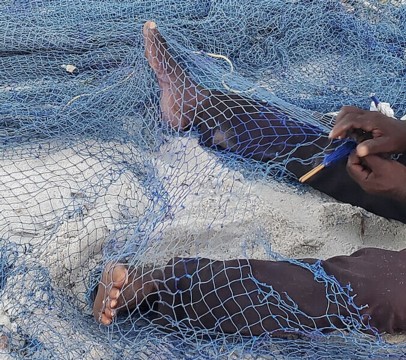
Photo by Godsplan jr at Wikimedia Commons.
| Child
Of A Troubled House Priye Gift Johnson © Copyright 2026 by Priye Gift Johnson |
Photo by Godsplan jr at Wikimedia Commons. |
My mother left us twice. The first time she came back. The second time, she didn’t and I have spent the rest of my life understanding why. Her name was Teide. She was not born into our family; she came into it the way widows in our community often did, inherited like a canoe or a fishing net when my biological father, Fewei, died and his younger brother Erefa took his place as her husband – and as father to me and my sisters. It was custom not cruelty that arranged it. My father had begged his brother on his deathbed, to look after us and Erefa had agreed. And for a long time, he kept that promise in his own rough way.
He loved my mother. She was his favourite wife, his “jewel”, he called her – and in his own way of telling, he loved us too. But love in that house was never far from his fists, and my mother had grown tired of both, tired of being beaten, and tired of a life she had never chosen.
We lived by the water, on a small island in Lagos stitched together by rivers and creeks, mangrove and a coconut plantation. Erefa was a Senior Navy Patrolman and a devout traditionalist, heir to a long line of juju worshippers who venerated the water spirits. His father had worshipped them, and his fathers before him, and Erefa expected his household to do the same. But the world was changing around him. A group of missionaries had come to the island talking about some deity called Jesus. One of them was young, fair-skinned and “sinfully handsome,” some women said, though not unkindly. And he was drawing the wives and children of the village toward his God and his black and white book.
Erefa hated that book. He hated what it was doing to his home, how it made his wives kneel to something other than him, and how thin his authority had begun to feel against it. It was this (the missionary, the Bible, the creeping erosion of his ancient traditions) that lit the fire on the afternoon everything changed.
Erefa was sitting on the floor that day, mending fishing nets, a cassette of his favourite Izon and Makossa records were playing low in the background – Senior King Robert, Barrister Smooth, Koffi Olomide, the songs he loved best. My mother had come to him about the pastor demanding an extra day each month for vigils, and what had begun as a request quickly curdled into an argument neither of them meant to have.
“I thought we had already given him a Sunday and Wednesday,” Erefa said. “Why does he need more?”
“For night vigils, Papa,” one of his sons muttered, not looking up.
Teide pressed on gently, she thought asking only that they be given the same room to serve their God that he gave himself to serve his own. But Erefa heard something else in it — disrespect, in front of his children. He warned her to hold her tongue. She didn’t. And when his other wife, Ndutimi, added her own quiet defiance saying that “our husband is obviously going mad again”, something in him broke open.
I was eight years old and I do not have all the words for what happened next, only the shape of it, the sound of it, and the way it lives in my body still date. He beat her. Not a slap, not a single blow struck in anger and regret but a long sustained violence that left Ndutimi fleeing the house with her baby strapped to her back and left my mother alone with him. He kicked her, struck her, dragged her half-clothed across the unfinished corridor floor of the backyard, while the music kept playing, indifferent, almost mocking underneath it all.
I remember running outside and seeing her body still on the ground. I remember snatching my baby brother, Pade, away from the crowd so he wouldn’t be trampled, and I remember screaming her name – Teide, Teide, Eyin! – while the women of the village poured water over her and tried to call her back from wherever she had gone. Erefa stood apart from it all, at first still shouting orders, insisting she was only pretending, that she would soon come to. It took a long time before shame reached him. When it finally did, he wept, and carried her inside himself, and begged her forgiveness. She forgave him. Or she said she did.
The chief, Amadiwei, and the elders had already once before talked her into staying, into believing that a marriage, however violent, was still worth keeping whole for the sake of her children. She stayed. But something in her head had already started walking away.
Years passed. I grew into an adolescent, and Teide grew more restless, though I did not understand it then as restlessness. I understood it as betrayal. She told me, quietly one afternoon, that she meant to leave again, and this time she meant to take my younger siblings with her. I refused to go. I told her I loved my father —my uncle-turned-father —more than she could understand. I told her about the life we had built together; fishing the creeks for tilapias and croakers, climbing coconut and ebelebo trees, gathering periwinkles from the marsh to sell to the traders in town, cutting mangrove firewood, walking bush paths, swimming until the tide or his long bamboo cane called us home. I told her about school, about friends, about a life I did not want to lose on her account. I did not tell her that I was afraid of losing her more —that fear was easier to bury than to speak.
“You are a fool if you don’t come with me,” she said.
“I insist. I’ll stay back.” I told her, and I meant it, though it cost me something to say it so coldly.
“Then when I leave, I’ll take your brother and sisters and go without you,” she warned. “One day, you’ll come looking for us. Mark my words child.”
I told her I never would because I didn’t believe her. Not really. She had left once before and came back; I had convinced myself this was simply how she spoke when she was angry, that the ordinary rhythm of our life would resume, the way it always had. I did not understand yet that a woman can love her children and still be unable to keep living the life those children were born into. I did not yet understand that her wanting to run was never really about us. It was probably something else setting her loose. Something extraordinary maybe.
It happened on a Friday. My step siblings and I came home from school to a house that felt strange —too quiet, too still —but nothing about it seemed alarming. We assumed our mother and the younger children had gone out fishing together, something they loved to do. Our father was away at his post in Ikoyi and wasn’t expected back until Sunday. So the afternoon passed as ordinary afternoons did —eating, playing, swimming —until dusk fell and it became impossible to explain why a simple fishing trip had swallowed an entire day. Amadiwei called a search immediately. Canoes went out toward Ologiyo and Ojoota, voices calling names into the dark water, and came back with nothing. There was no trace of them anywhere. No answer. It was as if the river itself had taken them and then I remembered her words. When I leave, I’ll take your siblings and go without you.
I ran inside to my mother’s room. It was empty in the particular way that only a deliberate emptiness can be —no clothes, no shoes, no photographs, nothing left of them at all, as if a hand had reached in and wiped the room clean the way you wipe a memory card. I understood, standing there, that I had been living inside her warning for weeks without recognizing it. The late night swims at low tide when they could have simply bathed at the house. The quiet, unusual bedtime, all four of them sleeping together in her room instead of scattering to their own. I had seen the rehearsal and mistaken it for nothing. Tears gathered in my eyes and I stepped away from the chaos that evening.
Later, words came that evening that Erefa’s canoe had been found abandoned near the waterside at Ojo township. My mother had taken my four younger siblings and disappeared, this time with no plan of coming back.
A Father’s Grief
My father came home on Sunday not knowing anything, carrying a sack of ripe mangoes from the dockyard for the children the way he always did. He waited through the morning for us to return from church, expecting the usual noise of his younger children running down to the jetty to meet the boat, racing home to eat mangoes and leftover bread and cakes he usually brought home from his job before the rest of the family arrived.
Nobody on the island knew how to tell him. In the end, it was Amadiwei, the pastor and the elders who gathered in our sitting room to break the news themselves, speaking to him in proverbs the way our elders do when the truth is too heavy to say plainly. The toad does not run in daylight for nothing; the tortoise carries its house because it fears what tomorrow may bring. Erefa did not understand at first. He asked after his wife, after his favourite daughter Tobo, growing more confused and then more afraid as the elders circled the truth without landing on it. When the young missionary finally said it plainly, that his wife had run away again taking the younger children with her, Erefa’s disbelief broke into something enormous and terrible. He swore, he wept. He turned on his older son, and my nephew accusing them of letting it happen, lunging at them with wooden stools before Amadiwei caught him.
I remembered him calling me forward in front of everyone asking whether he had ever been cruel to me, whether he had every raised a hand against me the way he had against the others, listing every kindness he believed he had shown me and my sisters as though a tally of gentleness could undo what the rest of the house had suffered. I could not answer him in front of that crowd. So I walked away, breaking under the weight of being made his evidence. He cursed my nephew Peter for not stopping it. He grieved my mother in the same breath he cursed her and Ndutimi (my step mother who had also run away the first time my mother did, although she never returned) calling on the names of his gods and ancestors, asking them why they had let this happen to him a second time as though her leaving was something done only to him and not to any of us.
The elders tried to calm him, tried to remind him that nothing he could have done would have stopped her, that whatever pain he carried, the children left behind were the ones who needed him most now. The last thing I remembered of that day was the record still turning on the player, a dirge drifting through the wreckage of our house, and Erefa sitting alone in it, a broken man surrounded by children who did not know, any more than he did, how to walk forward from there.
I did not see my mother again for a long time. So I built my understanding of her leaving out of anger first and only much later out of something closer to grace or fate. She was a woman who had been widowed young, inherited into a marriage she had not chosen, beaten more than once for defending her children or a faith that had given her something to hold onto when little else had. She ran, I think now, not because she stopped loving us, but because staying had become its own kind of dying, and she could not teach her children to survive by showing them a mother who had given up trying. I know sometimes she still harbor some regrets considering how life had turned for each one of us. If only she could turn back the hands of time, she could have stayed and endured, perhaps life would have been a lot easier for us now but then…
I chose my father because he was the only ground I had ever stood on, uneven as it was, I do not say this to excuse what he did to her, or to pretend that love and violence can share a house peacefully, because they cannot, and they didn’t. I say it because that was the choice a frightened girl made and I have had to live inside it ever since, the same way my mother had to live inside hers. I could say that we were, all of us, children of that house: some of us raised by a father who could weep with genuine remorse in one hour and raise his hand again in another; some of us raised, in the end, by a mother’s absence instead of her presence, which is its own kind of parenting, harder to name. And the rest of us, raised by an absent father whose love they immortalized through rebellion and juvenile delinquency. And yet some others by the reason of happenstances, were birthed and raised by men who loved and learned to kill for kids who shared only their DNAs.
I have often wondered why my father never went back for them as he did the first time, to bring back my mother and the kids. I have often wondered, in the years since, whether my mother ever thought of the daughter she left behind; the one who told her no, and meant it, and has spent every year since asking whether she meant it for the right reasons. I have often wondered why she would leave my abusive father only to be remarried to yet another bully who denied her children the rights to dream. But then, I like to think that she understood men too well and easily so that the need for comfort and security had become a love language that she had forgotten every time what it took her to speak it. I like to think that somewhere in that running and remarriages; there was room enough in her heart to outlive the dangers of emotional and psychological validations, to forgive a daughter who couldn’t run with her, and to forgive her even for daring to stay behind with the man who had started all this madness and her infernal troubles.
Somehow,
we’ve all survived it, each of us carrying our own version of that
Friday afternoon, the empty room, the dirge on the record player, and
the water that had once again taken someone we loved and given
nothing back. That very understanding of a woman who twice tried to
save herself, and in doing so, had taught all nine of her children
till date more about survival than she had ever meant to. This is the
story of my mother, Teide, the runaway.