"That's The Way I Want You To Die"


Morf Morford


© Copyright 2026 by Morf Morford
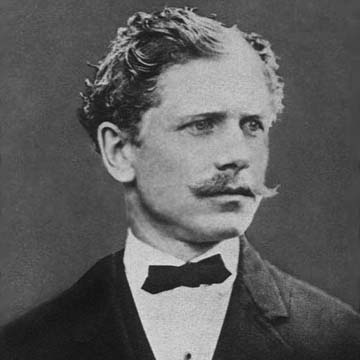
Ambrose Bierce.  From the website of the Clifton Waller Barrett Library of American Literature at Wikimedia Commons.
Ambrose Bierce.  From the website of the Clifton Waller Barrett
Library of American Literature at Wikimedia Commons.
 
“That’s the way I want you to die!”
 
Not your usual donut shop conversation….
 
That’s what my granddaughter gleefully said to me in my local neighborhood donut shop.
 
I don’t have a typical granddaughter – and I am not the typical grandfather.
 
Among other things, I seem to have lost my instructions regarding how one is supposed to act at any given age. Acting one’s age has always been a challenge for me. People speak as if there is a master list with details and criteria for each stage of life, but no one will share theirs with me.
 
In this particular case, a cheery exclamation about death, as with everything perhaps, context is everything.
 
I was picking her up after school in a neighborhood donut shop across the street from her middle school.
 
This was one of those places that had vintage hardback books lining the walls as part of the hands-on décor.
 
I was perusing the books as I waited for her.
 
As she came in, I pointed out a book of short stories by Ambrose Bierce.
 
To put it mildly, his stories are not for everyone. Most of them are notable for their unexpected – and often unsettling – conclusions.
 
The conclusion of his own life was as unsettling, ambiguous and uncertain as the endings of most of his short stories.
 
He was a contemporary of Mark Twain, among many other American literary figures. He, and his stories, were immediately recognizable.
 
Most people noted in history books have a parenthetical note of when they lived and when they died.
 
Not Ambrose Bierce.
 
Ambrose Bierce did have a clearly defined birth date, and place.
 
But his time – and location – of death were never confirmed. Or even estimated.
 
His last employment was as a reporter for a San Francisco newspaper.
 
In 1913, he went to Mexico to cover the various revolutions and uprisings there.
 
He never returned.
 
But he was reportedly seen in France shortly after 1913.
 
Or was shot by Mexican revolutionaries.
 
Or lost in the Grand Canyon.
 
Or married late in life and lived in deliberate obscurity many years longer.
 
You can see just a few of the conjectures and theories about his life here.
 
In short, no one seems to know for sure, or even approximately, where or when, or how, Ambrose Bierce died.
 
But yes, that is how I want to die.
 
Some people want a memorial – a gravestone or a monument, some kind of tribute.
 
I just want to be gone.
 
But not just gone.
 
I want to be gone in a temporary sense – or at least a seemingly temporary sense.
 
I would like to leave people I know with the sense that I could be almost anywhere -and might be back soon.
 
Graves, if nothing else, at least for our physical bodies, are too final, too certain, for me.
 
I have lived most of my life in a near total state of borderline uncertainty, and cannot imagine an afterlife much different.
 
I imagine those I know thinking, “He might be in China, or Jamaica or on one of the islands in the Salish Sea, or maybe teaching overseas, or on a tribal reservation, or panning gold in some isolated hills, or on a bike ride through some mountainous terrain. Or at a writer’s retreat. Or visiting a Trappist monastery. Or wandering the earth as an itinerant story teller and vagabond prophet, or at the bottom of an isolated, inaccessible cliff”.
 
Anything, that is, except a name on a stone with a beginning date and an inflexible end date.
 
My granddaughter saw that person.
 
Other people can have their memorials, or even their ashes scattered in their favorite parks. I just want to be gone; but gone in the sense that I could be walking around the next corner or just out of sight on some distant trail.
 
I don’t have a favorite place, or even the vision of a place of final rest.
 
And the thought of breathing my last breath in a hospital bed, with clean sheets and a patient’s gown, hooked up to various tubes and monitors is my worst nightmare.
 
Except that is not even nightmare, not a dream, not a possibility; I cannot even begin to picture it.
 
I know at least two people, born into cultures who do not track or value such things, who literally do not know their own birth dates. They have a general idea of the season and the year. But that is all.
 
And in their cultures, it is enough.
 
That is how I want my expiration date.
 
We are more than the dates printed on a form or engraved on a gravestone; we are more than our beginning and ending dates.
 
In that donut shop that day I learned something about myself that I knew but couldn’t put into words.
 
We all have beginnings, but not all of us have endings. Whether memories or grave stones – or unfinished stories - once here, we linger in all kinds of improbable places.
 
As I quietly told my granddaughter the story of Ambrose Bierce’s final chapter, over the hushed conversational buzz of the donut shop, she recognized immediately how I related to his undefined fate.
 
Her early teenage girl exclamation of “That’s the way I want you to die!” was as cheerful and upbeat as any end of mortality could, and should, be.
 
The surrounding conversations in the donut shop fell silent and we left without a word.
 
But I am convinced that more of us should end our lives with uncertainty, or at least refusing to surrender to the finality of those imprinted dates.
 
Breathing or not, we are unfinished, and, we could, after all, if not seen for a month or two, be on a secret assignment or impulsive vacation in France, Bolivia, The Mariana Islands, Portugal or across town.
 
I’ve always imagined myself, as the end approaches, taking a long bike ride into an untraceable wilderness, maybe alongside a vast and rushing waterfall, and never coming back.
 
But then again, I just might change my mind, go somewhere else, meet a Sasquatch, or find a local donut shop that needed a crazy story… 
   

Contact Morf
Unless you type the author's name
in the subject line of the message
we won't know where to send it.)
*****
If the link to the letter doesn't work you can copy
 and paste in this address: preserve@storyhouse.org


Morf's story list and biography

Book Case

Home Page

The Preservation Foundation, Inc., A Nonprofit Book Publisher