It's Not That Foreign
Mike Marks
© Copyright 2026 by Mike Marks
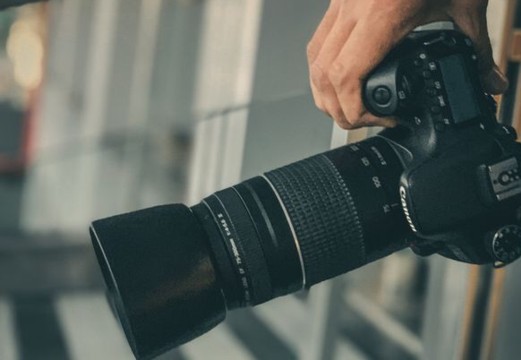
Photo by Anas Ahmed at Pexels.
It's Not That ForeignMike Marks © Copyright 2026 by Mike Marks |
Photo by Anas Ahmed at Pexels. |
I won the biggest prize Pier 1 Imports ever offered in the brutal winter of 1972, at the first store I managed. After my award, no colossal competitions were conducted. An outside consultant correctly convinced the corporate honchos that one champion produced hundreds— perhaps thousands—of losers. I terminated my employment from the company five years later. Nonetheless, fifty years after winning big, the corporation went bankrupt, shutting down its brick-and-mortar outlets throughout the world.
As a young couple with a nine-month-old boy, Anita and I were probably too young to fully appreciate our winnings. My regional manager tried to convince me to take cash instead. He was probably taking orders from upstairs. Whom could they get to run my store in central Michigan for three weeks while I was redeeming my reward for posting the largest annual sales percentage increase of the entire company of over two hundred stores? How would we feel about leaving our infant son for so long?
Even though neither of us had been abroad and didn’t know what it would be like in foreign countries, talking money instead of a trip to Europe wasn’t even considered. We packed our basic Kodak Instamatic camera, figuring we would buy a better camera across the Atlantic and dropped off our baby at his grandma’s house in Kansas. A day in New York City, then off to London, sightseeing from morning to night.
My blue-ribbon jackpot was an intense twenty-day visit for two to twenty-six cities in five European countries staying in the best hotels with lots of private tours. Our customized itinerary left only two evenings open. The travel service gave us bright yellow luggage tags so an employee could locate us to assist at hotels, airports, and train stations, ensuring our topnotch lodging or first-class compartment, or even just to help us change trains and buy us lunch. The lavish hotel chambers had original paintings on their walls, bidets, and fresh flowers alongside chilled champagne.
Our England guide said Germany was the place to purchase a camera. At our first dinner abroad, Anita ordered a chocolate milkshake. The London waiter put a small glass of hardly chilled chocolate milk on our table.
As we landed in Cologne late at night, we saw the humongous twin-spired Cologne Cathedral in the night sky. Arising early, we boarded a steamer for an all-day ride down the Rhine to Wiesbaden. Anita ordered something from the menu that sounded like a hamburger and received a delicious exotic creation. I ordered something with a long unpronounceable name and was served dry fish with bones. The hundred or so other passengers were all older, mostly Germans. We spotted another American couple, maybe a decade older than us. The husband held a fancy Rolleiflex camera with a long telephoto lens. He didn’t take photos, but often used it like binoculars, inspecting castles, vineyards, and other boats on the busy river.
Eventually Anita and I got acquainted with Ed and Sally. They were from California and had saved for several years to take this trip to Europe. They stayed in hostels and low-end hotels. Ed thought 35mm film was too expensive to waste on mediocre shots. With years of research, they were knowledgeable tourists. Anita and I had hardly been out of the Midwest. We had never thought about travelling overseas. We spent thirteen hours on that steamer, a break from nonstop tour guides and processing history lectures about New York and England. Unlike England, old castles built along the Rhine wear out, and are razed more often than restored.
On our first unscheduled evening, we met one of Anita’s college roommates and her husband, Mary and Bill, at the Baden Baden Kurhaus casino for dinner and gambling. Bill was in the army, stationed in Germany. I was placing small bets at a crowded blackjack table, trying to respond in German to the dealer. He misunderstood my attempt to say karte for halt. When I asked again, he angrily told me to speak in my native tongue. A bettor stood behind me waiting for an open seat at the table. In the meantime, he bet on my hand. I won eight times in a row, placing minimum bets each time. When he got a seat at the end of our table, he had forgotten about his stake on my cards, which compounded each deal. The dealer stopped the game to pass him his winnings from my spot, because the pile had exceeded the maximum table bet.
I plopped a couple of chips on the roulette table on the way out. They hit, enough to pay for all our dinners. Afterwards we window-shopped at the trendy resort shops. Clothing was intricately folded on display not only in the windows, but also behind the glass entry doors, a level of perfection I had never conceived. Local Germans told us we would get a lower price on a camera at our next stop, Switzerland.
Every day was a new town and a new grand hotel for us, sightseeing from dawn to dusk. I met a man about my age as we waited to board a funicular in Lucerne. The fellow traveler was from another part of Switzerland and knew only a little English. I told him how beautiful I thought his country was. I understood his response to mean that America was beautiful in so many ways. He gave me a new appreciation for my homeland. The cameras in the Swiss shops we entered were not discounted and much pricier than I expected. A clerk suggested that bargains may be had in Italy, where prices would be more negotiable.
We rode the famed Orient Express from Montreux to Milan, where an assistant from our travel agency helped us change trains. Two Italian ladies butted their way into our first-class private chamber, having reserved tickets that duplicated ours. Apparently, our seats were double booked. Soon after we were crammed together in the overcrowded compartment, the two intruders emitted tubercular sounding coughs until Anita I were expelled. We spent most of the three-hour trip standing in the windowless corridor.
From our digs in the ritziest hotel in Florence a Pier 1 buying agent took us on an all-day excursion. He drove us across the Arno River to a ceramic factory which made mugs that I sold in my store for a dollar each. I think they dug the clay from a pit beside the parking lot. He asked if we would like to see a higher quality ceramics factory. Anita jumped at the offer, and the manager of the upscale pottery gifted her a quality planter, but his products were way too expensive for Pier 1.
Then we had two days in Rome, two days of public bus tours of the Eternal City. As we waited, a street vendor hawked slides of the city in several languages. And wouldn’t you know, who was on that bus with us—Ed and Sally, our fellow river travelers from the week before! Our guide pitched the gelato on the upper level of the Colosseum. Traipsing past resident cats to get up there, we found him behind the counter scooping it out. Next stop was the Sistine Chapel, then Saint Peter’s Square in the Vatican. The Pope was a small figure in the upper window. I forgot to get a rosary blessed by the Pope for my Catholic stepfather.
That night was only the second with no itinerary. Ed and Sally invited us to their meager hotel near Vatican City to scrounge up a bread and cheese supper. It never occurred to us to host them at our five-star digs. Their room was modest, but close to shops. The four of us crowded into a small store where we picked out bread and cheese. The proprietor only knew a few words of English. Sally spoke a little Spanish. The shopkeeper inquired, “Americanos?”
We affirmed.
Next, he asked, “Californi?”
Both Ed and Sally lit up.
He brought out an envelope. The return address was a Torrance, California, address two blocks from the couple’s home.
Luckily the rosary vendor came in and interpreted. The store owner’s brother was Ed and Sally’s neighbor. Before we knew it, the store closed with the six of us sitting in the backroom drinking sugary homemade wine, eating bread and cheese, the best meal of our European adventure. The peddler sold me rosary beads that had been on his cart for two weeks, thus twice blessed by the Pope. He also told me that everything, including cameras, were priced lower in Spain, our final country.
Returning to Rome from the fountains of Tivoli late Sunday night, our tour guide insisted that we were in for a treat, a cameo factory. We were crammed into a pricey jewelry store. The proprietor gave a short, incomplete demonstration of cameo carving. We were tired and hungry, but our bus didn’t leave for another hour. Other passengers got bored enough to actually purchase baubles from this rip-off joint.
Even though we arrived in Madrid late at night, Anita and I were summoned at 7:00 a.m. by an elderly gentleman who sourced exported goods to Pier 1. He sped his little Seat, a Spanish car similar to a Fiat, by olive plantations on our way to Toledo. Inside the fortified city, he showed us an empty stall built in the city walls, explaining that it was formerly the site where the popular hand-crafted swords I had sold in my store were made. I sold every sword the Pier 1 warehouse allotted me. Looking out from the raised island town of Toledo, our sourcing man pointed out a desolate, large one-story building in the flatlands beyond. He told us that my company used to be their main customer when they were a small business, but dropped them when they tried to expand. Pier 1 refused to pay the higher prices they needed to support their new modern sword factory and directed him to locate another sword maker that was cheaper.
We walked through the El Greco Museum, a simple smalltown art gallery, then dined on roast suckling pig. The piglet was served whole, an apple in its mouth, its tail still attached, staring at us out of one dead eyeball. Anita and I were close to barfing, looking at the baby swine, but we toughed it out. It was scrumptious. Our Spanish guide returned us to our five-room suite after 5:00 p.m., giving us little time to freshen up before his son and wife picked us up for a second round of revelry. The affable couple, in their fifties, drove us to an opulent restaurant. Starting with aperitifs, then accompanying our three-hour meal were several other alcoholic beverages and bottled water, both plain and bubbly. From there they took us to a flamenco dance show where a dancer performed who was once the best in the land as we imbibed liqueurs. We were wined and dined until five the next morning. The husband told me that they went to the US to get their cameras.
By the time we retrieved our young son from Kansas and came back home to Michigan, we were exhausted, craving burgers and fries and time to slumber, dreaming to the clamor of our TV. A few weeks later my neighbor sold me his used Hanimex Praktica 35mm camera with a telephoto lens for a small fraction of the price of a new one. Like Ed, I quickly found it more valuable as a magnifier. Upon close inspection, I see the people of foreign lands are all alike and all very different.
Mike Marks, the middle of five children, got excited about writing when he took a course taught by Pulitzer Prize winner Gwendolyn Brooks. After earning the first Creative Writing degree ever tendered at Kansas State University, he and his wife Anita raised their own five children. His stories have appeared in Griffel, Prosetrics, Gabby & Min's Literary Review, Valley Voices, Pennsylvania Literary Journal, Livina Press, Meadowlark Reader, Sagging Meniscus, Genre: Urban Arts, The Loch Raven Review, Broken Alidade, The Rockford Review, Vine Leaves Press, Free Spirit, The Scop, and The Preservation Foundation.