Lorne Wilson

© Copyright 2026 by Lorne Wilson
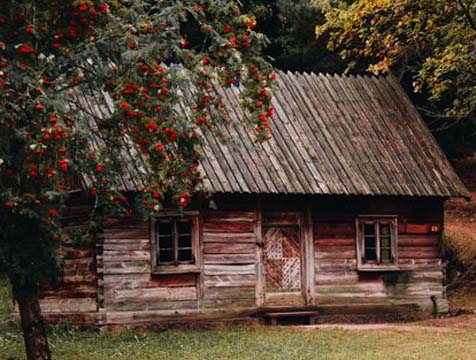
Photo by urtimud.89 at Pexels.
| Gramma's
Cup Of Blood Lorne Wilson © Copyright 2026 by Lorne Wilson |
Photo by urtimud.89 at Pexels. |
Her only old-country friend, when I knew her, emigrated from Norway in 1916 when he was sixteen. He was a very nice man with a bulbous nose. In later years, it got so big he had to get it drained. He gave my brother and me our first paid job to help him pick up rocks on his farm once. While we had lunch on the stoneboat behind his horses, he told us his parents sent him away from Norway to keep him from being conscripted into the army. When we told our mother this, she said he came from a well-to-do family because they had money to pay for his passage. Despite this class difference, the two were always glad to see each other. He would come to Gramma’s door, knock, wipe his feet on the mat, take his hat off, turn its rim around in his fingers, and blush. Gramma would invite him in, telling him to not worry about wearing his boots in the house, to sit, and have tea. They would sit across the table from each other, visit and maybe eat an apple, which Gramma did by peeling and cutting pieces off to gum, since she had no teeth. Mother never allowed me to stay and watch, so I only heard them speak Norwegian once because Gramma seemed to prefer English.
Gramma Hanson wasn’t our real grandmother, but she was nicer than our real grandmother. Why that was, I can’t be sure. I think it was because our real grandmother was bossy, and I didn’t like that. I first saw Gramma when she was about sixty-nine years old, saying she got the old age pension at sixty-seven. So this would have been in nineteen fifty-two when I was six. Walking over the railway tracks, she was returning from town with a couple of friends to her home on six acres. She was stocky and not that tall. She had pale blue eyes and wisps of blonde hair fading to the solid white it would become later.
This was the year before I went to school full time. We were moving all the time, so I started late. We came to Gramma’s place in the late fall, and we lived in her two bedroom log house. Gramma slept in her room. Our mother and her son, our stepfather, slept in the other bedroom. My brother and I slept at the end of the kitchen-living room area.
We had never lived in a log house before, and I thought it was great. It was the type of poplar log and chinking common in that part of the country. Scandinavian and Ukrainian immigrants had settled in this area, so the craftmanship was what could be expected from a people familiar with log building and woodwork. As with any wood building not built high enough off the ground, it rotted from the ground up. So in a few years, our stepfather and his friends built Gramma a small frame cottage with a hip roof. By that time, we were living in a trailer he had built. He was handy at things like that.
One year, Gramma raised a pig for butchering in a pen behind the large potato garden, near the trees. She bought a feeder pig in the spring to butcher in the fall. When her son was there, he looked after it. Sometimes, I had to throw some kitchen scraps into the pen. It stunk back there, so I didn’t hang around. I must have been about ten years old because Gramma’s new house was maybe two years old at the time.
In the autumn, our stepfather announced it was time to butcher the pig. So he called on his best friend, a Belgian immigrant with a French accent, for help. Before the day of the butchering, he hung a log crosspiece between two poplars near the pigpen. He also made sure he had a pulley and enough rope to tie the pig and to pull it up from the other side. He got a forty-five gallon drum and supported it on rocks over a fire pit.
When Gramma heard about the upcoming butchering, she said she wanted a cup of blood when it happened. The blood would have to be warm when she got it. When I asked her why, she said it was to drink, and she hadn’t drank blood in a long time.
Our mother found the idea disgusting and refused to make blood sausage when someone asked her. She refused to make head cheese, too. I was disappointed. I liked head cheese. Under Gramma’s guidance, her first attempt had been a disaster. I remember that scene, and her crying about it in the old log house.
She never had to do these things before. Her father emigrated from Washington state and, compared to other immigrants, had money. So, they lived better than other immigrants. Our aunt told me they had a rough board floor rather than a dirt floor in their soddy. Her father would praise her when he came home and found she had scrubbed it. Still, our mother knew how to can preserves and liked to get us boys to pick berries with her, especially strawberries and saskatoons, to preserve. Until she met the man who became our stepfather, she worked for farmers, ranchers, sawmills, and construction companies as a cook. She was a very good cook. We could eat her hot bread with nothing on it, but butter or jam made it even better.
When I mentioned I wanted to see Gramma drink blood, our mother expressed her disgust, something she didn’t do very often. So I guess this caused me to ask Gramma why she wanted the blood. She told me that in the old country, they would drink the blood when they butchered. The blood would be warm, so it wouldn’t coagulate in the stomach, or that’s what I remember. Anyway, it turns out it would coagulate, warm or cold. They couldn’t eat the meat because it was only for the landlord, the Storbunde. This was one of only two times I heard her use a Norwegian word. The other time was when we had too many potatoes from her large garden, and she wanted some lefse, by which she meant potato bread. So for the one and only time, our stepfather spent a day and a half making lefse. I remember seeing him rolling it out on the surface of Gramma’s wood stove after he had thoroughly rubbed it down clean with wax paper. Boy, that lefse was good with home-made strawberry jam.
One day when I came home from school, I could see my stepfather and his friend at the pigpen. I rushed to get the firewood in and ran out there to see what they were doing. The hog was lying down with its feet tied and a cut in its throat, which seemed surgical to me, because it was. They had cut the carotid artery and jugular veins, and the pig was twitching a bit as it was bleeding out.
My stepfather told me to run to the house and get a cup. I ran through the potato field and, breathless, went into Gramma’s house and asked for a cup. She was sitting at the table, drinking her tea and peeling her apple as usual. She asked me why. I told her it was for the blood, and that they, meaning my stepfather and his friend, were butchering. It seemed to me at the time it took her forever to get up, walk to the cupboard, and search for a cup. When she gave me a cup and sauce, she said to bring the blood back warm. I rushed out the door, across the garden’s potato field, to the pigpen and gave the cup to my stepfather. Unlike his usual jokester self, he didn’t seem happy, but he held the cup under the blood draining from the pig, which they had hoisted over the barrel of water.
When I took the cup, it was warm. As I left, they lowered the pig into the hot water to scald it. This made its hair easier to scrape off.
The potato field was muddy, so I was slipping and sliding as I ran back and at one point nearly spilled the blood. Some did slop over the rim and into the saucer. I stopped a minute till it settled. When I got to the house, I kicked the door until Gramma let me in. When she took the cup, I stood there for a while, hoping to see her drink it. She sat down with it and waited.
When I asked her if she wasn’t going to drink it, she said she was waiting for it to cool. I was puzzled because that was contrary to what she had asked for. Since I didn’t want to miss the scalding, I rushed back out the door, across the potato field, and to the pigpen, but they had already hauled it back out of the barrel. They started scraping the hog, and since there was nothing left I could do, I went back to the house.
A couple days later, our mother asked me to go to Gramma’s house to get a cup of sugar. Gramma wasn’t home. I knew where the sugar was, so I got a cup. When I was coming back from the cupboard, I saw a cup in a saucer behind the sheer curtain over one window by the door. Gramma never left cups laying around. They were either on the table or in the cupboard. So I walked over and pulled the curtain back to get a clear view. In the cup with dried black crusts running down its sides lay a black lump, shrivelled away from the edges. I could only guess it was the blood.
When I saw Gramma a few days later, I asked her if she drank the blood. She said no, it was too cold.A couple years later, we moved away for four years before we moved back for a year then away forever. A couple years after that, I visited her. She met me at the door with her daughter behind her, watching. Gramma was crying and looked like she wanted to hug, but men in those days didn’t hug. Her daughter was living with her and looking after her. Years later, my mother told me she had died. She lived to ninety-three and died of gangrene in a scratch on her arm. I couldn’t help wondering how that could happen. My mother, who I thought was always at odds with her, said she was a good-hearted woman. She was always good to us boys, spoiling us with milk and sugar-laden tea.