Lorne Wilson

© Copyright 2026 by Lorne Wilson
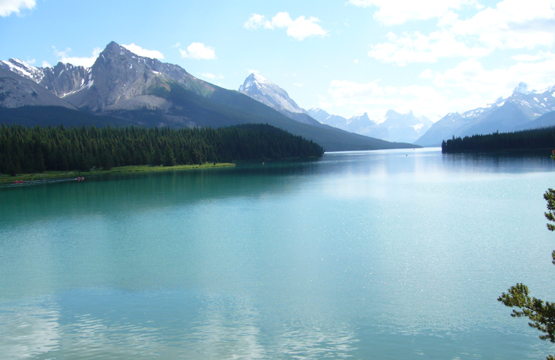
Photo courtesy of the author.
| Charlie
Dysart Lorne Wilson © Copyright 2026 by Lorne Wilson |
Photo courtesy of the author. |
We were surveying along the riverbank in a remote northern area in the 1980s. The three of us were alone. A path ran beside the river, halfway up the steep bank, through the woods. An old man materialized, walking along the path. When he saw us, he stopped. We said hi. Then he asked us what we were doing. We explained we were surveying the riverbank. When the hydro dam went in, the river water would rise. All the trees and brush below the flood line had to be cleared.
When he heard this, he started telling us how things had changed.
He started talking.
“I came up here from Illinois in the 1930s, just before the war. I lived up here all through the war. In those days, there wasn’t any white men around, except for Tom Johnson. He was already here. In those days, things were hard, but they were good. Everybody used to help everybody else—-not like now—-even if you weren’t friends.
“I remember, me and my partner Tom Johnson, were out trapping muskrats and our grub was getting low. We tried fishing. We tried snaring. We tried everything. And we weren’t catching too many rats, ‘cause they was what was keeping us going.
“It was early spring, and the ice was just coming off the water. There weren’t even any bears prowling around that we could shoot. They were still hibernating, I guess.
“Then one day we got lucky. There was a loon in the bay where we were trapping rats. Somehow, we got close to it with the canoe, and Tom threw the old fishnet we had on it, and I grabbed it and wrestled it into the canoe. Well, I wrung its neck right there to make sure it wouldn’t get away.
“We paddled back to the cabin. Tom plucked the loon and cleaned it while I went in and got the fire started and got the water. The only thing we had to cook it in was a galvanized pail. You know, those two and a half gallon pails made out of galvanized steel. They’re the same size as those plastic pails you see nowadays.
“Well, we cooked the loon in that pail on the small woodstove we had there. We made soup out of it with some salt and a few potatoes we had left. Then we had a feast. Boy, that soup was good. Even better than rat. And I’d prefer rat over beaver and a few other things around.
“Well, our stomachs had shrunk so much we could only eat about half of it. So I took the other half, left it in the pail, covered it, and set it outside where it was cool, you know.
“The next morning, we’re hungry again. So, I go and get the soup pail. That’s what we started to call it—the soup pail. I brought it in the cabin and took off the lid, and it was kind of blackish around the edges because the galvanizing in the pail had started corroding, you know. But we didn’t have anything else. So we warmed it up and ate it.
“Well, it wasn’t long, maybe a half hour to an hour, before Tom had to go to the outhouse. Then I had to go. Then it seemed like we were just taking turns keeping the seat warm. We had the runs like a goose on laxatives. And thirsty! Boy, we were thirsty. Sometimes I felt like I had my head over the water pail and my ass over the toilet hole at the same time. We were dehydrating, you know.
“We might have been six hours like this, maybe not even that long, and we could hardly move. We were literally crawling around on our hands and knees. At this stage, we couldn’t even make it to the outhouse anymore and were literally messing our pants.
“About this time, I hear a motor on the river, and I get myself to the door and outside, somehow, and start waving down this canoe with a small one-horse motor on it, and an old Indian in it. He had a kid, his grandson, with him.
“He took one look at us, and he knew what the matter was right away. He went down to the river and got a handful of those green plants that grow just under the water near the shore. They’ve got a root that forks out like a bird’s claw. To this day, I don’t know what they’re called. But I can sure recognize them. He boiled up a tea with these roots and gave us each a cup and made us drink it all. Gad! It was bitter stuff. I’d never drink that stuff again unless my life depended on it. And in this case, it did. We would have been dead by morning from dehydration.
“After drinking that stuff, about half an hour later, we felt right as rain. It fixed us right up. You wouldn’t believe. It was a miracle cure. That’s what it was.
“When that old Indian saw we were all right, he got in his canoe and kept on down the river. We sure were grateful to him, but he just took it in stride. He died some forty years ago, but I still see his grandson around, and I always go over and talk to him.
“Needless to say that we headed back for civilization the next day once we got our strength back.”
“That sounds like quite an experience,” said Allen, who was our instrument man.
The old man continued.
“Yeah, I married a Cree woman in the same year I come up here, and she’s been with me ever since. A damn good woman. I fell in love with her, and I still love her. She loves me too. I’m seventy-three now, and we’ve got thirteen children, nine sons and four daughters. We had two others, but they died at birth. That made my wife very sad. I was sad about it. All our children still live around here. There’s over thirty grandchildren. Some of them have moved away. Maybe that’s a good thing.
“It used to be that everybody worked. Everybody had something to do. Everybody used to dress up in a white shirt and go to church on Sundays and socialize afterwards. Nobody worked on Sundays unless they were away in the bush, and they had to. If there was ever a dance on a Saturday, there was never a fight. Maybe in all the years I’ve been here, there was one fight, and the one who started it was sent away.
“Now, somebody is pulling a knife every weekend. There’s a knifing every weekend. And that’s not even counting the other fights. It’s the booze that does it. Before Hydro came, there was none of that. There was no money. People never went anywhere. Nobody had any alcohol, and nobody wanted any. Oh, there was a bottle now and then, but never enough to cause any trouble. Now, there’s trouble every weekend. Then the police are there, and we never used to see them.
“People don’t work. The young people say, ‘Why should we work in the bush when Hydro will give us a job?’ Then they get a paycheck and get drunk until it runs out. If anybody has been drinking, my wife won’t even let them in the house. And I agree with her.
“They don’t respect the old people, not the way it used to be. I’m glad that I’m getting close to dying so that I won’t have to see this misery. Well, it’s a good job you fellows are doing. I hope it doesn’t ruin the fishing for my children’s sake. But I guess things are always changing. I wished things would stay the way they were. I’m glad that I don’t live in the settlement. My cabin is just up the hill here on the side of the lake. There’s hardly any moose around this fall. I guess it’s on account of all the construction activity going on.
“Well, it’s nice talking to you fellows. I got to get up to my cabin for supper. My wife will have it ready and be waiting.”
We said goodbye, and he continued on the trail.
“Who was that?” I asked.
“That was old Charlie Dysart,” said Allen. “There are all kinds of Dysarts around here. It’s a common local name.”
I was glad to hear how the people here used to live. I could’ve lived like that.