Their Horror, My Pain
Lena Samson

© Copyright 2026 by Lena Sampson
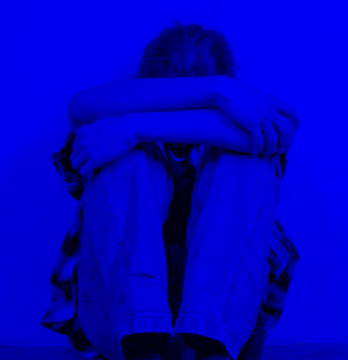
Photo by MART PRODUCTION at Pexels.
Their Horror, My PainLena Samson © Copyright 2026 by Lena Sampson |
Photo by MART PRODUCTION at Pexels. |
They yelled at each other.
Every…
single…
day.
Curled up in my tiny bedroom, comforted by a stuffed pink mouse, I felt safe. They never yelled upstairs. Sometimes I’d put a pillow over my head to muffle the insults, my turquoise transistor radio soothing my troubled mind with pop music and happy sounds. At night, when AM signals travelled unobstructed, my brothers and I tuned into far off places like Boston and Michigan, where I could imagine a young girl like me listening to the very same song at the very same time. I so desperately wanted someone to relate to.
It
is only now, in my 60’s, that I recognize my childhood trauma. I
never understood the damage inflicted on my psyche until I began
assessing my own relationships. I knew my home wasn’t happy, that
their insults and anger hurt. On our hefty black and white TV, I
would watch families loving and supporting their children in shows
like My
Three Sons
and The
Waltons. So
I knew this kind of love existed.
I saw parents saying, “I love you”, words unknown to my ears. I
knew it wasn’t good to be embarrassed by my uneducated, foreign
parents or to fear that friends would see how I lived. But that was
my normalcy.
I was the only daughter and youngest of three children. My mom would often say that all she ever wanted was a girl, burdening me with guilt. If she wanted me so much, why does she yell at me every day? Why does she tell me that everything I do and everything I think is wrong?
Who
was I supposed to be?
I didn’t know how to be a little Russian girl as I was immersed in
Canadian culture. My dad had no friends and my mom, to whom friends
were vital, towed me along on her visits to Ukrainian, Polish, Czech
and Russian women in our working-class neighbourhood. No one had
girls my age that I could talk to, and even if there were, I wouldn’t
have known what to say, not understanding the pain that burrowed so
deeply into my soul like an intestinal worm, infecting my life. All I
knew was that I had to endure, imprisoned in a stressful home,
dreaming of a happy future far away.
Both
my parents immigrated to Canada in the post-war 40’s. My mom left
her home in Estonia for a German refugee camp, where she would be
shipped to Canada under a program for young women to work as
“domestics”. I asked her, once, how could she have gone to
Germany when we know of the Nazi atrocities? She responded that they
didn’t know at the time, and that she was escaping Stalin’s
occupation. With a brother who died as a guerilla fighter, I wonder
how many other friends’ fathers, brothers and cousins she lost
during that time. Educated only to the sixth grade, how terrified she
must have been to leave her mother, sisters and brothers and venture
out to a strange country. She grew up on a farm, probably without
electricity, in a family of ten children. All I know is that she
left, an attractive young woman in her ‘20s, feeling safer in
Germany. I know that she met beloved, lifelong friends in that
displaced person’s camp, some of whom she never saw again but
exchanged letters with for the rest of her life. How strong those
bonds, forged during uncertain days of life and death! I know she
survived the bombing of Cologne because of her eye operation to
address the scarring from shrapnel. And I’ve never forgotten her
recounting dancing with the British soldiers, giggling with delight.
I’ve often felt that this was the happiest time of her life.
Landing in Montreal, she
worked at the Victoria Hospital and then as a
housekeeper. She brought me to visit one of her employers, with whom
she had stayed in touch, during a trip to Montreal for Expo 67. I
remember thinking how odd that they could somehow communicate, the
woman not speaking Russian and my mother barely speaking English. But
there was an invisible bond between them that I didn’t understand.
She met my dad in Montreal, introduced by mutual friends. My mom was
in her ‘30s by then, no doubt an “old maid” by social
standards, desperate to be married. She told me that she ONLY wanted
a Russian man as she was afraid of everyone else.
Working on the railroad in northern Ontario, my dad somehow travelled the substantial distance to Montreal, where they were introduced. My mom was a very attractive woman and revelled in attention—her looks were all she had. In their wedding picture, she wears a big smile and his face is stony. My brother and I only realized, many years later when we could do the math, that she would have been pregnant at the time. I expect she had entrapped him to achieve her goal of marrying and bearing children before growing too old. Funnily enough, when she became eligible for Old Age Pension at 65, she admitted that she had lied about her age all her life, revealing that she was actually five years older. Lies were perfectly acceptable in her world, a world that I absolutely rejected.
My parents did their best to survive. Their lives comprised struggle, work, responsibility and feeding their children. There was no “fun” in my house; in fact, my dad never trusted anyone who smiled too much, calling it “baring their teeth.” My brothers and I played when we were allowed, shooting each other with water guns around our abundant garden during our short summers. On summer weekends, my parents would pack us up to spend a day at the lake, where my dad would go off swimming and we chased tiny minnows along the shoreline. My dad tried to teach each of us to swim, but I think we were all too scared of him to relax. He gave up eventually. I remember, once, meeting another little girl who I played with for a while before being recalled by my mother, fearing Canadian influence on me.
I must have learned English from TV, radio and my older brothers. I grew to love school because there I was praised for good work; my mom wouldn’t even let me help her wash the dishes, saying that only she could “do it right.” I had to learn to be proud of myself since no one else was. All I wanted was to be a normal Canadian girl, a totally foreign and unacceptable concept to my parents. I didn’t know anything about Russian culture; the Russian fables my mom read to me were absolutely horrifying, with old hags and ogres terrorizing little children. As we lived in a town without a Russian church, my mom dragged me to the ornate Ukrainian Orthodox one, where I was routinely terrified by the other-worldly, long-haired, long-bearded priests in their flowing golden robes, and stupefied by the Old Church Slavonic words that were all Greek to me. My brothers and I would play with Dinky cars in the pew to help us endure the droning, meaningless services. Our role was to be dressed up and shown off as Mom’s only trophies. I can still visualize my childhood nightmare of descending into our dark basement and seeing an Orthodox priest, floating above the cement in his golden robes and pointed hat. That image is seared into my brain
Her religion was completely illogical to me. It consisted of sins like whistling in the house or singing at the table, for which I would be punished by having to kneel beneath the icon in her bedroom until she told me I could get up. And yet, Sunday cartoons on our black and white TV introduced me to a Christianity that espoused love and forgiveness, none of which seemed to exist in my house. What kind of religion was hers? Seeking meaning, I church-shopped until I found one where I felt welcome, settling on Catholicism and joining a youth group. I appreciated the understandable sermons, camaraderie and feeling of fitting in.
My mom and dad never slept in the same room. Her bedroom was on the main floor beside the living room, and his was upstairs with ours. Ours was a house of single beds. It is amazing that we were born at all.
I tried desperately to make sense of all this. When I was around ten, I engaged in an analytical exercise to justify to myself that my mom’s yelling at me for being late must be proof of her love, demonstrating concern for my well-being. This made me feel better. As I grew, I tried to appreciate her confusion at living in this strange country, where she never learned to speak English well, read or write. My dad had offered to enroll her in English lessons, but she refused out of fear. She never learned to drive either; luckily, we lived in a small enough town where we walked everywhere or took the bus. My dad rarely drove us. He lived in his own troubled world. Dads didn’t interact much with their children’s lives in the 60’s, at least in my orbit. It was all up to the moms.
Out of necessity, I began to envision a happy future, shaped by books and TV shows offering escape and hope. I dreamed of becoming like the young working women I read about, leaving home and working in an office, wearing high heels and dating nice men. I was inspired by career women Marlo Thomas in That Girl and Mary Tyler Moore. When I was about nine, my mom started working, cleaning a downtown office. She desperately wanted her own money as my father saved every penny. Taking me by the hand after school, she would lead me into the vacated premises, where I was tasked with washing out the large, round, black-glass ashtrays in a bucket of stinky water. Disgusting. But in the washroom, I wobbled around in the high-heeled shoes of the women who filled those ashtrays, dreaming of tomorrows so unlike my mom’s.
I envy those whose parents had loving marriages and set good examples for their children, as my parents illustrated what I never wanted to be. I swore that when I had children, I would tell them I loved them every day. I would support them at their events, applauding joyously for their performances and crying with pride at their graduations. I was embarrassed when my mom attended my Grade 12 graduation, not wanting to be seen with her or to introduce her to my teachers. What was the point? I’m not proud of myself for this, but this is how she made me feel. And I swore to myself that I would never force my children to endure what I had, the fighting and unhappiness of two parents who evidently hated each other. I often wished that they would divorce so I could have two happy parents apart instead of two miserable ones together. What I didn’t understand then, was that my mother was economically imprisoned in her marriage. She could never have supported us and there were no welfare programs, at least none that she would have understood to access. I swore, therefore, to become financially independent.
The greatest motivator in my life was when my dad called me “stupid” for wanting to go to university. I was a girl and would “just get married and have children.” Never mind that I was an A student who was praised by teachers, driven and success bound. He urged both of my brothers to attend university and fulfill his dream of their working in an office as accountants. He would have financed them, but neither were interested or academically inclined. So, I decided to prove him wrong. I completed high school early to work full-time and fund my first year of university. Selecting a program away from home, I left to seek my fortune. I intended to study Russian and become a translator, hoping to translate my dad’s poems one day; again, this earned me the insult of “stupid”, the term he hurled at my mother every evening. No, I wasn’t stupid. I was going to do it.
And I did. I’ll never forget calling my parents upon my graduation to tell them that I was hired into the federal government, starting immediately following my final exam. But by that time, my father had totally forgotten his discouragement and voiced how incredibly proud he was of me. This was an immigrant parent’s dream, for their child to work in government with all the security that came with it. It was a bittersweet moment for me—I couldn’t be angry at being denied my “told you so” moment as he was finally happy and proud, and that was all that mattered. Especially since he would die two years later; the last time I saw him alive was when he walked me down the aisle at my first wedding. I had actually considered walking down the aisle alone but acquiesced to his accompanying me. I’m glad I did.
It is only now, after years of sessions with counsellors, psychologists and natural practitioners, after learning about the effects of trauma and its impact on my life, that I have come to understand how deeply imbedded their own trauma is in me. I thought I had left my childhood behind when I found my power and made my own way. An intelligent, attractive, kind young woman, who bore three wonderful children and a successful career, I see now that I always suffered from “imposter’s syndrome”, never feeling good enough in any situation. At meetings, I always felt like everyone else knew more than me, afraid to speak up for fear of saying something “stupid”. I never knew that my lack of self-confidence kept me from advancing in my career. No one saw my fear, the little girl inside pleading for someone to take interest in my talents, to mentor and encourage me.
My childhood was also at the centre of a lifetime of failed relationships. Men were attracted to me and I would fall desperately in love, just like on TV, thinking that they wanted ME. But they didn’t. Probably many decent men liked me but I didn’t see them, flying like a moth to a flame to those who wouldn’t treat me well, as this was all I knew. Never having experienced a loving relationship growing up, never having seen respect and support, I was not equipped to recognize what it looked like nor how to find it. Only now do I see that I desperately sought a partner to provide all the love and support denied me as a child. No wonder my relationships failed. Now, happily independent, I have all the love I need from my children and grandchildren.
Do I hate my parents? Not at all, I love them. When I began studying Russian literature in university, I was surprised that all the characters in the stories yelled at each other just like my parents. Maybe this was a Russian trait—you can’t value love when you are trying to survive. Life there was unlike life in the west, where freedom from war and poverty meant people could ascribe to higher ideals. The hardship and tragedy of the Russian experience was difficult to comprehend here. I remember my mother sending parcels to her sisters and brothers back home: sugar, coffee and brassieres, of all things. And syringes because she explained to me that their hospital medical equipment was not sanitized. How strange to lack all these everyday essentials, I thought. They must be envious of us.
Once, I did an “emotional cleansing” with my natural therapist, focusing on the emotion of “shame”. Shame was thrown at me constantly growing up—I was supposed to be ashamed of singing at the table, wanting to go out with boys, wanting to be Canadian. This was a way for my mom to control me. However, I never felt ashamed of myself, understanding that I was just trying to live in my society; but this toxic emotion must have burrowed deep inside me. During the session, the therapist said that she saw me entwined in multiple umbilical cords reaching out from my mother; she had never seen this before. My exercise was to imagine throwing each of them off. I visualized an octopus squeezing me in its tentacles and unwrapping each slimy arm, one at a time, from around my body. It must have had some effect because now, when I visit the cemetery, I feel a strange disassociation. And that feels healthy.
Mom tied me to her as a child, as her only daughter. I was a badge of accomplishment, being dressed up like a little doll, a doll with no voice. She controlled me until I was old enough to leave, which I know she hated because she never understood. She only knew dependence on others and wanted the same for me. But when she went to work it was to earn her own money, as my father held all his earnings very tightly. She had to beg him for money for our clothes which inevitably ended up in shouting matches. But he would come through. She fought him for us every day. He held onto every penny so he could pay off the mortgage when I was around ten. I can understand how critical financial security was to him, having arrived in this country with nothing but a will to survive. Always living in fear. If he lost his job, we would all be destitute. What soul-crushing pressure.
One of my therapists asked if I thought my mother was a narcissist and I quickly agreed. A beautiful young lady, her looks no longer mattered after she was married and became a mother. Then when people started complimenting me on my big blue eyes, I imagine she became jealous. Men were attracted to me and not her. This was probably another reason that she treated me poorly. I was getting the attention that she wanted, not to mention being intelligent, capable and independent. She wanted me to stay home until I was married to a Slavic man who she selected. As if THAT was ever going to happen! I avoided people from a similar background like the plague, seeing nothing to admire.
After my dad died, my mom sold their house and moved to be near me. And I took care of her as best I could for the rest of her life, processing her mail, helping with banking, doctor’s appointments and all practical matters. I wish I could have invited her to live with me, but there was no way I could stomach her constant negativity and insults. One day, when my kids and I went for Sunday tea at her nursing home, my daughter said, “I wonder who Nana will insult today?” We laughed because that was her way of communicating, but I know it was always directed at me. My children inadvertently shielded me, turning her negativity into a joke.
I cried inconsolably when she died. At her funeral, an old Russian woman told me that my children would see how I took care of her, and that they would care for me like that someday. And the nurses at the home told me that she spoke of me all the time, of how proud she was of me. I never knew.
So now I process all this, hoping that through research, I can come to understand a little about where they came from and the traumas that damaged them. Their unspoken pain emerged every day, infecting us throughout our lives. The only antidote is to acknowledge it, try to understand and attempt to heal so that my children aren’t poisoned as well. My natural therapist told me that she felt my trauma beginning in the womb, which makes perfect sense to me, knowing that my mother carried the fears of her own mother inside her while she lived in a world of confusion and distress. She often said that she suffered from “nerves”, never understanding the half of it.
As for me, I did tell my children that I love them every day. I supported them through every activity, volunteering at school and hosting their friends for birthday and Halloween parties, hoping that they were proud of me. I have three beautiful granddaughters, the oldest named after my mom. She would be so happy to know that. And I’ve begun painstakingly translating my dad’s poems so that I might gain some insight into the deeper recesses of his soul. Despite everything, I am forever thankful for my parents having immigrated to Canada. As I strive to tell their stories, my pain evolves into compassion for their sacrifices, and my gratitude for their struggles flourishes.