A Bicycle Shop, a Fruit Cart, and Four Graduates
Kanak Kashap
© Copyright 2026 by Kanak Kashyap

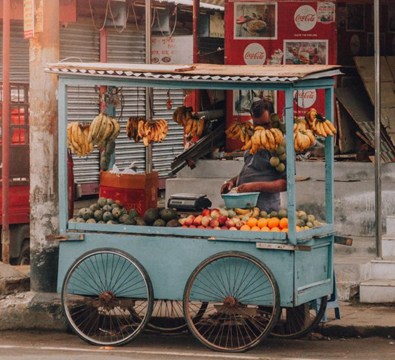
Photo by Nishant Das at Pexels.
A Bicycle Shop, a Fruit Cart, and Four GraduatesKanak Kashap © Copyright 2026 by Kanak Kashyap |
Photo by Nishant Das at Pexels. |
In a respected army neighborhood, a bicycle repairman and a woman who had never attended school quietly built a future larger than either of them had been allowed to imagine.
When people talk about Partition, they often talk about borders, politics, and maps. In one family, its memory survived through a woman who never got the chance to attend school.
She was one of five siblings. There was never enough money, and survival always came before education. While other children carried books, she carried responsibilities. School was not something she left behind—it was something she never had the opportunity to begin. Instead, she worked in kitchens and helped her family navigate the uncertainties of a life rebuilt after migration.
The man she would later marry knew a different version of the same struggle.
Ashok Kumar, the eldest of four siblings, learned early that responsibility could arrive long before adulthood. As family needs grew, education became a luxury he could not afford. Dreams of studying gave way to the practical demands of supporting those around him.
Neither of them possessed degrees. Neither had influential connections. Yet together they possessed something far more valuable: determination.
They began married life in a small home that reflected their circumstances. The ground floor consisted of a single room and a modest kitchen. Space was limited, but hope was not.
To support his family, Ashok Kumar opened a bicycle repair shop. Alongside it, the family operated a fruit cart. The work was demanding and the rewards modest, but slowly, steadily, a foundation was laid.
Customers trusted him. Neighbors respected him. In time, the bicycle repairman became a familiar figure throughout the locality. The family's reputation grew not through wealth but through honesty, consistency, and hard work.
Years later, the house would become known as Ashok Nivas.
It was not a mansion. It was not a symbol of luxury.
It was something far more meaningful.
It was proof that two people who began with very little had built something of their own.
What makes their story remarkable is not the businesses they ran but the dream they refused to abandon.
Neither had received an education.
Their children would.
The bicycle shop continued. The fruit cart continued. Sacrifices continued.
And slowly, opportunities appeared.
The same parents who had never entered classrooms watched their children move through schools and colleges. The future they had imagined began taking shape before their eyes.
Eventually, the tiny home that once held only necessities changed with the family's progress. An upper floor was added. One room became the domain of a son whose interests included fitness, filled with gym equipment his parents could scarcely have imagined during their own childhoods.
For them, success was never measured through status.
It was measured through possibility.
By the time grandchildren entered the picture, Ashok Kumar and his wife had become something more than parents.
They became the center of a growing family.
For Kanak, the first grandchild of their eldest son, Ashok Nivas felt less like a house and more like a second home. Long before careers, examinations, and responsibilities entered life, childhood was measured through simpler things: summer afternoons, bicycle rides, and the certainty that two people would always be there.
Six years later, another granddaughter arrived. The love that had once belonged to one child simply expanded to include two.
Their affection rarely appeared through grand gestures. It appeared in small folded notes quietly handed over for chiji—the universal childhood category that included sweets, snacks, toys, and whatever else seemed important at the time. No explanation was usually required. The happiness of a grandchild was reason enough.
Their protection became part of everyday life.
Whenever childhood mistakes invited trouble, their grandmother often stepped in first. She was the shield standing between fear and forgiveness. Her intervention rarely changed what had happened, but it changed how it felt. In a child's eyes, she seemed capable of making every problem smaller.
Ashok Kumar protected differently.
Armed with a walking stick and an unwavering sense of loyalty, he had little patience for anyone who troubled his granddaughters. If someone annoyed them, he considered it his business too.
Yet perhaps the clearest expression of his affection could be found in a bicycle.
Even years after leaving his profession behind, he never stopped being a bicycle repairman.
Whenever a bicycle chain slipped, a tyre punctured, or something refused to work, there was never any question about where it would go. It returned to the same hands that had repaired bicycles throughout the neighborhood for decades.
Those repairs were never rushed.
He worked with the patience of someone who genuinely cared whether a child could ride again by evening.
Looking back, it seems fitting.
For most of his life, Ashok Kumar had fixed things.
Broken pedals.
Broken chains.
Broken wheels.
And in many ways, he spent his life fixing problems larger than bicycles as well—financial struggles, family burdens, and obstacles that might otherwise have limited the futures of those around him.
As he grew older, age gradually began affecting his memory. There were days when he argued with family members and moments when confusion appeared where certainty once lived. Yet somehow, one thing remained unchanged.
He always listened when Kanak spoke.
Even today, the reason remains difficult to explain.
Perhaps every family has one relationship that survives changes time cannot fully understand.
His wife remained equally steadfast in her own way. Modern technology entered her life only as much as necessary. Her smartphone serves one primary purpose: calling her daughter with a single tap. The world transformed around her, yet she remained comfortingly unchanged.
Together, they created the kind of love that rarely announces itself.
It appears instead through repaired bicycles, protective gestures, bowls of homemade halwa, money slipped into small hands for chiji, and the quiet certainty that someone will always be waiting at home.
As age advanced, his memory sometimes faltered. He occasionally argued with family members and struggled with changes brought by growing older. Yet somehow, he always listened when his granddaughter spoke.
His wife remained equally unchanged in the ways that mattered most. Even today, technology plays only a small role in her life. Her smartphone exists primarily for one purpose: calling her daughter with a single tap.
The world moved forward.
They remained themselves.
Then came May 2022.
COVID-19 had already transformed countless lives. During that difficult period, the family faced two battles at once. While a son fought for survival in a hospital with dangerously low oxygen levels, Ashok Kumar's health steadily declined.
His son survived.
He did not.
Like many families during the pandemic, circumstances stole final moments that should have belonged to loved ones.
Yet grief cannot erase a lifetime.
Today, the bicycle repair shop no longer exists. The fruit cart is gone. The neighborhood has changed. The world that shaped their youth has almost disappeared.
But their legacy remains visible everywhere.
It lives in four educated children.
It lives in grandchildren who inherited opportunities they never had.
It lives in every achievement made possible because two people chose to place the future of others above their own ambitions.
History will never record the story of Ashok Nivas.
No textbook will mention a bicycle repairman named Ashok Kumar or the woman who sacrificed a childhood education to help her family survive.
Yet their lives deserve remembrance precisely because they were ordinary.
Between a bicycle shop, a fruit cart, and a small home, they built a life that gave their children opportunities they never had.
They built a future they never fully experienced themselves. And then, quietly, they gave it away to the generations that followed.