The Bible On Her Desk
Isaac Sohn
© Copyright 2026 by Isaac Sohn

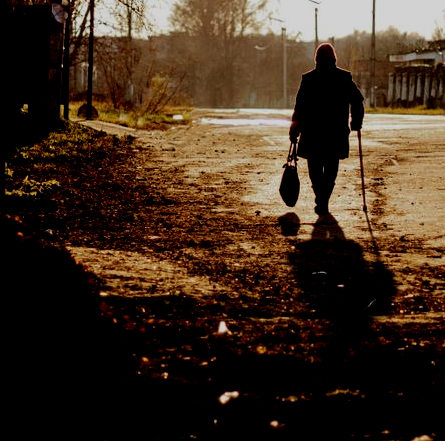
Photo by Vitaliy Photo at Pexels.
The Bible On Her DeskIsaac Sohn © Copyright 2026 by Isaac Sohn |
Photo by Vitaliy Photo at Pexels. |
This essay is drawn from family memory and from the Korean Bible my grandmother kept on her desk.
My grandmother's Bible was always on her desk.
At first, I remembered it simply as part of the room. Some houses have a clock, a chair, a cup that is always near the sink. In my grandmother's house, there was the Bible on the desk. It was there so steadily that, for a long time, I almost did not see it.
When I visited her house, I would sometimes notice handwritten pages on the wall. They were like essays, copied passages, or thoughts she had written out carefully. They did not feel like decoration. They were signs of things she had written or copied by hand and left there. The house had this quiet habit of holding what she had written. Still, the Bible was the object I noticed most. It lay on the desk with the patience of something handled often enough that it no longer looked new.
Its cover was so old and worn that it seemed nearly torn apart. The edges had the tired look of something opened, closed, pressed flat, and used again. Many of the pages had translucent tape affixed to them, the kind of tape that does not hide the page completely but leaves a cloudy shine over the paper. The tape held together the places that had begun to give way. Verses were underlined densely. Family photographs were tucked inside. The Bible was not kept clean in the way unused things are clean. It looked worn from repeated use.
At first, I understood this only as religion. My grandmother was a person of faith. She read the Bible. She went to church. She prayed. These were facts I knew so early that I did not question them. They seemed to belong to her the way her face and voice belonged to her.
But facts can sit in a family for years before a person understands what they mean.
My grandmother went to church at four in the morning.
She went alone. She dressed for the weather before leaving. This was not a dramatic journey in the eyes of the world. It was not a long pilgrimage written about in books. It was a daily walk from home to church early in the morning, before most people were awake.
But her legs and back made walking hard. I knew this because I saw it. I saw that walking cost her effort. I saw that her body did not make the road easy. Still, the routine continued. At four in the morning, she went out to pray.
When I was younger, I could see the fact of it without seeing the full weight of it. Children and grandchildren often know the surface of love before they know its labor. Care can become so familiar that a child sees the habit before the effort. We may be grateful, but we do not always understand the cost.
My grandmother's prayer was like that for me at first. It was something she did. It belonged to the shape of her day. I did not think of it as work.
Later, the Bible taught me otherwise.
I am careful about that word, taught. The Bible did not speak. It did not explain my grandmother to me in a way that made everything simple. It only kept the traces she had left: tape, ink, underlines, photographs, copied words. Those traces did not solve her life. They made me look longer. They asked me to notice that repetition can be a form of devotion, and that a quiet habit can contain more feeling than a speech. In that sense, the book did not give me a lesson. It gave me evidence, and the evidence was patient. I had to become older before I could read it that way.
Inside it, the underlines were everywhere. They were not the few careful marks of a person trying to look studious. They were crowded and repeated, evidence that she had returned to them. Some lines appeared to have been marked more than once. Some pages looked as if they had been returned to many times. There were places where tape held the page together but did not erase the words beneath it. There were family photographs inside, resting between the pages like names held in silence.
There were also copied passages. Some were written with brush-like strokes. Some were written in pen. The difference in the writing mattered to me. Writing with a brush asks the hand to move differently. The pen writing looked more immediate to me, closer to an ordinary note. Together they made the Bible feel less like a book she owned and more like a place where part of her daily life had left a trace.
The prayers were handwritten too.
They were for the family. They were for individual family members. They were not only general prayers. They carried the weight of particular people and particular worries, though I choose not to repeat those private details here. They showed that my grandmother's prayers moved person by person. To me, they made her care feel specific rather than general.
That detail matters to me. A family can be loved as a single word, but a person is loved differently when someone pauses over the separate life inside that word. In those handwritten prayers, my grandmother did not seem to hold us only as a group. She seemed to be praying for us one by one. The brush marks and pen marks made that care visible without making it public. They were private lines, but their presence was enough to show the direction of her care, as I understood it.
The underlines were not only signs that she had read. To me, they seemed like signs of repeated reading and searching. The tape was not only a repair. It was a way to keep the book usable. The photographs were not only memories. They were a way of placing family inside the pages she read and marked. The copied scripture was not only practice. It was the work of bringing words through the body, through the wrist, through the hand, until they became part of what she wrote and kept.
And the prayers were not only prayers.
They were a form of carrying.
There are many kinds of love that are easy to recognize. Some love is loud. Some love announces itself. Some love arrives as praise, gifts, jokes, embraces, or words that explain themselves clearly. My grandmother's love was not always like that. It could be difficult to understand across generations. She had her own way of seeing the world, and we had ours. There were distances created by age, language, habit, and the simple fact that families do not always know how to read one another.
Because of that, her love could seem lonely to me, not because it was weak, but because I sometimes felt we did not know how to answer it in the same way. She prayed before dawn, while others slept. She wrote prayers many of us never saw her write. She copied scripture by hand, privately. She carried family members in a way that could be missed because it was quiet and repeated.
I think of her walking at four in the morning. I think of the weather changing day by day, and of her dressing for it. I think of her legs and back making the walk difficult. I think of the church before dawn, and of the road between her house and that place. I do not need to make the scene larger than it was. The truth is already enough. My grandmother went to pray for her family even though walking was difficult. That is not a small thing.
It is easy to respect sacrifice when it looks heroic. It is harder to notice sacrifice when it has become routine. My grandmother's love had become routine. That may be why I almost missed it.
At some point, looking at the Bible, the thought came to me plainly. It did not arrive as a grand revelation. I saw the worn cover, the tape, the underlines, the family photographs, the copied words, the prayers written in brush and pen. The book was old, but it was not weak. It was damaged, but it had not been abandoned. It had been held together because it was still being used.
It looked like my grandmother's love.
It looked worn because it had been used. It looked repaired because it had endured. Family photographs and prayers had been placed inside it. Much of it remained private. It was a book, but it was also a record of effort.
I began to understand that my grandmother had not only believed in prayer. She had practiced love through it.
This does not mean I understood everything about her. I still do not. No grandchild fully understands a grandmother. We enter late into their lives. We inherit the results of years we did not witness. We see the person who prayed, wrote, and kept returning to these habits, but we do not see everything that may have shaped them.
But I know this much: she went to church at four in the morning. I know she walked even when walking was hard. I know she kept a Bible so used that it had to be repaired in many places. I know that inside it were photographs of family, underlined verses, copied scripture, and prayers written for the people she loved.
That is a form of biography, not the kind that depends on public achievements or important dates. It is the biography of a desk, a Bible, a road to church, and a hand that kept writing. It is the life of a woman shown through what she returned to, day after day.
I understood my grandmother's love as unconditional. It was also, at times, lonely. It was not always understood. But it was clear. It kept walking. It kept writing. It kept placing our lives between the pages.
When I think of her now, I do not first imagine a speech or a lesson. I imagine the Bible on her desk. I imagine the cover nearly torn, the tape shining faintly over the page, the underlines pressed into the text. I imagine family photographs resting inside, in a way that felt tender to me.
In my mind, I close the Bible gently.
Not
because the story is finished, but because some love is too private
to treat carelessly.