When
the old post office in our town closed, most people shrugged and
moved on. After all, who still wrote letters? We had phones that fit
into our pockets and applications that delivered messages before we
had finished typing them. The building had stood for generations, but
in the end it was reduced to a locked door, broken windows, and a
faded sign that no one bothered to read anymore.
But
to my grandfather, the closing of that weather-beaten building marked
the end of an era.
Every
Tuesday, without fail, he walked the same dusty road with a walking
stick polished smooth by years of use. He wore a faded brown hat that
had once belonged to his father and carried a small leather bag
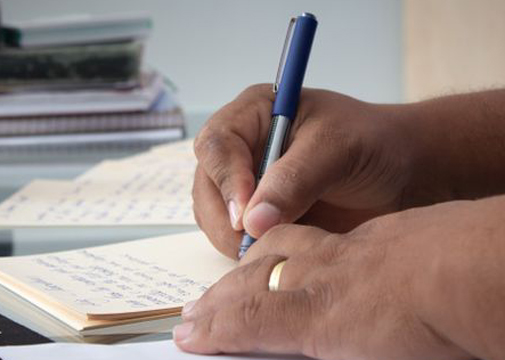
containing nothing but envelopes, stamps, and a fountain pen older
than I was. The walk was never hurried. He greeted shopkeepers,
children, and strangers with the same quiet courtesy, as though time
itself was something to be respected rather than conquered.
He
had been a schoolteacher for nearly forty years. Even after
retirement, he believed words deserved patience. "A letter,"
he often said, "travels with a piece of the writer's heart."
As
a teenager, I thought that sounded hopelessly old-fashioned. I could
not understand why anyone would spend an hour writing something that
could be said in thirty seconds over a phone call. To me, letters
belonged in museums, not in everyday life.
One
Tuesday I accompanied him, mostly because the electricity had gone
out and I had nothing better to do.
The
post office was quiet. A single ceiling fan turned lazily overhead,
pushing warm air around the room. Behind the counter sat an elderly
clerk who greeted my grandfather by name before either of them
smiled. It was the smile of two men who had watched the world change
together.
"Another
one?" the clerk asked.
"As
long as these hands can still write," my grandfather replied.
While
he carefully addressed an envelope, curiosity overcame me.
"Who
are you always writing to?"
He
paused before answering.
"My
former students."
I
laughed.
"After
all these years?"
He
nodded.
"They
still need encouragement. Age doesn't change that."
On
our walk home he told me stories I had never heard before. One of his
students had become a nurse in a distant village. Another had opened
a small repair shop. One had failed several times before finally
qualifying as an engineer. He spoke of them not as accomplishments,
but as people whose struggles he remembered.
"They
remember your lessons?" I asked.
"Not
all of them," he admitted. "But they remember someone
believed in them."
Months
later, my grandfather became ill. His weekly walks stopped. The
leather bag remained on the table beside his chair, and the fountain
pen stayed capped. The silence in the house grew heavier than the
illness itself.
One
afternoon the sound of motorcycles filled our compound. Then came
cars. Then more people on foot.
Men
and women from different cities and different professions arrived
carrying food, flowers, and folded letters.
Some
were doctors.
Others
were traders.
One
was a judge.
Another
was a mechanic with grease still beneath his fingernails.
They
all said nearly the same thing.
"I
came because he wrote to me."
One
young woman held up a worn envelope.
"I
was ready to leave school," she said quietly. "His letter
arrived the same day. He reminded me that difficult roads often lead
to beautiful places. I stayed."
Another
visitor produced three letters tied together with blue ribbon.
"I
read these whenever life becomes heavy."
For
hours our home became a place of stories. Every visitor carried one.
An
elderly man waited quietly until nearly everyone else had spoken. He
held no flowers and carried no food. Instead, he unfolded a carefully
preserved letter, its edges worn from years of handling.
"I
doubt he remembered writing this," the man said, smiling through
moist eyes. "I had just lost my wife. I stopped going to work,
stopped speaking to my neighbours, and thought there was nothing left
to look forward to."
He
paused before continuing.
"One
afternoon this letter arrived. He didn't try to solve my problems. He
simply reminded me that grief is not something to be defeated but
something to be carried with hope. He ended by saying, 'When you
cannot see tomorrow's light, borrow today's from someone who cares.'"
The
man folded the letter carefully before placing it back into his
pocket.
"I
still carry those words wherever I go."
As
more visitors shared their memories, I realised something I had never
understood as a boy. My grandfather had not merely taught
mathematics, history, or grammar. He had quietly taught people that
they mattered. Long after they had forgotten the lessons from his
classroom, they remembered the kindness that accompanied them. His
greatest gift had never been knowledge alone; it was the unwavering
belief that every person could become better than they imagined.
None
spoke about remarkable wealth or fame.
They
spoke about kindness.
About
being remembered.
About
receiving a handwritten letter when they thought everyone had
forgotten them.
My
grandfather listened with tears in his eyes. He said very little that
day, but I could see that every visitor had returned a small piece of
the love he had quietly given away for decades.
When
he died the following year, the funeral was unlike anything our small
town had ever seen.
People
travelled from every corner of the country.
Many
carried the letters he had written decades earlier.
Some
were faded.
Some
had been repaired with transparent tape.
A
few had nearly fallen apart from being opened too many times.
Each
letter had survived because someone believed it was worth keeping.
After
the burial, the old post office stood abandoned for months before it
was demolished. A modern shopping complex occupies the land today.
Most people passing by have no idea what once stood there. Children
chase one another across the pavement, and shoppers hurry past
without a second glance.
But
sometimes I imagine invisible paths stretching from that spot across
villages, towns, and cities—paths travelled not by vehicles but
by hope folded neatly inside envelopes.
In
a world that measures communication by speed, my grandfather measured
it by sincerity.
His
letters never went viral.
They
never appeared on television.
They
never attracted thousands of online reactions.
Instead,
they quietly changed individual lives, one envelope at a time.
Today,
whenever I am tempted to send a hurried message that says very
little, I remember the old man with the brown hat and the leather
bag. I remember that encouragement written with care can outlive the
writer. And I remember that while buildings disappear and technology
changes, genuine kindness always finds a way to reach its
destination.
Even
now, years later, I sometimes find myself reaching for a pen instead
of a phone when someone needs encouragement. A handwritten letter
takes longer to write, but perhaps that is its greatest strength. It
forces us to slow down, to choose our words carefully, and to let
another person know they are worth our time, our thought, and our
kindness. Whenever I seal an envelope, I cannot help but smile,
knowing that somewhere my grandfather's quiet legacy continues
through one more letter.
Some
people leave behind houses.
Some
leave businesses.
My
grandfather left letters.
And
judging by the people who still carry them, they remain the finest
inheritance anyone could hope to receive.
Ibrahim
Abdulhakeem is a law student at Lagos State University and an aspiring
writer from Lagos, Nigeria. He enjoys writing stories that celebrate
the lives of ordinary people and the quiet moments that reveal courage,
kindness, and hope. His interests include literature, history, and
preserving stories that highlight the enduring power of compassion and
human connection.
(Messages are forwarded by The Preservation Foundation. So, when you write to an author, please type her/his namd in the subject line of the message.) *****
If the
link to the letter doesn't work you can copy
and paste in this address: preserve@storyhouse.org