Ginny Brown

© Copyright 2026
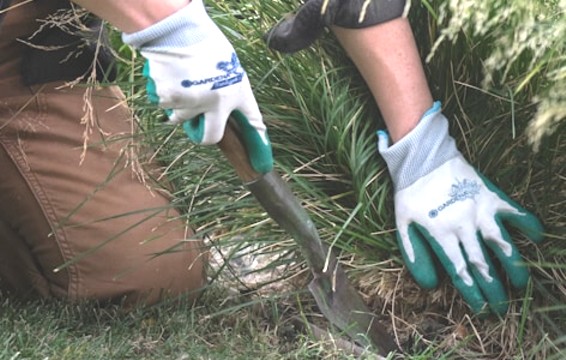
Photo by Tim Wilson at Unsplash.
| What
My Father Fixed Ginny Brown
© Copyright 2026 |
Photo by Tim Wilson at Unsplash. |
My dad is a simple man with a simple life. I have his eyes, his smile, and the same emotions we both wear too plainly on our sleeves. Neither of us has ever been especially good at pretending we do not feel what we feel.
This past year has been the hardest of my life. There were days when I could not imagine how I would get through the next hour, much less the next season. Yet one of the brightest parts of it was time with Dad.
We took road trips to natural springs, following roads neither of us knew well just to see where they led. We ate in strange little restaurants where everyone looked up when we came in, because we clearly were not local. We worked side by side in a backyard that had not been maintained in fifteen years or more, pulling roots, moving stones, clearing what had been left tangled and forgotten.
And, through it all, we asked questions. It is the question we return to again and again: Why?
Why are some people impossible to please? Why does the car in the left lane drift along as if it has nowhere to be? Why does the person in front of us sit through a green light as though time has stopped just for them? Why is the woman in the ten-items-or-less line unloading an entire pantry?
Life gets loud, messy, and ridiculous in small, precise ways. One moment everything seems to hold, and the next it slips, and we are left wondering how the ordinary became so hard to move through.
My dad has always believed most of life’s trouble is cumulative. It is not always one dramatic thing. It is the smaller things piling up until they become too heavy to carry. The questions about love are heavier still.
Why does love hurt when everything insists it should heal? Why do songs make it sound simple, movies make it look easy, and couples passing by make it seem attainable for everyone but us? Why does love bloom so beautifully in the stories we hear and unravel so quietly in the ones we live?
My dad never pretended faith erased those questions. He taught me that faith gives us somewhere to place them. Not because it is wrong to want understanding, but because understanding has limits.
When I bought the old house, I knew it needed work. I did not understand that buying an old house is less like purchasing property and more like entering into a long-term negotiation with everything previous owners decided could wait.
My father understood this immediately.He did not need an inspection report. He could stand in the yard with his hands on his hips, looking at the house for five minutes, and produce a list long enough to ruin my Saturday. “That needs to come down.” “That needs cutting back.”
“Who did that?” And the one I learned to fear most: “Well, while we’re doing this, we might as well…”
There are no clean answers for every grief. There are only echoes. Scripture itself is full of questions that God never rushes to resolve. Even Jesus asked why. Faith, I have learned, is not the absence of questions. It is the courage to keep walking with them.
Dad did not promise me answers this year. He promised me steadiness.
He showed up for the springs and the strange restaurants. He showed up in the backyard, where our hands got dirty and our backs hurt and the work seemed impossible before we began. He stood beside me among all the roots and debris, helping me clear space where I could breathe again.
Maybe that is what love really is. Not safe. Not easy. Not always gentle. Faithful. That is my father.
He belongs to a generation of men who do not always explain love particularly well because they were taught to demonstrate it instead. They fix things. They carry things. They show up with tools. They notice the board that is beginning to rot before anyone else sees it. They worry about whether the roof will hold and whether the grass needs cutting. They may never announce that they are taking care of you.
They just arrive.
Week after week, my father arrived.
The house slowly began to change.
A labor of love that endures, and endurance implies cost. It means staying when it would be easier to leave. It means showing up without having a perfect speech prepared. It means sitting beside someone in the mess and helping them move one stone, one root, one hard day at a time.
Dad taught me that peace is not found in knowing everything. It is found in surrendering what we cannot know.
Maybe why is not a question meant to stop us. Maybe it is a direction.
A small light we follow forward—not a guarantee of safety, but an invitation to trust. A lamp does not show the entire road. It only shows enough for the next step.
This year, Dad has helped me take the next step.
And then the next one.
Not every question is meant to be solved. Some are meant to be carried faithfully, honestly, all the way home.
Dad and I share adventures not grand ones. We did not cross oceans together or climb mountains. Thinning out an overgrown flower bed wasn’t a vacation, yet we crossed an overgrown yard carrying rakes, shovels, saws, and whatever else the day's problem required.
But ordinary adventures have a way of becoming important when you realize they are numbered. I began noticing his age in ways I did not want to notice.
man can remain permanently young in his daughter's mind even while his body quietly disagrees. The father who once seemed capable of lifting anything eventually pauses before lifting something heavy. He sits down for a minute. He rubs a shoulder. He moves a little more carefully across uneven ground.
You notice. You pretend you don't. “Let me get that,” I started saying more often. “I've got it.” Of course he did. Until one day he won't.
Dad showed me how to pull stubborn, old roots from the ground with a winch and a tractor. Before this summer, I did not even know what a winch was. But I learned quickly, and it was fun watching him study the tangled roots and vines, then figure out another way to move what looked impossible to move.
I wanted a historic home. What I did not understand was that an old home—especially one neglected for so long—comes with a responsibility I had never fully imagined. It asks for more than repairs. It asks for patience, strength, and a willingness to keep uncovering what has been buried. Renovating an old house teaches you that preservation is not the same thing as making something new.
You do not erase every scar. You decide what is worth saving. You reinforce what has weakened. You remove what is causing damage. You learn that some things require patience rather than force. And sometimes you discover that what appeared ordinary has been holding everything together all along.
I thought my father was helping me restore a house. It took me a while to understand what he was really giving me. He was leaving pieces of himself behind.
Not intentionally. Daddy would probably laugh at that sentence. He was not creating a legacy. He was cutting grass. Moving limbs. Fixing things. Telling his grown daughter that she needed the right tool for the job.
This summer, I did not take a grand vacation. I took a few days here and there, but what I really had was one morning each week to look forward to: Dad coming over to help me with this old place. Through a thousand ordinary acts performed for people we love without keeping count.
Someday this house may belong to someone else. Someone may change the yard, replace what we repaired, cut down something we saved, or wonder why something was done the way it was. They will not know that an older man once spent his Saturdays here helping his daughter make a neglected place her own.
But I will. I will know where he stood. I will remember the sound of his voice across the yard. And whenever I look at everything we managed to put right together, I will remember that the most important thing my father fixed was never really the house.
He always had a unique plan, one I typically questioned. Yet every plan became memorable. Last week, he tripped over his own tools and fell. I was frightened. He laughed. The next day, he called to tell me he had torn his rotator cuff. The day after that, he said it was not as bad as he first thought.
You have to love the man. He is the kind of person who says, “Hold my sweet tea and watch this,” before attempting something he probably should have done in his twenties—not his early seventies. Yet he does it anyway.
And maybe that is one of the answers to the questions that stay.
Maybe love is not always a grand rescue or a perfect explanation. Maybe it is a man in his seventies, showing up once a week with tools, a tractor, and a plan that makes no sense until it works. Maybe it is laughing after a fall, calling the next day, and coming back anyway.
My dad did not fix every hard thing in my life this year. But he showed me how to keep pulling at what has been tangled for too long. He showed me that even old roots can come loose, given enough patience, the right tools, and someone willing to stand beside you.
And
every week, he reminded me that I was not carrying it all alone.