George Keyes
© Copyright 2026 Geoege Keyes
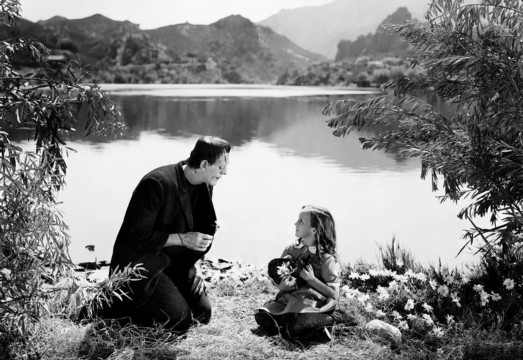
Image courtesy of Wikimedia Commons.
| Bad Horror Vs. Effective Horror -|What
Makes or Breaks a Scary Movie? George Keyes © Copyright 2026 Geoege Keyes |
Image courtesy of Wikimedia Commons. |
Horror is one of cinema’s most fascinating genres because it operates on some of our most primal emotions: fear, anxiety, anticipation, and dread. A well-made horror film can make an ordinary hallway feel dangerous, turn silence into a threat, and transform a familiar house into a place where nothing feels safe. Yet horror is also one of the easiest genres to get wrong.
A film can have an intriguing premise, talented actors, elaborate production design, and a substantial budget and still fail to frighten its audience. Meanwhile, a movie made with modest resources can become a cult classic because it understands something fundamental about fear.
Why?
The difference between bad horror and effective horror is not simply the number of scares a movie contains. It is how those scares are constructed, how deeply we connect with the characters, how effectively the film creates uncertainty, and whether its fear continues to live in our minds after the credits roll. Bad horror often tells us when to be scared. Effective horror makes us feel uneasy before we even understand why.
WHEN HORROR GOES WRONG
At its core, ineffective horror fails to tap into the mechanisms that make fear work. It may have all the ingredients of a scary story, yet poor execution can leave audiences bored, frustrated, or even laughing at moments intended to terrify them.
One of the biggest problems is predictability.
Suspense depends on uncertainty. The audience should not be completely certain about what will happen next. Even when we know something terrible is coming, a filmmaker can maintain tension by making us wonder when it will happen, how it will happen, or what consequences it will have.
Once we can predict every scare, however, the tension begins to disappear. The Bye Bye Man (2017) offers an example of how an intriguing supernatural premise can lose its effectiveness through execution. The idea is unsettling: a supernatural entity is connected to the simple act of thinking or speaking its name, with increasingly dangerous consequences. Yet many of the film’s frightening moments rely on familiar horror conventions, making them easier to anticipate. Instead of wondering what might happen, viewers can find themselves waiting for the next conventional scare.
Predictability is particularly damaging to horror because the genre depends so heavily on the fear of the unknown. We should be asking questions: What is really happening? Can these characters trust what they are seeing? Is the threat supernatural, psychological, or something else? What happens if they make the wrong choice?
When a movie answers those questions too quickly, it leaves little room for the audience’s imagination to participate. Another common problem is one-dimensional characterization. Character development matters in every genre, but it is especially important in horror because fear depends on emotional investment. If we do not care whether a character survives, their danger carries very little emotional weight. A death might be visually shocking, but it is unlikely to be genuinely disturbing.
The Gallows (2015), for example, places a group of high school students in a dangerous situation but relies heavily on familiar teenage stereotypes. When characters feel like recognizable types rather than fully developed people, their suffering can begin to feel like a mechanical requirement of the plot. Instead of worrying about them, we simply wait for the next character to be eliminated.
Effective horror approaches characterization differently. The people on screen should feel as though they had lives before the horror began. Their relationships, insecurities, regrets, and desires give meaning to what happens to them.
The Descent (2005) demonstrates the power of this approach. The women trapped inside the cave are not simply interchangeable victims running from monsters. Their relationships are complicated by grief, betrayal, guilt, and unresolved conflict. The cave therefore becomes more than a physical environment; it becomes an extension of their emotional turmoil.
The horror is not simply that something is hunting them underground. It is that they are already carrying wounds that make their situation even more devastating. Then there is the overuse of jump scares. Jump scares are not inherently bad. A sudden movement, sound, or appearance can be extremely effective when properly prepared. The problem occurs when a film uses jump scares as a substitute for suspense. Being startled is not necessarily the same thing as being frightened. A loud sound accompanied by a sudden figure can produce an immediate physical reaction, but that reaction may disappear seconds later. Genuine horror can be much more persistent. It can make us nervous during a scene in which nothing frightening is happening at all.
The Nun (2018) illustrates how repeated jump scares can diminish their own effectiveness. The film creates striking imagery and a suitably gothic atmosphere, but many of its scares depend heavily on sudden appearances and loud sound effects. After enough repetitions, the technique becomes familiar. The audience is no longer completely immersed in the story; it begins anticipating the next cue. That distinction matters because shock and fear are not the same thing. A person can jump at a sudden noise and laugh immediately afterward. Fear is more complicated. It involves anticipation, imagination, uncertainty, and the feeling that something is wrong even when we cannot see exactly what that something is.
The same principle applies to pacing.
Horror requires a delicate relationship between anticipation and release. If everything happens immediately, there is no time to build dread. If nothing happens for too long, the audience becomes disengaged. A slow burn can be extremely effective, but only when the quiet moments are doing something. They should deepen character, establish atmosphere, introduce questions, or plant details that become meaningful later.
A Cure for Wellness (2016) illustrates how ambitious atmosphere and mystery can sometimes become weighed down by uneven pacing. The film creates an elaborate world and an unsettling premise, but its extended buildup can test the audience’s patience when the narrative does not consistently sustain the tension. By contrast, It Follows (2014) demonstrates how deliberate pacing can become a weapon. The film does not need to constantly attack its characters. Instead, it establishes a simple but disturbing rule and gives the audience time to contemplate its implications. The threat can appear almost anywhere, and because we understand that it never stops coming, ordinary spaces become potentially dangerous.
The pacing allows dread to accumulate rather than simply announcing when we should be frightened.
WHAT MAKES HORROR EFFECTIVE?
If ineffective horror fails by misunderstanding how fear works, effective horror succeeds by understanding that fear is often psychological before it is physical.
The strongest horror films create experiences that remain with us. They understand that what we imagine can sometimes be more disturbing than anything a filmmaker could explicitly show. They build atmosphere, develop emotionally meaningful characters, manipulate expectations, and explore fears that cannot simply be defeated by killing a monster.
Perhaps the most important element is atmosphere.
Atmosphere involves much more than darkness, frightening music, or disturbing imagery. It is the creation of a world that feels fundamentally unsafe. Lighting, production design, sound, cinematography, editing, location, and performance all contribute to that feeling.
The Witch (2015) is a particularly strong example. Set in seventeenth-century New England, the film places its characters in an isolated environment surrounded by an enormous and threatening wilderness. The landscape itself becomes part of the horror. The family is physically separated from society, and that isolation intensifies the conflicts within the household. The film does not need to constantly show its supernatural threat. Instead, it creates an atmosphere in which almost anything could be significant. The silence of the woods, the bleak landscape, the religious anxiety, and the increasingly unstable relationships between family members all contribute to a persistent sense of dread.
The Babadook (2014) uses atmosphere differently. Its domestic environment gradually becomes oppressive and claustrophobic, reflecting the psychological condition of its protagonist. A home that should represent safety increasingly feels like a place from which there is no escape.
The horror becomes inseparable from the emotional world of the characters. Effective horror also understands the power of subverting expectations. Audiences have seen countless horror conventions: the haunted house, the mysterious stranger, the monster in the darkness, the isolated cabin, and the final survivor. Familiarity does not automatically make these conventions ineffective, but filmmakers need to find ways of giving them new meaning.
Hereditary (2018) demonstrates how a film can initially appear to belong to one kind of story before gradually revealing something much more disturbing. What begins largely as a story about family, grief, and trauma becomes increasingly entangled with supernatural forces.
The film's horror develops from the collision between psychological suffering and an apparently predetermined supernatural reality. This is where subversion becomes particularly powerful. The audience’s expectations become part of the filmmaking process. When we believe we understand the kind of story we are watching, the film can use that assumption against us.
The effectiveness of Hereditary does not come simply from a single twist. Its power comes from the way it connects family trauma, grief, alienation, and supernatural horror. The audience is encouraged to interpret events one way before the film gradually destabilizes that interpretation.
Good horror does not merely surprise us. It changes our understanding of what we have already seen.
THE IMPORTANCE OF EMPATHY
Perhaps the most important ingredient in effective horror is empathy. A film can have an extraordinary monster, but if the audience has no emotional connection to the people being threatened, the monster ultimately has limited power. Fear becomes meaningful when something important is at stake.
This is why The Descent works so effectively. Its characters are not defined solely by their roles within a survival story. They have complicated histories and emotional conflicts. The cave becomes both a literal and psychological trap. The same principle applies to The Witch. Thomasin is not simply a young woman confronted by supernatural evil. She exists within a rigid social and religious environment that places enormous expectations upon her. Her struggle is therefore larger than a battle against something lurking in the woods. She is also struggling against the expectations of her family, her culture, and the world around her.
When audiences empathize with characters, they do not merely fear for them. They begin to fear with them. That distinction transforms horror. A frightening scene becomes more than an exercise in sound and editing because we understand what the character stands to lose. The monster is frightening because something human is vulnerable.
WHEN THE REAL MONSTER IS THE MIND
Some of the most effective horror does not depend on a physical monster at all. Psychological horror explores the possibility that the most terrifying threat may exist within the human mind.
The Babadook is a powerful example. The creature can be understood as a supernatural presence, but it also functions as an embodiment of grief, trauma, and unresolved emotional pain. The horror comes not simply from the possibility that a monster might kill the protagonist, but from the realization that some forms of suffering cannot simply be defeated through physical confrontation. Similarly, Black Swan (2010) transforms psychological deterioration into horror. The film follows a ballerina consumed by perfectionism, competition, insecurity, and obsession. As her psychological state deteriorates, the distinction between reality and perception becomes increasingly unstable. That uncertainty is one of horror’s most powerful tools.
When we can no longer completely trust what we see, fear becomes internal. Instead of asking only, "What is that?" we begin asking, "Can I trust what I am seeing?" and "Is this actually happening?" Those questions can be more frightening than a conventional monster because they attack our sense of certainty. Psychological horror has a unique ability to linger. A jump scare may last a second. A disturbing idea can remain for days.
What Separates the Two?
Ultimately, the difference between ineffective and effective horror comes down to how a film uses its tools. Bad horror often prioritizes immediate reaction. It wants the audience to jump, scream, or recoil. Effective horror can certainly produce those reactions, but it understands that the reaction is only part of the experience. The strongest horror films create suspense rather than simply delivering shocks. They establish rules, create uncertainty, manipulate expectations, and allow anticipation to build. They understand that sometimes the most frightening moment is the one immediately before something happens. They also create real characters rather than disposable archetypes. The audience needs to understand who these people are, what they want, what they fear, and what they stand to lose. When the horror arrives, it should threaten something emotionally meaningful.
Effective horror also plays with genre expectations. It can use familiar conventions while finding new ways to interpret them. It can take a haunted house and make it about grief, a monster and make it about trauma, or a supernatural curse and make it about guilt and inevitability. Most importantly, effective horror understands the psychology of fear. External threats can be frightening, but internal uncertainty can be much harder to escape. Fear of losing control, fear of isolation, fear of death, fear of grief, and fear of confronting something within ourselves can follow an audience long after the movie ends.
CONCLUSION: WHAT MAKES A HORROR MOVIE TRULY SCARY?
The difference between bad horror and effective horror is ultimately not about budget, special effects, the number of deaths, or even the number of scares. It is about whether the film understands how fear actually works.
Ineffective horror often relies on predictable formulas, shallow characterization, excessive jump scares, and uneven pacing. These techniques can produce temporary reactions, but without emotional or psychological substance, those reactions tend to disappear as quickly as they arrive.
Effective horror does something more ambitious. It creates an atmosphere that makes us uncomfortable even when nothing explicitly frightening is happening. It gives us characters whose survival matters. It uses uncertainty to keep us guessing, subverts our expectations, and explores psychological fears that cannot easily be dismissed once the movie ends. The best horror films do not simply scare us. They make us anticipate, question, empathize, and doubt. They understand that what we cannot see can be more frightening than what we can, and that what happens inside a character’s mind can be more terrifying than any creature waiting in the darkness.
For film students and horror enthusiasts, this distinction is worth remembering whenever we watch or create a horror film. Instead of asking only, "Was this scary?" we should ask a deeper question: Why was it scary—or why wasn't it? Was the fear created by a sudden noise that made us jump, or by a feeling of dread that began several minutes earlier? Did we fear the monster, or did we fear what the monster represented? Did we care about the people in danger? Did the film surprise us, or did we see every scare coming? Most importantly, did the fear disappear when the credits rolled, or did some part of the experience follow us home?
That is the real dividing line between horror that merely produces a reaction and horror that creates an experience.
After all, the most effective horror movies do not simply scare us. They get under our skin. They stay in our thoughts. And sometimes, they make us question what we thought we understood about fear itself.
Great movies scene that strongly shows fear, here are some memorable examples:
The Shining (1980) — Wendy discovering Jack’s disturbing writing. The fear comes from realizing someone she trusted has become dangerous.
Alien (1979) — The crew searching through the spaceship for the creature. The darkness, silence, and uncertainty create intense fear.
The Silence of the Lambs (1991) — Clarice searching through Buffalo Bill’s basement in the dark. The audience knows she is in danger, while she can barely see.
Jaws (1975) — The first major shark attack scenes. The fear is heightened because the shark is mostly unseen.
Hereditary (2018) — Several scenes use sudden revelations and unsettling family situations to create psychological fear.
Don’t dare to turn off the light!