George Keyes
© Copyright 2026 Geoege Keyes
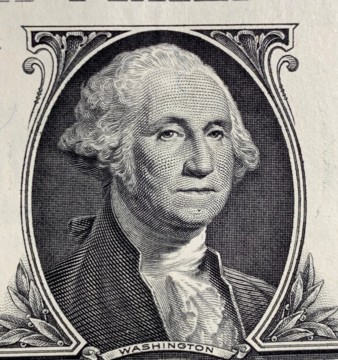
Photo by Javier Mendoza at Pexels.
| A
Most Modest Dividend George Keyes © Copyright 2026 Geoege Keyes |
Photo by Javier Mendoza at Pexels. |
The poor man buys a hamburger and discovers that the hamburger has acquired the purchasing power of a small automobile. The woman fills her automobile with gasoline and wonders whether she has inadvertently purchased shares in the Middle East. The young couple, having spent several years studying at great expense, discovers that their diploma may be exchanged for an entry-level position in which they are expected to answer emails from people who use the phrase “circle back.”
Meanwhile, the national debt continues its stately march toward the heavens.
It is therefore with no small satisfaction that I have received the recent proposal that every adult American citizen might be presented with a dividend of $5,000, provided that the Republican Party retains control of both chambers of Congress at the approaching midterm election. The proposal, we are told, shall be known as the “Trump dividend.” This is an exceedingly sensible name, for there is no reason why a public expenditure should not bear the name of the person who promises it. Indeed, I can think of no better method for restoring confidence in government than attaching the name of the government to the money, much as a proud father might write his name upon a lunchbox before sending his child to school.
The arrangement is particularly elegant because the dividend is not merely a dividend. It is a dividend with a condition. The citizen shall receive $5,000 if the Republicans win. Thus, the American voter is not merely a citizen, but a shareholder. And, as every prudent businessman knows, shareholders must occasionally be reminded of the importance of voting correctly.
I propose, therefore, that we cease pretending that elections are solemn exercises in constitutional self-government and recognize them for what they have increasingly become: a loyalty program with unusually expensive advertising.
There! The supermarket gives us points for buying cereal. The airline gives us miles for flying. The credit-card company gives us cash back for spending money we do not have.
Why, then, should the political party not give us $5,000 for electing the correct people to spend the money?
There is nothing unreasonable in this.
Indeed, it is remarkably efficient.
I. ON THE EXCELLENT ECONOMY OF BUYING A VOTERLet us consider the arithmetic.
There are hundreds of millions of adult citizens in the United States. At $5,000 each, the proposal would require something in the neighborhood of $1.2 trillion. Some persons of a nervous disposition have objected that this is a considerable sum.
I disagree.
A trillion dollars is merely a large number which has been given an unnecessarily intimidating name. The government has already demonstrated its capacity to discuss trillions with extraordinary composure. A trillion is therefore no more frightening than a billion, provided one does not insist upon adding them together. Furthermore, the government may obtain the money from tariffs, or from savings, or from economic growth, or from some other marvelous reservoir of national prosperity whose exact location need not concern the citizen.
The important thing is that the money exists conceptually.
And in Washington, conceptual money has always enjoyed a rich and productive career.
Should the money prove insufficient, we may simply print additional money. Should printing additional money produce inflation, we may distribute another dividend to compensate the citizens for the inflation caused by the first dividend. Should the second dividend cause further inflation, we shall distribute a third.
In
this manner, every American may eventually become a millionaire while
remaining unable to purchase a sandwich. This is what economists call
progress.
II. THE VOTER AS AN INVESTMENT
There is, however, a deeper advantage to the proposal.
It will finally permit the United States to determine the monetary value of its electorate.
For too long we have maintained the sentimental fiction that every citizen is equal. This is unnecessarily complicated. Under my improved system, every eligible citizen shall be assigned a precise electoral valuation. A Republican voter shall be valued at $5,000. A Republican voter who votes early shall be valued at $5,250. A Republican voter who persuades three relatives to vote Republican shall be valued at $6,500. A Republican voter who persuades three relatives, posts a photograph of the voting sticker on social media, and declares that he has “saved America” shall receive an additional patriotism allowance of $750.
Independent voters shall be classified as “prospective investments.” Democrats shall receive nothing, as they have apparently misunderstood the terms of the program. This last category may seem harsh, but I assure the reader that it is economically sound.
Indeed, it is essential.
For
if everyone receives the dividend regardless of how they vote, then
the dividend ceases to be an incentive and becomes merely government
spending. And we must never allow government spending to occur
without a political lesson attached to it.
III. THE QUESTION OF THE CHECK
Some critics have asked an impertinent question:
“What happens if I vote Republican and the Republicans lose?”
I am astonished by the lack of faith displayed in such an inquiry. The answer is obvious.
You have invested badly. No responsible financial adviser guarantees a return on an investment, and there is no reason the federal government should behave differently. You may therefore retain your vote, your dignity, and your $5,000-less bank account.
This is called market discipline.
Other critics have asked whether the government is permitted to condition a payment upon the outcome of an election. Such people are evidently unfamiliar with modern politics.
A politician may tell us that voting for him will bring prosperity, lower prices, cheaper gasoline, stronger borders, better schools, more jobs, less crime, world peace, and perhaps a chicken in every pot.
Why, then, should he not also provide the chicken's price in advance?
The
distinction between a political promise and a commercial transaction
has become so thin that one could comfortably print it on a
credit-card receipt.
IV. A PROPOSAL FOR EFFICIENCY
I would go further. Instead of holding elections every two years, we could simplify the process enormously. Every American adult could be mailed a catalog. The catalog would contain the available political parties, their promises, their slogans, their preferred television personalities, and the amount of money each party proposes to distribute. The citizen would then select the package most suitable to his household.
For example:
REPUBLICAN GOLD PLAN — $5,000 DIVIDEND
Includes: patriotic dividend; border security; tariffs; additional tariffs; very large flags;
presidential confidence; optional golf-course diplomacy.
DEMOCRATIC PLATINUM PLAN — AMOUNT TO BE DETERMINED
Includes: climate initiatives; healthcare proposals; institutional reform; a committee to study whether the word “initiative” has become meaningless.
INDEPENDENT BASIC PLAN — NO CASH, BUT YOU GET TO COMPLAIN ABOUT BOTH PARTIES.
Naturally, the Republican plan would be the most popular.
Why?
It is because it contains $5,000.
This
demonstrates the power of capitalism to solve democracy.
V. ON THE MATTER OF THE POOR
There remains the delicate question of poverty.
Some sentimental persons may argue that $5,000 is insufficient compensation for a citizen who is struggling with rent, food, medical expenses, childcare, gasoline, drug, or student loans. I believe these critics have misunderstood the purpose of the dividend. The purpose is not to solve poverty. The purpose is to make poverty feel temporarily bipartisan. A poor Republican will receive $5,000.
A poor Democrat will receive nothing.
For
approximately three weeks, therefore, the poor Republican will
experience the sensation of being a successful member of the middle
class. After that, prices may rise. But by then the election will be
over. This is an important economic principle: the political
usefulness of money is greatest before it is spent.
VI. THE CHILDREN
Some may object that the proposal places a burden upon future generations. This is an old-fashioned objection. Our children are already inheriting debt, environmental problems, infrastructure deficiencies, student loans, artificial intelligence, political polarization, and a national argument over whether a hot dog constitutes a sandwich.
Surely, they can inherit another trillion dollars. Indeed, I recommend that the government explain to children that the debt is actually a gift. A ten-year-old might reasonably ask: “Who will pay for it?”
The proper answer is: “You will.”
And if the child looks disappointed, we may reassure him: “You will also be allowed to vote when you are eighteen.”
This
should restore his faith in democracy.
VII. A MORE PERFECT SCHEME
Yet I confess that I believe the $5,000 dividend does not go nearly far enough. Why stop at five thousand? If the object is to encourage Republican victory, we should make the incentive proportional to the importance of the election.
A Republican victory in a safe district might therefore produce $5,000. A victory in a competitive district should produce $10,000. A victory in a state decided by fewer than one percentage point should produce $25,000. And if the Republicans win by precisely one vote, the voter who supplied that vote should receive the Treasury itself. He should also be appointed Secretary of Something. This would encourage civic participation enormously. Imagine the turnout. Imagine the patriotism. Imagine the lines outside polling places. Imagine citizens asking one another: “Have you decided who you are voting for?”
“Yes.”
“Why?”
“Because I have done the math.”
There
could be no clearer demonstration of the triumph of democracy.
VIII. THE NEW AMERICAN CREED
We might even revise the national motto.
“E Pluribus Unum” is beautiful, but perhaps too abstract for our present economic moment.
I propose:
E Pluribus Five Thousand.
Out of many, a dividend. The phrase captures the modern American understanding of government with admirable precision. We are many. We disagree. We argue. We watch television. We complain about Washington. We complain about Democrats. We complain about Republicans. We complain about the price of eggs. And then, suddenly, someone appears and says: “Vote for me and I will give you $5,000.” At which point the great machinery of constitutional government becomes remarkably simple.
About
the money.
IX. THE LAST OBJECTION
There is, however, one objection which I cannot entirely dismiss. A democracy is supposed to be a system in which citizens select their representatives according to their judgment of the public good. If a politician offers $5,000 conditional upon his party's electoral success, might the citizen begin to regard the vote as a commodity rather than a civic responsibility? This is a serious concern. Fortunately, there is an easy solution. We should simply redefine the vote. The vote shall no longer be considered an expression of political judgment. It shall be considered an economic instrument.
Every citizen receives one. Every citizen may use it once. And every political party may attempt to purchase its favorable disposition by promising something sufficiently attractive.
The richest party will therefore have the advantage. The party with the most famous candidate will have another advantage. The party with the largest television audience will have another.
The party with the largest supply of promises will have another. And the citizen, who was once the sovereign of the republic, shall become the consumer. This arrangement is not undemocratic.
It
is merely democracy with better marketing.
X. CONCLUSION
I have now demonstrated, I believe, that the proposal is entirely reasonable. It provides money without requiring us to explain where the money comes from. It encourages voting without requiring citizens to understand what they are voting for. It stimulates the economy by giving people money which may increase prices, thereby requiring them to spend the money.
It reduces political uncertainty by converting political allegiance into a measurable financial transaction. And, most importantly, it gives every American something to look forward to after election day.
There are, naturally, some minor details.
Congress may have to approve the expenditure. The Treasury may need to locate the money. Economists may object. Bond markets may become nervous. Inflation may complain.
The national debt may become somewhat larger. And the American people may eventually discover that a $5,000 check received from the government is not actually worth $5,000 once the government has borrowed the money, the economy has adjusted to the spending, and the taxpayer has been reminded that nothing in Washington is ever free. But these are technical matters. The essential principle is sound.
The citizen votes.
The party wins.
The citizen receives $5,000.
And everybody lives happily ever after. At least until the next election. For I have one final and modest improvement to suggest. Rather than waiting two years for another midterm election, why not hold one every year? Better still, every six months. Better still, every month.
And, if the treasury should permit it, every Tuesday. This would have the additional advantage of keeping the American people permanently hopeful, permanently nervous, and permanently eligible for another dividend.
Indeed, I see no reason why the President could not announce a new payment every week: $5,000 if we win Tuesday. $7,500 if we win next Tuesday. $10,000 if we win the following Tuesday. And, eventually, when the national debt has reached a number too large for ordinary arithmetic, the President may announce the final and most magnificent dividend of all:
One trillion dollars to every American who promises to vote for us.
At which point the republic will have achieved perfect economic equality. Everyone will be rich. Everyone will owe everything. Everyone will have received a check. And no one will be able to afford the stamp required to mail it back. I remain, therefore, with the greatest respect,
Your most obedient servant, A Concerned Economist Who Has Discovered That Democracy Has Excellent Cash-Flow
Potential…