Just In Case
Ellie Miyoshi
© Copyright 2026 by Elli Miyoshi

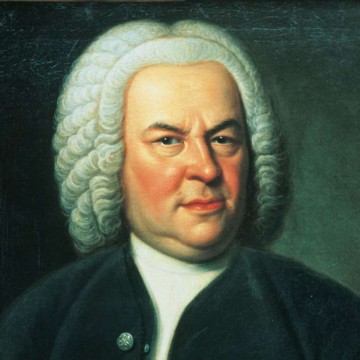
Bach portrait 1748 by Hausmann at Wikimedia Commons.
Just In CaseEllie Miyoshi © Copyright 2026 by Elli Miyoshi |
Bach portrait 1748 by Hausmann at Wikimedia Commons. |
That is not quite true.
The sequence was somewhat reversed: I joined a choir because I wanted to go to Germany.
Germany was the homeland of the people who ran the bakery I visited as a child, the owners of my favourite sweet shop, and the lady who lived two doors down. Since I was little, it had been a country strangely familiar in name alone. And now, my choir was going on tour there.
“Never miss an opportunity.”
Or, as the saying goes,
“There’s no time like the present.”
Proverbs are remarkably convenient when you need an excuse.
Mind you, once I actually arrived in Germany, it was a different proverb that came to mind: Better safe than sorry.
Our choir was so large that we had to split into two groups for the Worms city tour—one with a German-speaking guide and one with an English-speaking guide. More than any performance in Germany, one task filled me with absolute dread: I had been assigned as the Japanese interpreter for the English group.
I had never interpreted in my life.
As our departure date approached, the fact that I had never done anything like this before became increasingly alarming, so I mentioned my concern to a few friends.
Those who knew my hobbies immediately burst out laughing.
They had a point.
An alarming proportion of my English vocabulary had been acquired from stories involving murder, kidnapping, medicine, and other subjects of very limited use on a peaceful sightseeing tour. This was the direct result of spending years absorbing much of my English from British crime dramas and detective mysteries.
My British friends were particularly encouraging.
“Should the case happen over there, I think the culprit would be you, Ellie.”
How very reassuring.
So I developed my standard reply.
“I’ll put that away in my suitcase, just in case.”
That banter has been our running joke ever since.
I had been taking notes from J. S. Bach since childhood, though not entirely by choice. Ever since I learned a few pieces from the Notebook for Anna Magdalena Bach, he and I have maintained a rather complicated relationship.
It isn’t that I dislike him; I just don’t particularly love him either. Yet Bach was the “Father of Music”—and like certain fathers, he had a habit of turning up whether invited or not.
Play the piano? Bach.
Sing in a choir? Bach.
Open a Western music history book? Bach.
No matter how hard I tried to dodge him, there he was.
And Germany, apparently, had decided that subtlety was unnecessary.
In Leipzig, I stood inside St. Thomas Church, where Bach had worked for decades and where he now lies buried.
Not as a mere tourist, mind you.
I sang Bach’s Singet dem Herrn ein neues Lied, Wachet auf, ruft uns die Stimme, and the Mass in F major.
Then, at the Hochschule für Kirchenmusik Heidelberg, I attended a workshop on Singet.
By the time we reached Worms, Singet had turned up yet again.
The evidence was becoming difficult to ignore: Bach was following me.
Life occasionally writes its own foreshadowing. Whether you ask for it or not, the payoff can arrive decades later. As for my relationship with Bach, it seemed I had been in the middle of one long, unresolved cadenza all along.
However, sheet music was not all one needed for a concert tour.
During our stay, I caught a cold. At rehearsal, I simply could not stop coughing. Noticing my distress, the German singer seated next to me handed me a tiny object.
Apparently, a cough remedy.
Except it wasn’t an ordinary lozenge. You were supposed to stick it directly to the roof of your mouth.
As I listened to the explanation, I couldn’t help thinking: Do Germans precision-engineer even their medicines?
Sceptical, I stuck it on.
It worked wonders.
To show my gratitude, I gave her a Japanese voice-care throat sweet that I had brought from home. Another German singer watching us took an interest.
Then another.
And another.
Before I knew it, a modest bazaar of international trade had erupted in a corner of the rehearsal hall.
German cough remedies. Japanese throat sweets. Someone else’s mints. Another person’s herbal sweets.
They say music is a universal language. That may well be true—though cough sweets require considerably less rehearsal.
Ever since, “cough-sweet diplomacy” has become a staple of my choir tours. Diplomacy, after all, doesn’t always begin at summit meetings. Sometimes, it starts with a single sweet.
Sweets occasionally transcend almost everything: nationality, borders, and language. Sugar and a little human kindness have an impressive way of making strangers warm to one another.
As diplomacy goes, it may even be more effective than some G7 summits.
Probably.
Then came the day of the Worms city tour.
What awaited us was a barrage of religion, world history, and church architecture. Normally, I adore these subjects. However, listening to explanations in English about subjects you love and interpreting them into Japanese on the fly for everyone else are two entirely different beasts.
In my brain, every English word I knew, every scrap of world history, Japanese history, and religious history that I could summon, and a mountain of questionable trivia all scrambled to their posts at once.
It was full-scale military mobilisation.
Honestly, I was so desperate while explaining the churches that I remember almost nothing now. Nobody ran away in panic, so I presume I wasn’t entirely off the mark.
When we visited the Jewish cemetery, a UNESCO World Heritage site, our guide spoke about the distance traditionally maintained between the living and the cemetery. Something about that separation struck a familiar chord with ideas about death and ritual boundaries I had encountered growing up in Japan.
For just a brief moment, right in the middle of interpreting, I slipped back into being an ordinary tourist, thinking how fascinating it was.
And then the mission was over.
Peacefully.
No murders occurred.
No kidnappings took place.
No situations demanded the deployment of medical terminology.
The sinister crime-related vocabulary I had diligently hoarded over the years was, thankfully, never called into active duty.
By the end of the trip, my suitcase contained herbal teas, chocolates, a few remedies, and throat sweets.
I sang plenty of notes, took plenty of notes, and came home having taken note of one important thing:
You never truly know which words will save you until you actually get there.
Still, better safe than sorry.
Just in case.
Case
closed.
Ellie Miyoshi is from Japan and currently lives in Surrey, England. She studied Japanese literature and language at university and has worked in corporate administration and early childhood education. She enjoys choral music, travel, languages, and finding humour in cultural encounters.