Grandmother's Truths
Dina Bern
© Copyright 2026 by Dina Bern
|
Grandmother's Truths
Dina Bern
© Copyright 2026 by Dina Bern |
|
On her way home, Candelaria thought about what her grandmother had told her:
“It’s good that you’re studying, my little girl. This is a world made for those educated in the ways of non-Indigenous people; only then can one dare to dream of the chance at a better life. I am an ignorant old woman when it comes to that world you are learning about now, and that’s why I’ve been poor all my life. But one thing’s for sure, Cande: I remember everything my grandparents taught me during conversations just like the one we are having right now. That’s why I’m telling you, my little girl, whether you believe me or not, there are things they teach in school that simply aren’t true.
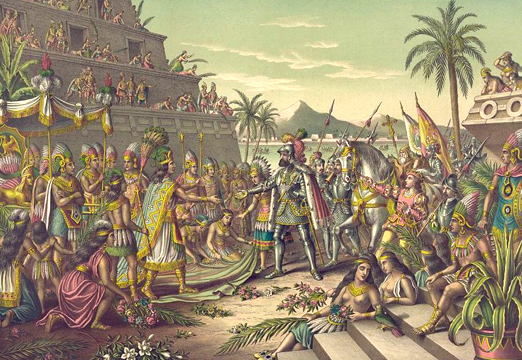
Take what you just told me, for example: that the Indians lost the war against the Spaniards because they were foolish, thinking the Spanish man and his horse were a single being, and so, instead of aiming their arrows and spears at the man, they aimed at the horse. Look, child, what was really happening back then was that horses were what tanks and Jeeps are today. The invaders used those poor animals as vehicles to move around and kill with greater ease. They bought massive, powerful horses from a tribe of people called the Celts, who lived closer to the Spaniards than to us and traded in equines. Before coming to our lands, the invaders used those powerful animals in a religious Christian war of theirs called the Crusades. And because things went so well for them with the help of those huge horses, they brought them over here to conquer us. Our people killed the poor beasts so the invader would fall to the ground and be at eye level with our men and women defending what was theirs. Killing the horses was a war tactic, my little girl, not stupidity like your teacher says. But that's just how it goes: since we were the losers, for centuries upon centuries the victors have felt entitled to tell whatever lies they want about us.”
“Tomorrow first thing, I’m going to tell the teacher she’s dead wrong!”
“No, Cande. She will only get upset and take it as a sign of disrespect. She might even give you a bad grade. But don’t worry, the time will come when you will be able to bring the Truth to light.”
“But the teacher told us that tomorrow she’s going to teach us more about the Maya. Surely more lies!”
“Do you know what she’s going to talk to you about tomorrow?”
“Yes. About how the Maya, despite their advances in mathematics and astronomy, never had the imagination or the capacity to use the wheel.”
“Ah! And that’s really how your teacher put it?”
“Yes, Grandmother; just like that.”
“Listen, my little girl, that has to do with our religious and spiritual beliefs. To Indigenous people, the circle is a sacred shape. The Heart of Sky, the sun, is round. The moon is round. Our Mother Earth is round. It’s true that before the invaders arrived, we didn’t use likenesses of that sacred shape to lighten our daily labor, but that doesn’t mean we didn't know about it. So you can see we did understand the benefit the wheel could offer us, realize that the rolling pin we still use today with the grinding stone for our corn is an elongated wheel—a cylinder. Preparing our food is a sacred task; that’s why, for centuries upon centuries, long before the conquistadors arrived, we have used the wheel to help us produce our nourishment.
We also used it as a kind of ball in our religious games, because those were sacred too. That game that nowadays even has an Americanized name, what they call basketball, is of Mayan origin, Cande. Incense was burned and prayers were offered to the gods before starting every game. But you know something, Cande? I believe that nowadays, ball sports have something sacred about them even for non-Indigenous people. Before every event begins, everyone present—both players and spectators—sings the national anthem of the countries playing. I’ve seen this on TV at your house, Cande; I’ve seen it when your dad watches the World Cup. I’ve seen how team members from each country sing their national anthem before they start to play.”
“And I can’t tell the teacher that either?”
“Of course not, my little girl. She would surely take offense and remind you that you’re only eleven years old. According to her logic, the difference between her age and yours is reason enough for her to know more than you. And she probably does about most things. But when it comes to Indigenous people, my little girl, you know more—because I swear to you that the things I teach you are true.”
“But what good is it for them to be true if nobody knows them and you can’t say them, Grandmother?”
“One day you will be able to say them. I’ll tell you how: if you study hard, very hard, and truly master the ways of the non-Indigenous world, you will be able to write down everything I’m passing on to you. And all of Guatemala—and with any luck, the whole world—will be able to read and finally know these truths.”
~The End~
Dina's Story List and Biography