Lost In The Fog At Quinta da Regaleira
Dhruv Maheshwari
© Copyright 2026 by Dhruv Maheshwari

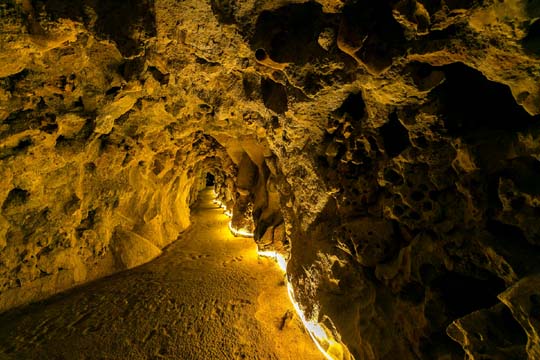
Photo by Diego Delso at Wikimedia Commons.
Lost In The Fog At Quinta da RegaleiraDhruv Maheshwari © Copyright 2026 by Dhruv Maheshwari |
Photo by Diego Delso at Wikimedia Commons. |
I woke up late in my hostel in Lisbon and had a quick espresso for breakfast. It was an unpromising start to a morning trip. I caught the morning train to Sintra with the feeling that the day had already started without me. There was still time to go somewhere, though, and that seemed enough reason to keep moving.
The weather app had given me expectations that the weather itself had no intention of meeting. Everything was grey, and a fine mist was falling. It was the sort of weather that makes it difficult to decide whether it is actually raining. The distinction did not matter much to my boots. They would be wet either way. I had wanted a day out of Lisbon and was getting one, complete with a sky that looked unwilling to cooperate.
On the train, everyone seemed to be heading for Pena Palace. I had already filed it away in my mind as a tourist trap. That was a fairly confident judgement about a place I was choosing not to visit. Looking back, the certainty says more about my mood that morning than about the palace. I was running late, the forecast had let me down, and following everybody else towards the same destination held little appeal.
So I changed the plan. I got off early and walked the back roads towards Quinta da Regaleira. A train gives a journey a reassuring shape: get on, stay aboard, get off where intended. Walking offers more opportunities to wonder whether the last decision was a sensible one. Still, after watching a carriage full of people apparently agree on where to go, making a different choice felt satisfying. I would discover later how little choosing my own route guaranteed that I could follow it.
Quinta da Regaleira looked like a Gothic fever dream. That was the phrase that fitted it, even without knowing its history or the meaning of its features. There was enough to absorb simply by being there in the mist. The weather that had disappointed me on the way now seemed entirely appropriate. A bright, clear day would have given me a different impression of the place. This version came with damp stone, limited visibility and the uneasy pleasure of not quite knowing what lay ahead.
The Initiation Well became the centre of my visit. I spent about two hours lost around the well and its subterranean stone passages, trying to work out which tunnel would lead somewhere other than another dead end. Two hours is a considerable amount of time to spend being uncertain about where to go. In the telling, it sounds like a deliberate exploration. At the time, a fair part of it was the much less impressive business of trying to find my way.
There is a difference between deciding to get lost and discovering that the decision has been made for you. On the train, avoiding the obvious destination had felt like independence. Underground, independence was less glamorous. I still had to choose a direction, and being pleased with my earlier choice did not help me identify the correct tunnel. The visit had become very immediate. Instead of considering everything that Sintra might offer, I was concerned with the stretch of stone in front of me.
My boots were becoming thoroughly caked in damp mud. The humidity was also doing something unwelcome to my phone speaker. Neither detail belongs in an ideal account of a carefree excursion. They do belong in this one. Getting lost had physical consequences: dirty footwear, a troublesome phone and a chill that made itself felt. The inconvenience was real, even if I would eventually decide that the experience justified it.
Standing at the bottom of the moss-covered pit, with no crowds around me, I felt that it did. I had left the train wanting to avoid a busy attraction, but I had not expected this particular kind of emptiness. There was no need to compete for a moment in which the place could be experienced without other visitors filling it. For that part of the visit, I had the damp, the stone and the quiet to myself. The chill was still there. I simply minded it less.
I would be making too much of the day if I claimed that being lost had taught me how to live. Mostly, it had taught me that I was capable of spending a long time confused inside a place I had deliberately chosen. Yet that confusion also held my attention. It prevented the visit from becoming a quick arrival, a look around and an equally quick departure. Quinta da Regaleira occupied more of my day than I had intended, and more of my attention too.
Afterwards, near the centre of Sintra Vila, I found a small place selling a cheap bifana, a pork sandwich. The owner spoke little English. I remember that without a story about overcoming a language barrier to attach to it. What I remember is the modest scale of the place and the sandwich that followed a long, damp visit. After the hurried espresso in Lisbon, eating something substantial belonged among the day's better decisions.
Lunch brought me back down to earth. I had spent part of the day in a setting that seemed almost unreal, then returned to the straightforward needs of being hungry and finding somewhere to eat. A place does not have to remain mysterious for every minute of a visit. Sometimes its strongest impression sits alongside something as simple as a cheap lunch. The two memories do not compete. Together, they make the day easier to remember honestly.
There is a temptation, when describing a trip, to make every decision sound deliberate. Mine had involved a late start, disappointing weather and an impulse to go somewhere different. The uncertainty continued after I arrived. Keeping those details matters to me because they explain the day better than a polished list of sights could. I had wanted an outing, and the outing had become this particular combination of discomfort, confusion and pleasure.
Now
I am sitting on a stone wall in Sintra, waiting. My boots are muddy,
my phone speaker has suffered from the humidity, and the morning's
neat expectations have long since stopped being useful. I cannot say
whether the people who went to Pena Palace had a better day. I never
saw what they saw. I only know the day I actually had: the late
start, the grey weather, the back roads, the passages and the quiet
at the bottom of the well. It was worth the damp chill. That is
enough to take back with me.