When Life Changed The Rules
David Krochmal
© Copyright 2026 by David Krochmal

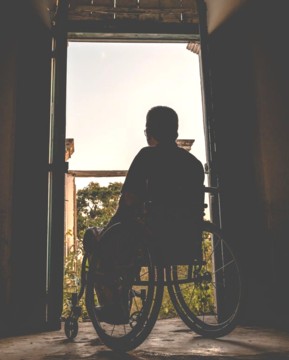
Photo by Alexandre Saraiva at Pexels.
When Life Changed The RulesDavid Krochmal © Copyright 2026 by David Krochmal |
Photo by Alexandre Saraiva at Pexels. |
Then my body started telling a story I wasn’t ready to hear.
I began falling at work. I didn’t understand what was happening until I was diagnosed with multiple sclerosis. I was still trying to process that when, about two months later, an MRI revealed kidney cancer. And then came another terrifying crisis: my son found me lying on the bathroom floor. I was later found to have blood clots on my heart and in my lung.
In just a few months, my life went from full speed to one medical emergency after another. I had spent 52 years barely seeing a doctor, and suddenly my world revolved around hospitals, scans, specialists, treatments, and questions I never imagined I would have to ask. It felt as if every time I started to catch my breath, something else happened.
But the diagnoses were only part of what I was losing.
Multiple sclerosis changed what my body could do. Walking became harder and harder until I became a full-time wheelchair user. I went from working more hours than most people thought possible to being unable to work at all. The independence I had taken for granted disappeared in pieces: getting where I wanted to go, doing things without planning every move, and being able to rely on my own body.
There is a particular kind of grief in losing ordinary things you never imagined you would have to miss. Freedom. Spontaneity. The ability to get up and go. The familiar version of yourself who could work a long shift, solve a problem, and keep going. I miss that person. I miss the life I had before MS. And some days, I’m still trying to figure out who I am without the work, movement, and independence that used to define so much of my life.
Then there’s the financial side—the part people don’t always see. When you can no longer earn a living the way you used to, the bills don’t simply stop arriving. Medical appointments, prescriptions, copays, groceries, household expenses, and wheelchair repairs all compete for money. It is a hard adjustment to go from earning your own way to needing financial help. It can feel humiliating, especially when you have spent your life working hard and taking pride in being able to provide and take care of things yourself.
I’ve had to learn that needing help doesn’t erase the years I worked or make me less of a person. But knowing that intellectually doesn’t mean it’s easy to live with. Asking for help can bring up pride, frustration, and feelings I don’t always know what to do with. I never pictured this as my life. I never thought I would have to explain why I needed help with things I once handled without thinking.
The emotional toll is real, too. There is the fear that comes with each new symptom or medical result. There is the exhaustion of appointments and treatments. There is the frustration of having a mind that wants to do something while a body that has other plans. There are days when the physical struggle, the financial pressure, and the uncertainty all pile up at once. Some mornings, I wake up already tired of fighting.
I won’t pretend I’m positive every minute of every day. I have bad days—physically, mentally, and financially. Sometimes I complain. Sometimes I get angry. Sometimes I’m overwhelmed by the fact that this is my reality now. I don’t think being inspiring means pretending everything is fine. Sometimes the most honest thing you can say is, “Today is a bad day, and I’m doing the best I can.”
But I’m still here.
I still look for reasons to laugh. I still connect with people, share what I’m going through, and try to make somebody else’s day a little lighter. I’ve found community in places I never expected, including online, where people living with chronic illness understand things that can be hard to explain to anyone else. Humor has become one of the ways I keep my footing. I can’t control every twist in the road, but I can still try to find something to laugh about along the way.
I’m learning that resilience doesn’t always look like a dramatic comeback. It doesn’t always mean beating an illness, returning to your old life, or waking up grateful every day. Sometimes resilience is getting through an appointment. Sometimes it’s accepting help. Sometimes it’s telling the truth about how hard things are. Sometimes it’s finding a reason to laugh from a wheelchair in a life you never planned.
I don’t want my story to be reduced to a list of diagnoses. I’m a person who had a life before illness, and I’m still a person now. I’m more than my wheelchair, more than my medical chart, and more than the money I do or don’t have. My value was never measured only by how many hours I could work or how much I could accomplish in a day—even if it took losing those things to understand that.
I didn’t choose this chapter, and I don’t know exactly what comes next. I can’t go back and undo the falls, the diagnoses, the cancer, or the frightening day my son found me on the bathroom floor. I can’t restore the body or the life I had before MS. What I can do is keep telling the truth about what this experience is like, appreciate the people who stand beside me, and keep looking for ways to connect with others who may be facing their own unexpected battles.
Before all this, I thought strength meant powering through, working harder, and never slowing down. Now I know strength can mean something very different. It can mean adapting to a life you never asked for. It can mean asking for help without surrendering your dignity. It can mean grieving what you’ve lost while still making room for laughter, friendship, and hope.
My life changed in ways I never would have chosen. I lost my physical independence, the work that gave my days structure, the financial security I had built through working, and the familiar sense of who I was. I’m still dealing with the emotional weight of one medical crisis after another.
I’m not going to pretend those losses don’t matter. They matter every day.
But they are not the whole story.
I’m still here. I’m still finding my voice. And I’m not done telling my story.