There Is Always War Here
Beata Stasak

©
Copyright 2023 by Beata Stasak
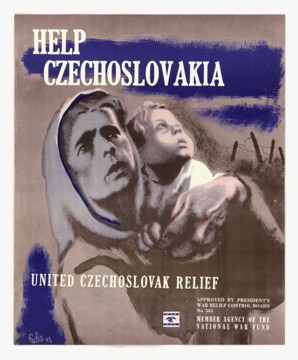
IImage by artist: Antonin Pelc at Wikimedia Commons.
|
There Is Always War Here
|
|
My great-grandmother Julia was born in a Croatian village in 1900, a village that no longer exists. By the time I knew her, she was in her seventies, sharing one room in a Communist tenement with three of her great-granddaughters, myself among them. This is one afternoon from that childhood.
Behind the house, by the woodshed and pigsty, Grandmother Vilma and my cousins were lowering Zahraj into a fresh grave.
His bloodied fur was wrapped in one of Grandmother Vilma's knitted tablecloths, the lace already darkening where it touched him.
I slipped past them into the house and tiptoed to the forbidden rooms.
Great-grandmother Julia gathered me in her arms and kissed my forehead. She smelled of stale urine, old wool and medicine, so I pulled away. When she offered me chicken soup, I drank quickly — until something bitter stung my tongue and made my eyes water.
“Black pepper,” Uncle Julian laughed, coming from the back room he shared with her.
I coughed, then smiled at the smell of chicken.
“Grandmother only gives us potatoes and butter. I want to live here.”
“Ask your grandfather when he comes home,” Julia said. “Your grandmother took half my house and my only son, then made a fool of him with a German.”
“It was in the war, Julia,” Uncle Julian said quietly.
“There is always war here,” Julia said, wiping her eyes. “My husband died fighting the Germans. My son nearly died fighting Russians. Now the Russians are fighting us.”
“Grandfather is never home. That is good. When he is, we get beaten because we are not good.”
I licked the last drops from the bowl.
“He is better off in Malacky with that Gypsy of his,” Julia said. “Vilma only wants his money. Without it, you would all be licking the floors. I have my war pension. I need nothing from him.”
“Grandmother has a big garden, pigs, chickens and vineyards,” I said proudly.
“That was my garden and my pigs and my chickens. She had nothing, just a rotten old vineyard her father lost to drink.”
Uncle Julian placed pills into Julia's palm.
“Look after your heart. It matters no more. The Communists claim everything now.”
“What about her father?” Great-grandmother pointed at me, whispering. “Is he in or out?”
Uncle Julian glanced at me and shook his head.
“He was organising a night crossing to Austria through Devín last week. My girlfriend begged me to go, but I couldn't. Not with this heart.”
“They have medicine in the West,” Julia said. “That German who lived here should have protected you.”
“I fought against him. You know that I fought the Germans. I don't regret it.”
“Germans or Russians,” Julia spat. “The same filth.”
The cellar door banged, and I slipped back into the hallway.
Through the veranda glass, I saw my Aunty studying for her high school exams. I crept in and sat on the stool she had set out for me.
“Write your name, copy these sentences, then read them to me,” she said without looking up.
I began copying.
“One day I'll be a writer and write down everything I know.”
My Aunty laughed.
“You don't know much yet.”
“Yes, I do. I've been in prison. You haven't, have you?”
“That was not a real prison. Soldiers caught you crossing the border. Your father escaped because he was clever enough to hide. Your mother was not.”
“Exactly.”
“Now copy the alphabet so you can do more with your life than she has. One day you'll thank me.”
I loved letters but not numbers. I pressed the pencil too hard, broke the tip, and tried to fix it by scribbling over the page.
“Go and practise somewhere else, scribbler,” she snapped, pushing my stool away.
I was sorry, but I had no paper or pencil of my own.
I ran outside and hid behind the dunny, where no one went, practising my name in the dirt with a stick.
Soon I heard sighs, then cries of pain from inside.
I stopped writing and listened, worrying about the empty place in my mouth where a new tooth was pushing through.
“Who's there?” Great-grandmother's voice rose in panic from inside the dunny.
“I want to do a 'wee'. You must let me in,” I demanded, banging on the wooden door.
Julia opened it, small and black-clothed, gripping the frame as if it were the only thing keeping her upright.
I peered inside.
“Great-grandmother, there is blood on the seat. Grandmother Vilma will spank you.”
She searched through her black skirts and pulled out a tiny chocolate biscuit.
“Have you ever tasted this?”
I grabbed it and crammed it all into my mouth before she changed her mind.
She pointed a bony finger at me. I noticed little droplets of blood on it.
“Are you going to die, Great-grandmother Julia?”
She looked at me for a while.
I put my open hand in front of her.
“Can I have another one?”
“Clean that toilet and not a word,” she ordered.
I remembered how she had once hit Grandmother Vilma across the face before Grandfather divided the house in half: one side for us, one for Julia and Uncle Julian.
I hurried past her for a tin bucket.
My cousins appeared behind the pigsty with flowers for Zahraj's grave.
“Where are you going? What are you doing?” they pestered.
I ignored them and lowered the pig-food bucket into the well.
It dropped easily but came up heavy, so the three of us pulled together.
“What are you doing?” Grandmother Vilma demanded from the washing tub, steam rising beside her from the outdoor fire.
She came over and chased us away, the bucket falling back into the well.
“There's not even enough water left for the vegetable garden. Go find somewhere else to play.”
“That's exactly what I want to do, Grandmother Vilma. Water the vegetable garden. I love the fresh peas there, but they're so dry now.”
She hauled up the bucket and handed it over, scolding me for using the wrong one.
I took it, spilling half, and led the cousins to clean Julia's blood from the dunny seat.
I told them she was bleeding out like the winter pig.
“Then we'll need another grave,” my cousins said.
We wandered to Grandfather's plum trees and chose an old one with bark wrinkled and split like Julia's hands.
“We'll dig tomorrow,” I decided, and we sat beneath the tree, inspecting the darkening plums.
“Grandfather will come soon,” one cousin said. “Then we'll pack the fruit into crates for Malacky.”
“He'll make plum brandy with his Gypsy,” I said. “Grandmother says he needs it to pay the Communists and keep his job.”
“What is his job?” I asked.
My cousin stood, waving an imaginary flag at an imaginary train.
“During the war, he sent people on trains to be killed in factories,” I told them importantly. “They bled them like our pigs.”
“For what? For meat?” my cousins asked curiously.
“I asked, but no one told me. I just know Grandfather was there.”
“Then we'll look in the ghost shed,” one cousin said. “Where they kept the children before the trains.”
“Grandmother Vilma said no one should go in there. It's an evil place. Lots of innocent blood was spilt there, she said.”
“If they bled them there, then what do they need the factories for?” I asked.
“We'll have to find out,” my cousins said.
I nodded.
For once, I thought they were right.
Just then, a neighbour boy jumped the fence.
“Do you want to see Russian tunnels from the war? I found a bomb there yesterday.”
“A real bomb!” all three of us shouted.
“You won't take us because we're just girls,” I snarled.
My cousins stood beside me.
“Sure,” he said. “Two boys went blind last week when a bomb blew up in their faces. I need a new crew. Unless you're chicken.”
“I'll go,” I said, glaring.
“I tasted real blood today. Did you?”
Julia lived to be almost a hundred. She outlasted the village, the highway that replaced it, a husband, a grandson, and two occupations, and she never once set foot inside a hospital, right to the end. Her last words, as far as anyone remembers, were about the fear of war — the same fear she'd been feeding to whoever turned up hungry at her door, one bowl of chicken soup at a time, pepper and all.
Contact
Beata
(Unless
you
type
the
author's name
Beata's story list and biography
The Preservation Foundation, Inc., A Nonprofit Book Publisher