The Wrong Code
Arthur Van Young
© Copyright 2026 by Arthur Van Young

The Wrong CodeArthur Van Young © Copyright 2026 by Arthur Van Young |
|
There is a kind of tired that only the parents of a one-year-old really understand. It is not the tired of a long day at work. It is the tired of a long day of being needed every single minute: snacks, diapers, bottles, songs, more snacks. By the time my wife and I pulled into the parking lot of our Airbnb in Traverse City, it was late at night, and we were running on whatever was left after that.
In the back seat, our son was finally asleep in his car seat, his head tipped to one side the way only a baby's head can tip without looking uncomfortable. Our dog had settled down too. The car was quiet for the first time in hours. My wife and I looked at each other with the small, tired smile of two people who had made it. All that stood between us and a real bed was a door and a code.
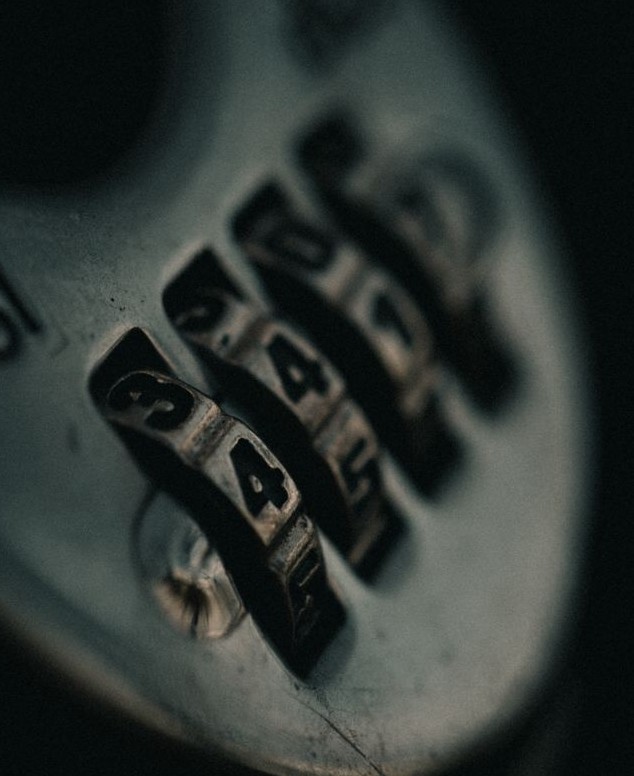
The host had sent us the code ahead of time. I had it on my phone. I remember feeling a little proud of how organized we were: we had the address, we had the instructions, and we had the code. I walked up to the door, typed in the numbers, and waited for the lock to turn.
It did not turn.
I tried again, slower this time, pressing each button as carefully as if I were defusing something. Nothing. I went back to the car, and my wife read the numbers out loud from her phone while I typed them in a third time. Still nothing. The door stayed exactly as closed as it had been when we arrived.
At first you assume it is your own mistake. You must have hit the wrong button. Your finger must have slipped. But after enough tries, a quiet, sinking feeling sets in. The code was simply wrong.
We reached out to the host. We sent messages and waited. We tried again and waited some more. No answer came. Standing there in the dark, I understood why. It was late at night. She was almost certainly asleep, the way most sensible people are at that hour. There was no one on the other end of the line, and there would not be until morning.
So there we were: a husband, a wife, a sleeping baby, and a dog, parked outside a place we had paid for and could not get into.
I am sure there were other choices we could have weighed. But at that hour, with our son finally sleeping and both of us worn thin, the simplest answer was the one already right in front of us. We had a car. We had each other. We would sleep where we were and sort it out in the morning.
That decision sounds calm when I write it now. It did not feel calm at the time.
The thing nobody tells you about sleeping in your car as a family is how exposed it makes you feel. A car is a room made of windows. Inside, we were just tired parents trying to rest. But I kept picturing how we might look from the outside: a car parked late at night in a residential lot, with people inside who did not seem to be going anywhere. I started worrying that someone would notice us, wonder what we were doing, and call the police.
I want to be honest about that fear, because it was the loudest thing in my head that night. I kept imagining a knock on the window, a flashlight, and having to explain, with my son asleep in the back, that we really were supposed to be there, that we had a reservation, that the code just did not work. I knew we were not doing anything wrong. But knowing that and feeling safe are two different things.
So we did the only thing we could think of. We reclined our seats as low as they would go, so low that from outside, the car might look empty. My wife and I lay there almost flat, looking up at the roof, trying to make ourselves small. It is a strange thing, as a grown man and a father, to hide in your own car. It is a stranger thing to do it while your child sleeps a few feet away, trusting completely that everything is fine.
Maybe that was the hardest part. Our son had no idea anything had gone wrong. To him, it was just another night in the car seat, another nap on the road. His whole world was still safe because we were there. I lay in that reclined seat thinking about how much of being a parent is exactly this: holding the worry so the little one does not have to.
Then the dogs came.
Even late at night, there were residents out walking their dogs. I would hear footsteps first, then the jingle of a collar or the soft scratch of paws on pavement. Every time, my whole body went tight. It was not the people I was worried about in that moment. It was our dog.
Our dog was a good dog. But a good dog, in a strange place, late at night, seeing another dog walk right past the car window, might decide to say something about it. And one bark, in a closed car, would be more than enough to wake a sleeping one-year-old. If our son woke up, there would be no getting him back to sleep in that cramped car, and our long night would get a lot longer.
So each time someone walked by, I held my breath. I watched our dog out of the corner of my eye, waiting for the ears to go up and the bark to come. I think my wife was doing the same. We lay there in silence, two parents pressed flat in their seats, listening to strangers walk their dogs and silently begging our own to stay quiet.
And here is the thing: it never happened. Not once. Our dog never barked. Our son never woke up. All of that fear, all of that holding my breath, and the night simply passed. I have thought about that many times since. So much of what scared me that night lived only in my imagination. The police never came. The bark never came. The crying never came. The worst things I pictured never happened at all.
I would not call what we did that night sleeping, exactly. It was more like resting in shifts between worries. But slowly, the dark gave way, and morning arrived the way mornings do, whether you are ready for them or not.
The next day, the host found out what had happened.
I had been half expecting a quick, awkward reply, or maybe an excuse. That is not what we got. She was truly embarrassed. It showed in how she responded. She understood right away that a family with a baby and a dog had spent the night in their car because of a mistake on her end, and she did not try to make it smaller than it was.
She offered us a free night's stay. And on top of that, she gave us a gift. She did not have to do either of those things. A simple apology would have been the normal thing. Instead, she went out of her way to make it right.
I will be honest about something else: we had no hard feelings. None. It was not even a hard decision. We forgave her immediately.
I have thought about why that came so easily, and I think the answer is simple. We all make mistakes. I have typed wrong numbers. I have sent the wrong message to the wrong person. I have forgotten things that mattered to someone else. Every one of us, at some point, has been the person who got one small detail wrong and caused someone else a long night. When I looked at her mistake, I did not see someone careless. I saw someone human. I saw myself.
And when someone owns their mistake as openly as she did, holding on to anger would have cost us more than it cost her. We had a choice that morning. We could carry that night around as a grudge, or we could set it down and enjoy the rest of our trip. Forgiving her was the lighter thing to carry.
It has been years now, and our son, of course, has no memory of that night. He slept through the whole thing. But I remember it clearly, and not in the way I would have expected.
I do not remember it as the night our vacation went wrong. I remember it as the night my wife and I lay side by side in reclined car seats, keeping watch together. I remember our son sleeping peacefully in the back, completely unaware that his parents were awake and worrying for him. I remember our dog, quiet through every passing footstep, as if somehow understanding that this was not the night to make a sound. And I remember the next morning, when a stranger who had made an honest mistake showed us real kindness, and we got the chance to show her some kindness back.
A wrong code kept us out of a house for one night. It did not keep us from anything that mattered. We were together the whole time. Sometimes the trips we remember most are not the ones where everything goes right, but the ones where something goes wrong and people choose to be gracious anyway.
That is what I learned in a parking lot in Traverse City. Most of what we fear never happens. Most mistakes are just mistakes. And forgiveness, when it comes quickly, leaves room for the rest of the trip.
Arthur Van Young lives in Detroit, Michigan, United States. He is a husband and father, and this is his first piece of writing submitted for publication.