The Road To The Re-Use Depot
Arif Rehman Khan

© Copyright 2026 by Arif Rehman Khan
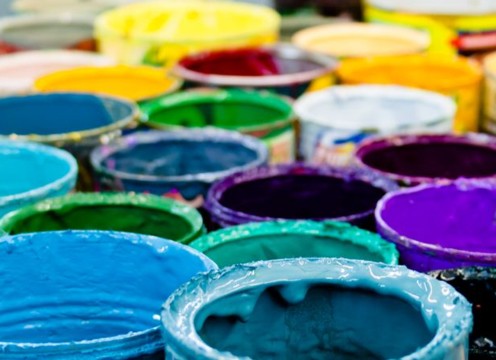
Photo by David Waschbusch at Pexels.
The Road To The Re-Use DepotArif Rehman Khan © Copyright 2026 by Arif Rehman Khan |
Photo by David Waschbusch at Pexels. |
In March 2024 I flew from Lahore to Detroit. On paper, my mission was to count how many gallons of paint had been diverted. In real life, it was to meet people who run small warehouses where leftover paint is saved from the landfill.
The flight is long enough that you have time to forget why you are going and then remember again. Lahore to Doha, Doha to Detroit. I left in the nighttime heat of Lahore, where even in March the air holds dust and paint thinner from the street shops. I arrived in the late winter of Michigan, where the snow was long gone but the cold was still in the concrete. The reason, on my grant paperwork, was simple: quantify paint diversion in ReUse Depots. I had a scale in my checked bag, a pocket notebook, and a letter from a county program.
But a journey is never only what is on paper.
I landed at Detroit Metro and drove to the East Side. I had been to Detroit before. My life is split between Lahore, Pakistan and Detroit, USA. Both cities know how to hold on to things. Both cities have houses that are repaired constantly before anyone thinks of throwing them away.
The first ReUse Depot was on a street with low houses and a shop that sold used doors. You know this kind of street in Detroit — a long block where every third lot is empty, but the houses that remain are cared for with a seriousness that feels like defiance. Someone has painted the porch. Someone has placed plastic on the windows neatly, not carelessly. There were tire marks in the thin snow-melt.
Inside it smelled like latex and dust. That is a specific fragrance. Latex paint when it is old becomes slightly sweet and sour at the same time. Dust in a paint warehouse is not the same as house dust. It is heavier because of pigment. It sits on the lids of cans. The depot was not large. It was the size of a double garage, perhaps a little larger. Fluorescent lights, a space heater, and shelves made from plywood and two-by-fours. Five-gallon buckets on the floor. Quart cans on shelves sorted by something close to color but not exactly. Off-whites together. Beiges together. Greens in a single corner that made me think of Lahore's public school walls.
Sajid was there.
Sajid is 60 years old. He is Punjabi like my father. He keeps a ledger in Urdu and English. Each line is a weight. I had seen Sajid's name before I arrived because his depot is in the county listing, but I had not met him. When I entered, he stood up from a small table that had a calculator with big buttons and a chai cup.
He told me he weighs every can. This is not required by anyone. Some depots estimate. Sajid does not estimate. He has a hanging scale and a platform scale. He lifts the can, hooks it, waits for the needle to settle. He writes it down. In 2023 his depot diverted 12,000 gallons in Detroit. He showed me his notebook. The numbers were written with care. Urdu numerals mixed with English notes. Date, weight in, weight out, color family. He said, we do not throw away color. He said it in Punjabi first — rang nahin sutde — and then in English.
We spent hours. I had come to count, so I counted with him. My method was simple: weigh in total, log, weigh again after consolidation if it was being bulked. Sajid's method was slower and better. He would open a can, stir it with a wooden stick, look at it, smell it, decide if it was still usable. Latex that has frozen and thawed is no good. It gets lumpy, like curdled milk. He knows by the way the stir stick moves. He learned this over years. There is no training for it.
I asked him where he learned to keep an Urdu ledger. He smiled. He said from his father who kept a kiryana shop. The shop in Gujranwala, then here. The habit of writing down every rupee, every dollar, every gram. The notebook was a full accounting book, not a small memo pad. Hardbound. Pages slightly warped from being in a cold warehouse.
When we broke for lunch he offered me chai from a thermos. We sat among the paint. The heater ticked. Outside a truck passed with a rattle that is specific to Detroit streets in late winter, when potholes are at their worst.
He told me that people bring paint after a death, after a house is sold, after a project fails. They do not want to put it in the trash because they know it is wrong, but they do not know what else to do. So they bring it to him. He is, in a way, the last person to see that color before it becomes something else.
I wrote that down.
The second depot was run by Marcus.
Marcus is 58, Black, from Detroit. He can match any paint color by eye. He has lived on Mack Avenue his whole life. His depot is larger, in a former auto shop. The bay doors still work. You can see where the lifts were. Now the space is full of shelving. Five-gallon buckets stacked like a wall. Literally like a wall — five high, two deep, a corridor of color.
Marcus greeted me in front of that wall. He is a large man with hands that are stained at the knuckles. Not from carelessness, from work.
He told me about homes painted by families who couldn't afford new paint. Low-income houses on his block had been saved by reused paint. He said it plainly, without sentiment. In his community, keeping a house is work. Paint is protection. If wood is exposed, it rots. If rot starts, the city notices. Reused paint is not about decoration. It is about keeping the house standing another winter.
I asked how he learned to match.
He said he watched his uncle who was a painter for the city. He learned by watching. He does not use a device. He uses his thumb.
He demonstrated. He took two whites that to me looked identical. One was slightly yellow. One was slightly blue. He placed a dab of each on the back of his hand, then a third that he mixed from a tint from a separate jar. He rubbed it. He held it up to the light from the bay door. "See?" he said. And after he said it, I did see. One white was warmer. The difference matters when you are touching up a living room wall where one section has been patched.
He has no spectrophotometer. The county offered one. He said he does not need it. His eye is faster. And he's right — the device needs calibration, needs power, needs to be clean. His eye works when it is cold.
We talked about inventory. Marcus keeps buckets sorted not by color name but by what they could become. He has a section for "porch grey" — all the grays that are close enough to become porch floor paint when mixed with a little more tint. He has a section for "Detroit beige" — that particular light brownish-yellow that is on half the houses on the East Side. He has a section for primers, which can be anything light mixed together.
I used my scale. He used his eye. Together we logged. My notebook filled. My hand got cold. Latex paint is cold when you hold the can in an unheated warehouse. The metal sucks heat from your fingers.
At one point a woman came in with two gallons from her garage. She apologized for bringing so little. Marcus said, "Two gallons is a bathroom. A bathroom matters." He logged it in his own book — not in Urdu and English like Sajid, but in block capitals. He thanked her. She left quickly, like someone who had done a good deed and did not want to be praised for it.
On that day I learned that in Harris County, Texas, more than two million gallons had been counted in a year. In Phoenix, 800 gallons in a small program. Marcus had those numbers taped to his wall from a conference flyer. He said the numbers are big but every number is someone who brought a can. He was right. Statistics in paint reuse always sound industrial until you are in the room where someone carries in one can and apologizes for only bringing one.
The third meeting was in Hamtramck, in a small room with Fatima.
Hamtramck is its own city inside Detroit. To get there I took the bus. I traveled between these depots by bus. The bus was slow. The bus in March is slow because it is full and because every stop takes longer when people have heavy coats. I sat near the front because I get motion sickness otherwise. I watched the city pass.
I saw many empty lots. Detroit has more empty lots than any city I have known except parts of Lahore after a demolition. In Lahore the lots fill quickly with rubble and then with a new structure. In Detroit they stay empty longer. Grass grows. Sometimes a garden grows. I saw children playing near a fence that was painted light green. That green was from a reused can. It was the same green Sajid had logged the day before. I knew it because I remembered the weight — 3.2 pounds, partial can, good condition, mint family.
Fatima's depot is not called a depot by her. It is a room in the back of a community center. Small, perhaps 12 by 12 feet. Shelves to the ceiling. A small electric kettle and a box of tea.
She is 62, Amazigh, from Fez, Morocco. She came to Michigan many years ago. She mixes paint like someone making tea. She stirs slowly. That is exactly how she does it. Not the vigorous shaking that paint stores do with a machine. She stirs in a circle, slowly, letting the pigment reincorporate. She said in Fez her mother saved everything. Fabric, oil, sugar, water. She saves paint now the same way.
She told me a journey is not just distance, it is what you bring back.
We did not weigh much that day because her stock was already sorted and much of it was in small jars, not original cans. She re-cans usable paint into clean quart jars that she collects from a restaurant that saves them for her. Each jar has a hand-written label: color, date, condition. Her handwriting is small and even.
I asked her about color. She said color is memory. She said she had a customer, a man from Yemen, who wanted the exact blue of his house in Sanaa. She did not have that blue. She made it from three blues and a drop of black. He cried when he saw it. She told this story not to boast but as a fact about what paint does.
I had come from Lahore where paint is also saved. In Lahore painters mix leftover paint for small houses. The practice is the same but the system is different. In Detroit there is a ledger, a tax credit, a county program. There is a hazardous waste manifest. There is a system for tracking VOCs. In Lahore it is a habit, not a program. A painter in Ichhra will keep half a can because he knows next week there will be a small wall that needs it. He will not write it down. He will remember it in his head. He will carry it on his motorbike. There is no county program. There is a common sense of thrift that comes from necessity and from Islam and from Punjabi culture — do not waste.
But the chemistry is the same. I hold an AB in Chemistry from the University of Chicago, 2014. I know paint is pigment suspended in binder. Latex is water, acrylic polymer, titanium dioxide, calcium carbonate, clay, and pigment. Oil is linseed or alkyd. When you save it, you are saving the energy that went into mining titanium, into making polymer, into transporting it. You are also stopping it from going into the landfill where it could leach. Counting gallons is a proxy for counting carbon, for counting work.
I spent three days counting. I used a scale. I wrote down numbers. I wrote down weights and converted to gallons using specific gravity. Latex is about 10-12 pounds per gallon depending on solids. I had a table. I had done this before in other cities. But Detroit was different because of the cold. Paint that freezes is ruined. Many cans that come in during January are ruined. The depots know this. They tell people — bring it before it freezes. Keep it inside.
On the bus rides between depots I had time to think about travel. The contest asks for travel nonfiction. What is travel? I have traveled a lot between Lahore and Detroit. I have also traveled very little. I am a person with a disability. Travel for me is slower, requires more planning, more rest. The bus being slow was not a problem for me. It allowed me to see.
Travel writing often wants faraway places. But this trip taught me that travel is not about faraway places. It is about journeys taken to meet people known to you, or to become known. Sajid, Marcus, and Fatima are now known to me. Their depots are places where tourism ends and work begins.
What do I mean by that? I mean that the glamorous idea of travel ends when you enter a warehouse that smells like latex and dust and you have to weigh cans. That is where the real journey begins. Because you have to pay attention.
Listening is not a small skill. Sajid listening to a can being stirred. Marcus listening to a neighbor who needs porch paint but can't say it directly. Fatima listening to a customer describing a blue from a city far away.
On the final day Marcus gave me a tour of a house on the East Side. The house had been painted inside with three different whites. He said people think white is one color. It isn't. He pointed to the wall. I saw the difference.
We stood in a small living room. The house was empty, being prepared for a family to move in through a nonprofit. The walls were patched. One wall was a warm white with a yellow undertone — that would be from a batch that had a little beige in it. One wall was a cool white with a blue undertone — from a batch that had a little gray. One wall was pure white, perhaps from a new can that had been donated unopened. If you looked quickly, you would say the house was painted white. If you looked like Marcus taught me, you saw three whites. And you saw that the house was cared for regardless.
I asked if he ever traveled. He said he traveled to Nashville once for work. He said the trip taught him that people everywhere save things. In Nashville he saw a church saving pews. Same habit, different object.
I asked Sajid if he ever went back to Punjab. He said yes, every few years. He said in his village they save paint now too, because his brother saw his ledger on a video call and started his own.
I asked Fatima if she missed Fez. She said she misses the color of the walls there — a particular pinkish ochre that is made from clay near the city. She said she has tried to make it here but the clay is different.
I flew back to Lahore with a notebook full of weights and a small can of Detroit green that Marcus gave me. Customs asked what it was. I said it was paint. They let me keep it.
The green sits on my desk in Lahore now. It is the green from the fence where children played. It is the green Sajid logged. It is a color that was diverted from landfill. 12,000 gallons in one depot in a year. Two million gallons in Harris County. 800 gallons in Phoenix. Each gallon is about four to six pounds of material that did not go into the ground.
When people ask me what I do — tracking low-carbon paint diversion and reuse — they often think it is small. It is small. It is cans. But small is not unimportant. In Lahore, small houses are painted with small cans saved over time. In Detroit, low-income houses on a block are saved by reused paint.
This
journey was 749 words in my first notes and is now longer because I
have tried to remember more of what the bus saw, what the heater
sounded like, what the chai tasted like among paint cans. Travel is
not just distance, as Fatima said, it is what you bring back. I
brought back weights, and green.